

(ERGO) – Displaced families relocated by the authorities to a new camp, about 20 km east of Somaliland’s capital Hargeisa, say their health is being affected by waste dumped near their homes, alongside severe food shortages and a lack of essential services.
Around 500 families were moved to Qasali camp in June by Hargeisa municipal authorities. Many were moved from a camp near the city, Nasa-hablood, whilst others are newly displaced families who lost their livestock in the drought.
The site is near a waste disposal ground where rubbish and waste from slaughtered animals are dumped. Residents say they are suffering from illnesses as a result of the waste and other challenges.
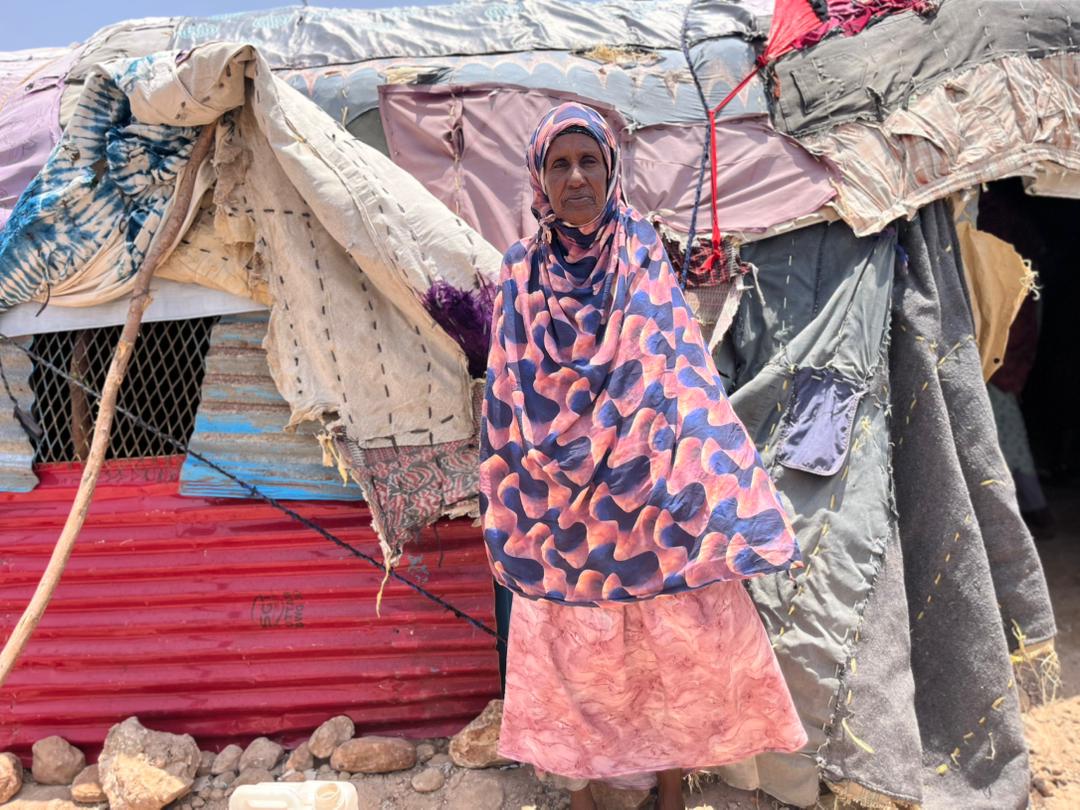
Amina Awl Hirsi, 60, said she and her seven grandchildren had suffered from diarrhoea, skin disease, coughs and fever for the past two months. There is no health facility in the camp, and she can’t afford to seek medical treatment.
“The stench makes it impossible to sleep. Flies and even snakes come from the dump, leaving us frightened. We have suffered from diarrhoea and skin irritation, and the illness has left me weak,” she said.
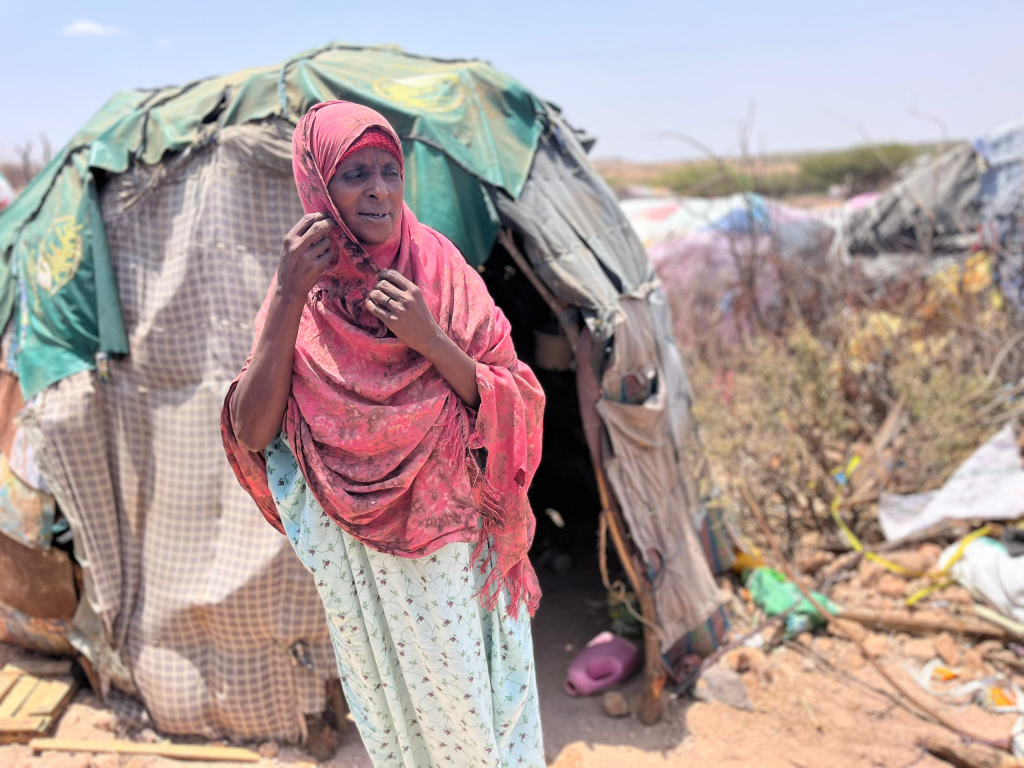
Amina lives in a hut beside the dump with her grandchildren, whom she has been caring for since her son’s death. She has no regular income as the relocation site is far from the city where she used to get laundry jobs. Her illness has left her too weak to work.
They get very little food and rely on neighbours for help.
“This morning, a neighbour brought me a little bread. We have nothing for tonight. What will the children live on? I have no one to help me except God,” she said.
Amina said they received 40 litres of water every Thursday from Somaliland’s resettlement ministry but it usually ran out before the next delivery. The seven children are all out of school because she can’t afford transport to schools in Hargeisa.
Their shelter, made of old fabric and branches, offers little protection from rain or sun and is often blown down by strong winds. The family had lived for 17 years in Nasa-hablood camp, closer to schools, health centres, markets and job opportunities.
Ifrah Haybe Warsame, another Qasali resident, said her children suffered from stomach pain and fever. Animals attracted to the waste sometimes attacked them in the camp.
The hundreds of families share just three latrines, and flies swarm on food and household utensils.
Ifrah has diabetes but can’t regularly afford her medication. She sometimes receives $1 or $2 from relatives to buy her tablets and food for her children. When she receives no assistance, her blood sugar level drops and she is too weak to prepare meals.
She cares for her young children alone and walks to Hargeisa to look for cleaning work when her health allows, often finding no jobs.
“People are dying of hunger here. Some children can barely stand because they are malnourished,” she said. “We are all sick and too weak because we cannot get a balanced diet.”
She said her family got three 20-litre containers of water a week from a tanker supplied by the Ministry of Resettlement. As their shelter is on a hill that the tanker can’t go up, she has to carry the water on her back.
Six of her children had to stop attending their free school in Hargeisa when they were relocated to Qasali, as it is so far away.
Ifrah’s family became displaced in Hargeisa in 2009 after drought and disease killed their 80 goats and sheep in rural Salahley and left them without a livelihood.
A doctor at a local hospital in Hargeisa said that the Qasali site conditions were unsanitary and that the waste contributed to the spread of diseases.
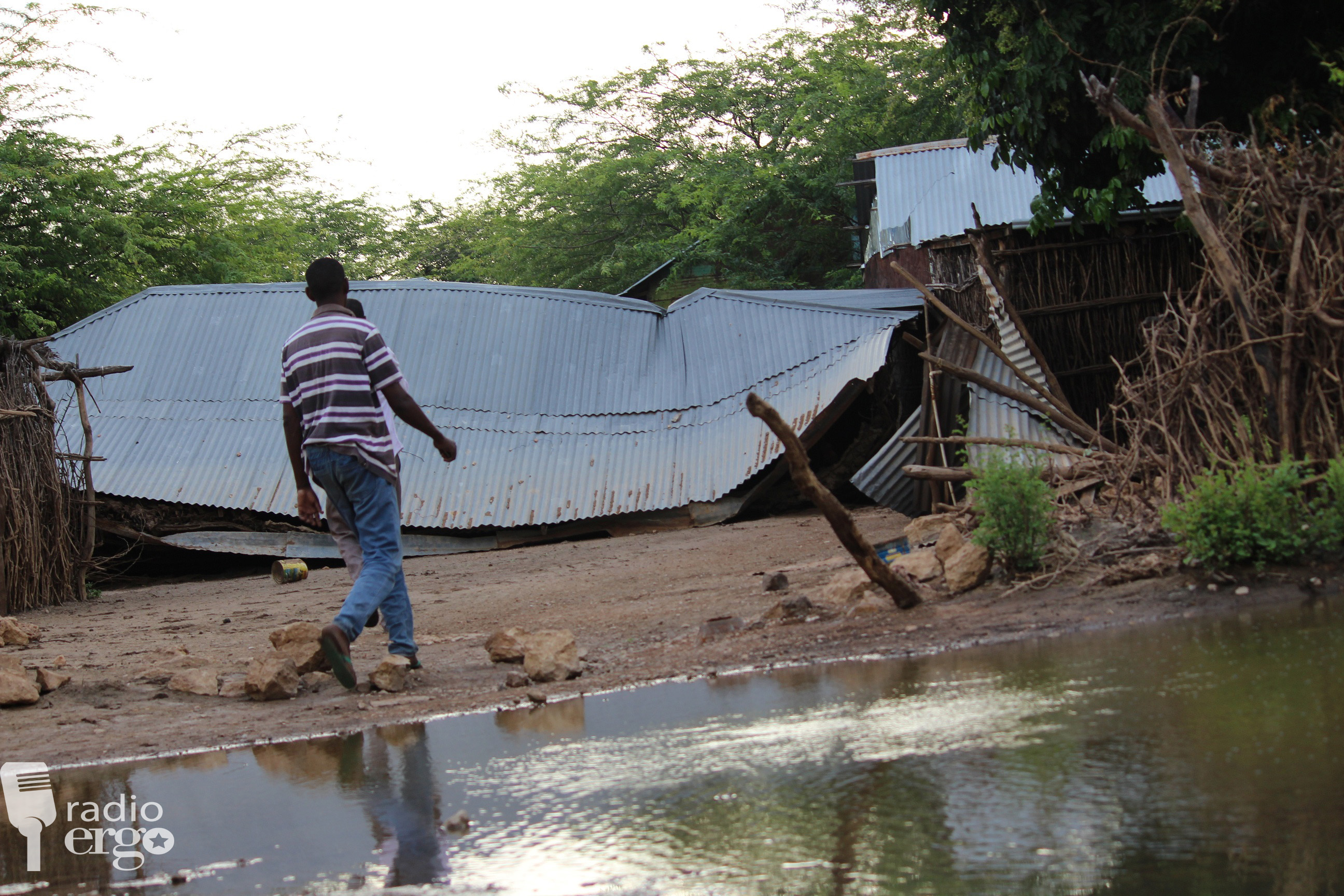
The Hargeisa municipal authorities relocated the households when the owners of Nasa-hablood camp demanded their land back. Each household was allocated a 19 metres square plot, but residents can’t afford to build homes or access basic services.
Municipal officials told Radio Ergo that Maandeeq, the company that manages livestock slaughtering and related waste, was expected to address the complaints in Qasali camp. However, Maandeeq officials said the municipal authorities had designated the site but declined to comment on the families’ concerns.