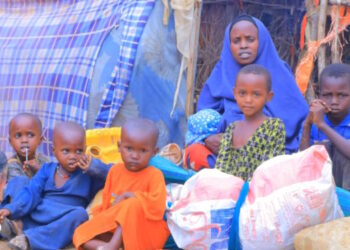


(ERGO) – Nomadic pastoralist families who migrated trying to save their livestock say they are trapped in dried out plainland areas south of the Somaliland capital Hargeisa, unable to move away again due to lack of resources.
Their weakened animals cannot withstand another journey, and they have no money to hire trucks to transport their livestock and families either back to where they came from or on to another location.
Abdikarim Sulub Mohamed moved his family and livestock from Ina-Guuha, north of Hargeisa, hoping to find pasture and water in Qool-adey in Marodi-Jeh region in April. However, he has lost 16 camels and almost half of his goats and fears the total demise of his family’s only source of income.
“Our animals arrived here already weakened by drought,” he told Radio Ergo. “They have not recovered because they never found enough pasture after coming here. The goats have almost all disappeared. We can’t bring back those that have died, and many more are close to dying. Unless it rains soon, I fear we will lose even more.”
Abdikarim has only 17 camels and 10 goats left. These animals are too frail to produce milk or other income. They can’t be sold as livestock prices are low. They also can’t walk to another place due to their weakened condition.
His family of six barely finds enough food and water themselves and often go hungry unless neighbours share what little they have.
“There are shops that have been giving me food on credit, but sometimes I feel too ashamed to ask again. Even when I desperately need help, I hesitate because I know how much I already owe. In the end, necessity forces me to ask,” Abdikarim said.
His debts accumulated over recent months have reached $1,000. Local shopkeepers are demanding that he repay before getting further credit for food supplies. For years, the family depended on milk and occasional livestock sales. Today, both sources of income have disappeared.
“What worries me most is the debt. Debt brings no peace in this life or the next. It weighs heavily on my mind every day. My family depends entirely on food bought on credit, and that burden is becoming harder to carry.”
Abdikarim has no money for veterinary services and has watched his camels develop a disease affecting their mouths, preventing them from grazing until they die. He believes drought weakened the animals, leaving them vulnerable to disease.
Another herder, Ahmed Mohamed Diigale, who migrated 35 kilometres from Balli-abane, is facing similar hardship stuck in Qool-adey. Drought, water shortage and livestock disease have killed seven of his camels and 64 goats since January, leaving him with just 10 camels and 30 goats.
Ahmed says he faces an impossible choice between feeding his family of nine and keeping his animals alive.
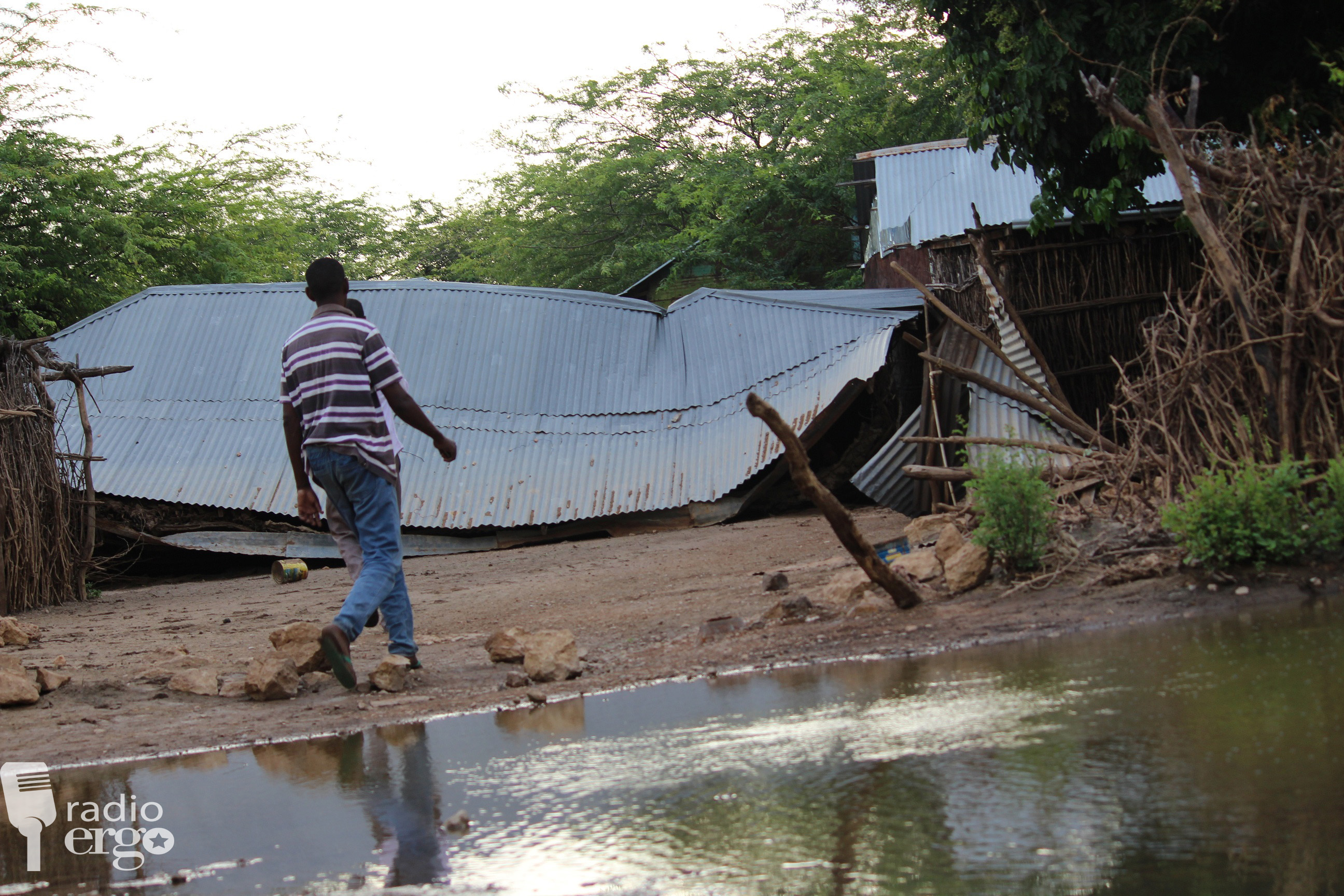
“Our situation improved briefly after some rain fell, but now it has become difficult again. The land has dried up, and the strong winds have made life even harder. Our shelter is very weak. It is just plastic sheeting that the wind tears apart. That is one of the many hardships we are facing.”
Families contribute collectively to hire water trucks that deliver from Geed Deeble, 50 kilometres away, after wells in the area dried up. But Ahmed can’t afford his household’s $5 share of the $50 cost per delivery and has to ask neighbours for whatever water they can spare.
He occasionally asks relatives in Hargeisa for help. They are able to send him no more than about $5 a week, which falls far short of meeting the family’s needs.
When the families first arrived, the areas of Qool-adey and Ubaale had enough grazing to sustain their animals. But as more pastoralists arrived with their herds, the pasture was soon exhausted. Disease also spread among the crowded livestock, accelerating losses.
The local area commissioner, Mubarik Sugule Mohamed, said the displaced families had nowhere else to go as drought had affected much of the surrounding region. Hundreds migrated from Garabis, Ina-Guuha, Balli-abane and other drought-affected areas to Qool-adey and Ubaale, where they are stranded.
The authorities have appealed to humanitarian organisations and other donors for assistance.
“People have lost the ability to cope. They keep searching for somewhere better to move, but they have found nowhere with better grazing. Only a few places received rain,” he said. “The greatest needs are food and shelter because the livestock are weak and no longer producing milk. We are anxiously waiting for rain.”