

(ERGO) – Around 180 farming families have fled their homes in villages south of Baidoa in southern Somalia’s Bay region after a flare up of conflict over access to land between farming and pastoralist communities.
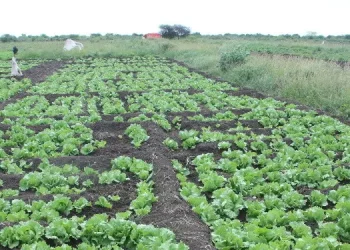
The families have sought refuge in Fanole and Afar-wab Dhoobey internal displacement camps outside the city of Baidoa. They had to leave behind their farms with crops on the fields ready to harvest.
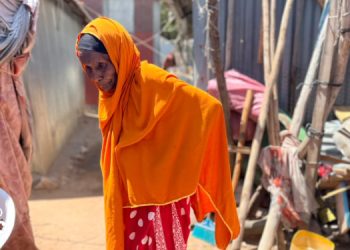
Adan Ibrahim Noor, 38, was harvesting sorghum, beans, and vegetables when fighting erupted on 5 August. He’d been planning to harvest gradually and store enough food for the lean times before the next season.
His five-hectare farm had earlier been beset by poor rainfall and pest infestations, but this harvest was his hope for recovery.
“The fighting destroyed the farms. Even the donkey I had in the neighbourhood for transport was hit by a stray bullet and died. We had good grain on the farm, but everyone fled. Livestock were allowed in to graze on it. We can’t tell whether anything is left,” he told Radio Ergo.
The family walked for six hours to reach Fanole camp, where they found no basic services available. The nearest free water source is a 30-minute walk away. Four of his seven children have been sick for a week, but he can’t afford to take them to private health facilities.
He has a $300 debt from investments on the farm. His children also miss the Koranic school they were attending at home.
“The biggest difficulty I face now is having nothing to give my children. Before the fighting, our life was good. After the fighting broke out, me and all my children are grappling with food shortage,” he said.
The inter-clan violence in the areas of Welgadude, Yaqle and Daawudow, about 15-30 kilometres south of the city, is long-standing and remains unresolved. Radio Ergo was able to confirm that a total of five people from the two sides had been killed, with one of them dying in hospital of severe injuries.
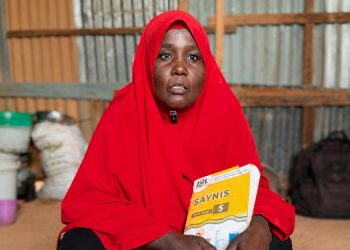
Ekow Ishaq Mohamed, 45, fled her home in Qoriile village, leaving behind 100 kilograms of stored sorghum and maize, her house and household belongings. She had been expecting to harvest her farm this month.
She arrived in Afar-waab Dhoobey camp in Baidoa with her elderly husband and 11 children. They had lived in their village for more than 30 years. It took them two days to reach Baidoa. In the camp, they can only depend on what others who arrived before them can share.
“The displacement has brought us many problems. When we fled, my children, their father and I stayed with pastoralist families along the way. We suffered for two days, hiding and struggling, and that is how we reached Baidoa,” she explained.
“The sleeping conditions in this camp are very bad. We carried whatever we could on our backs and came without a vehicle. We sleep on bare ground with the mat. We had no opportunity to bring much with us.”
The nearest water source is two kilometres away and the family can’t afford to buy enough. She has to ask other families for 20 litres for drinking and cooking.
Ekow doesn’t know whether her farm is still intact and has been thinking of going back to harvest the crops, although the ongoing insecurity would make it dangerous. She is worried about her children’s future as they are out of school now.
“Five of them were attending school. Forget school for now! They have been psychologically affected by the fighting and are constantly on edge.”
She owes $500 for expenses she incurred on the farm, including seeds, cultivation, spraying and labour, and doesn’t know how she will replay the debts.
The chairman of Fanole and Afar-wab Dhoobey camps, Mohamed Ibrahim Mohamed, said the newly arrived families had joined those already struggling to meet their own daily needs. New arrivals continued to reach the camps empty-handed from the conflict areas.
“We have nothing to give them. They have no homes, there is no water in the camp, and they have no food. Some of these people have travelled for up to four days. We are asking the administration and humanitarian organisations to help these people in whatever way they can,” the camp chairman said.
The two IDP camps had an existing population of 350 families who have lived there for years with little support from aid groups or government authorities for basic services.