(ERGO) – Hundreds of former pastoralist families displaced by years of drought are rebuilding their lives through fishing along the coast of Gunbah in Somalia’s Bari region.
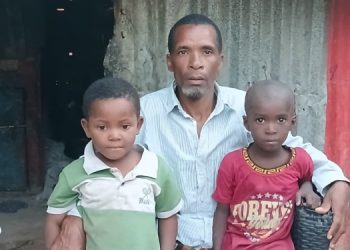
Among them is 50-year-old Said Muse Yusuf, who spent most of his life herding livestock before repeated droughts wiped out the animals his family depended on.
Today, he starts each morning at sea with six fellow fishermen, sharing a small rented boat as they search for fish off the coast. The income is modest, but it has helped his family of 10.
“After drought devastated our livestock, we came to the coast looking for another way to survive. We set our nets and work together. In the past, we depended entirely on animals, but now most people who once had herds are left with only a few weak animals. The sea has become our livelihood,” he said.
Said began fishing in January after receiving two months’ training from the local fishermen’s cooperative. He learned how to handle fishing nets, navigate the water safely, and respond to emergencies at sea.
Before joining the fishing community, Said’s family had fallen into severe hardship after arriving in Gunbah earlier this year. They often survived on a single meal a day, relying on food donations from long-term residents of the area.
The daily catch now earns him around $5, which is shared among the crew. Although the income is small, it is enough to provide regular meals and basic necessities for his family.
However, Said is still burdened by debts accumulated over the past three years when drought destroyed the value of his livestock. Traders in Murcanyo who supplied food for his family and animals continue to ask for repayment.
“I am still carrying debt and I don’t know where I will find the money,” he said. “People were asking me about it today. If this work continues to go well, I hope I can repay what I owe. My prayer is that I won’t die leaving debt behind.”
Despite the challenges, Said believes fishing offers greater opportunities than livestock keeping ever did. Having gained confidence and experience at sea, he hopes to increase his earnings if he can access better equipment.
Every morning, groups of newcomers head out to sea in rented boats under arrangements with boat owners and fishing traders. Most work on a profit-sharing basis, receiving a portion of the value of their catch.
Mahamud Ahmed Nasir is another former pastoralist who has found a measure of stability through fishing.
Since March, he has spent his days aboard a small boat owned by a local businessman. The work provides him with around $5 a day, helping him support his family of six.
The father previously owned 50 goats and lived in the rural areas around Gunbah. When drought wiped out his animals, he moved his family closer to the coast in search of alternatives.
“My family now lives near the town,” he said. “We bring home fish for dinner and sell part of the catch to buy food. Compared with our life in the rural areas, we are better off here by the sea.”
Mahamud says fishing has restored hope after years of uncertainty. The opportunity came through a relative already working in the sector who encouraged him to join.
He estimates that his former livestock business generated no more than about $50 a month from occasional animal sales. Fishing now brings him close to $150 a month.
The income has allowed him to repay a $300 food debt accumulated before he entered the sector. He has also begun saving $50 each month toward building a corrugated iron house for his family, who currently live in a cramped shelter vulnerable to rain and strong winds.
“I believe I can achieve that goal before the end of the year if I continue working,” he said.
Yet major challenges remain for the growing number of former pastoralists entering the fishing industry.
Mahamud says many lack essential equipment such as boats, engines, and storage facilities. As a result, they depend heavily on traders and boat owners who control access to fishing opportunities.
Farah Guled, a member of the Gunbah fishing cooperative committee, said experienced fishermen have played a crucial role in helping drought-affected families adapt to their new livelihoods.
The cooperative provides voluntary training on net-making, diving, boat handling, and other essential skills, enabling many newcomers to work independently within a short period.
However, Farah said the lack of investment threatens future growth. He noted that fishing communities urgently need cold storage facilities to preserve catches and reduce losses.
“Humanitarian organisations should help these communities with equipment such as freezers and cold storage,” he said. “Sometimes fishermen bring in large catches, but there is nowhere to store them. Apart from a single freezer donated some time ago, there are no proper facilities. Fish often spoils before it can be sold.”