

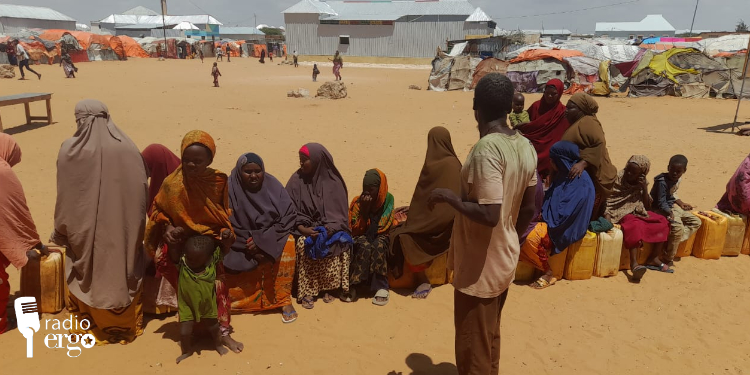
(ERGO) – Water, once relatively affordable for displacement camp residents, has become a daily struggle for thousands of vulnerable families in Mogadishu’s Kahda district.
Local authorities say the increase in water prices is linked to the growing number of displaced people arriving from drought-hit regions, placing pressure on already limited water resources.
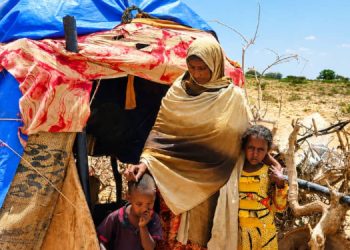
In Maqsud camp, Khadro Mohamed Hassan, a mother of five, says the rising cost of water means it’s impossible for her to meet her family’s basic needs.
“The biggest problem we have is lack of water. Some days we can’t even afford to buy any. The children bring dirt from outside into the house, and there is no water to clean. Sometimes we go around asking people for one jerrycan, but even that is not guaranteed,” she said.
The price of a jerrycan of water has tripled in recent months from 2,000 to 6,000 Somali shillings.
Khadro does not have a steady source of income. She makes three or four dollars for occasional work washing clothes. She carries some of her children’s clothes with her when she goes to do laundry jobs, using her employers’ water to wash them and bring them back home.
Her family were forced to leave their rural home in Ukunji in Lower Shabelle region after losing their 60 goats to drought. Since arriving in Kahda, water scarcity has contributed to health problems in her household, including diarrhoea affecting two of her children.
“Some days I return home without any water because I cannot afford it,” she said. “If you don’t have even half a dollar, you cannot get water unless you borrow.”
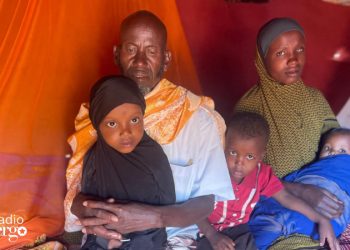
Single mother of six, Sahro Mahmoud, also living in Maqsud camp, says the rising cost of water has made survival even harder.
“If you don’t have one dollar a day, you cannot get water. Water is now a business. If you ask for it without money, no one will give it to you,” Sahro told Radio Ergo’s local reporter.
Sahro and her children have been living in the camp for three months since fleeing drought in Jalalaqsi district in Hiran, where she lost 100 goats.
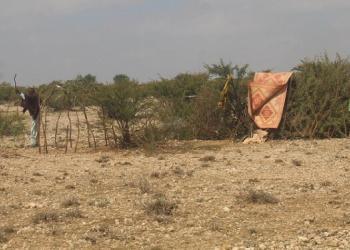
The situation in the camp has reached a point where families can no longer support each other, as everyone is struggling. The lack of water has also affected hygiene and health among displaced families.
“Children are getting sick with diarrhoea and vomiting,” Sahro said. “You don’t know whether to use the little water for drinking, washing clothes, or cleaning. You can spend the whole day looking for water and still come back empty-handed.”
The director of humanitarian affairs in Kahda district, Yusuf Abdi Osman, said the surge in water prices had placed an unbearable burden on already vulnerable families. He explained that the influx of displaced people fleeing drought had sharply increased demand for water, while supplies were limited.
“If this situation continues, we fear a humanitarian disaster. Water is essential for both health and survival. Families cannot afford the current prices, and we do not have the capacity to resolve this alone,” he said.
The district administration has called on aid agencies and other partners to support efforts to address the water shortage, including investing in sustainable water sources or subsidising costs for displaced families.