

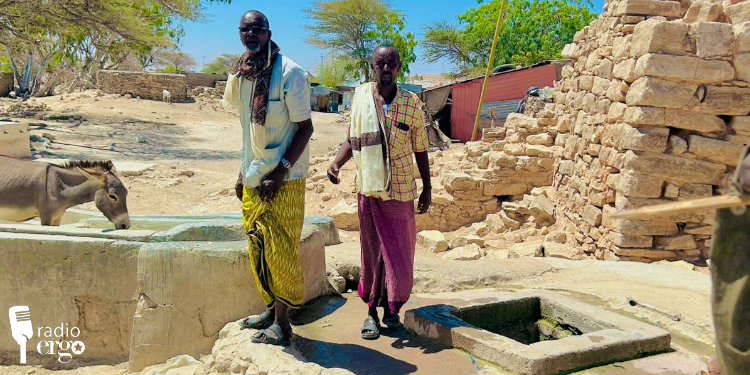
(ERGO) – The two shallow wells serving the area of Taleh, in northern Somalia’s Sool region, have dried up leaving local residents the only option of buying high-cost water that is trucked in commercially from other areas.
Most low-income households can’t afford the water prices and are already facing food shortages and mounting debts.
Yasin Ahmed Isse’s family of 10 begs small amounts of water from their neighbours, who sometimes can’t spare them any water at all.
“My family is in a very dangerous situation,” he told Radio Ergo. “The biggest problem we face is lack of water. I fear my children could die of thirst. We have nothing to cook or drink.”
Water is being sold at $12 to $15 a barrel.
Yasin, a casual construction worker, has been unemployed for four months as building work in Taleh has slowed due to the prolonged drought that has brought worsening economic conditions.
He goes out every morning looking for work, but usually returns empty-handed. Without a steady income, his family depends on neighbours sharing some food or whatever food he can buy on credit from local shops.
“Hunger has affected us badly. Sometimes neighbours cook for us once a day, or we borrow a kilo of rice. Other times we go without food,” he said.
In February, the family was evicted from their home after failing to pay the $40 rent for four months. They now sleep rough with no proper shelter.
“The children sleep outside. I have daughters and I worry about their safety at night,” Yasin said.
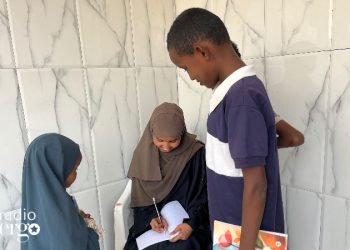
Six of his children have dropped out of school as he was unable to pay the $60 in monthly fees. His debts are now at around $1,580, and shopkeepers have stopped extending him any credit.
Other families in Taleh are facing similar conditions. Laki Saleban Abdi, a pregnant mother of nine, said her family had struggled to access water since the nearby well they relied on dried up earlier this year.
“We have no water – neither fresh nor salty. We are extremely thirsty and cannot afford to buy water,” she told Radio Ergo.
Her husband has made no income for six months, leaving the family dependent on small, irregular support from relatives. They usually cook just one meal a day.
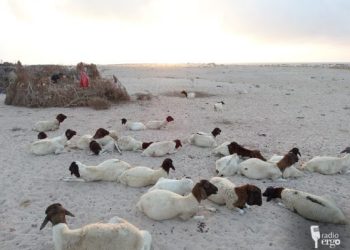
“Sometimes we cook once a day, usually at midday, and it is not enough,” she said. “We have no livestock, no farm, and no business.”
Two of her young children recently fell ill with fever and vomiting, but she cannot afford medical care. With her delivery approaching, she is also unable to access maternal health services.
“I don’t have money to check my health or the baby’s,” she said. “Some nights I can’t sleep because of the pain.”
Two of her children have dropped out of Koranic school due to unpaid fees. The family owes around $600 in debts for food bought on credit.
The district commissioner of Taleh, Ahmed Abdullahi Abdi, said the wells that dried up had been serving town residents as well as the surrounding pastoralist communities in rural areas.
“The only available water is very expensive, and many families cannot afford it,” he said. “Only those with some means can buy it. Poor families are left without access.”
He attributed the situation to several years of poor rainfall that has reduced water sources and increased pressure on existing supplies. Although the local administration has provided limited water trucking and some food assistance, he acknowledged that the response had not met the scale of need.
“The support we provided is very small compared to the number of people affected,” he said. “Many families are still struggling.”
He called for urgent assistance from regional authorities and humanitarian organisations, warning that the situation could worsen.