

(ERGO) – Drought displaced pastoralist families in southern Somalia’s Lower Juba region have arrived in Kulbiyow – a small town close to the Kenyan border – with no livestock, shelter, or reliable access to food.
The families were driven out of rural areas around Buulo-Haaji near Kismayo, where prolonged drought wiped out their animals, dried up water sources, and destroyed the livelihoods they depended on.
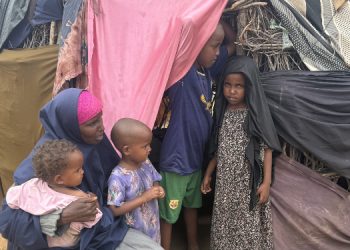
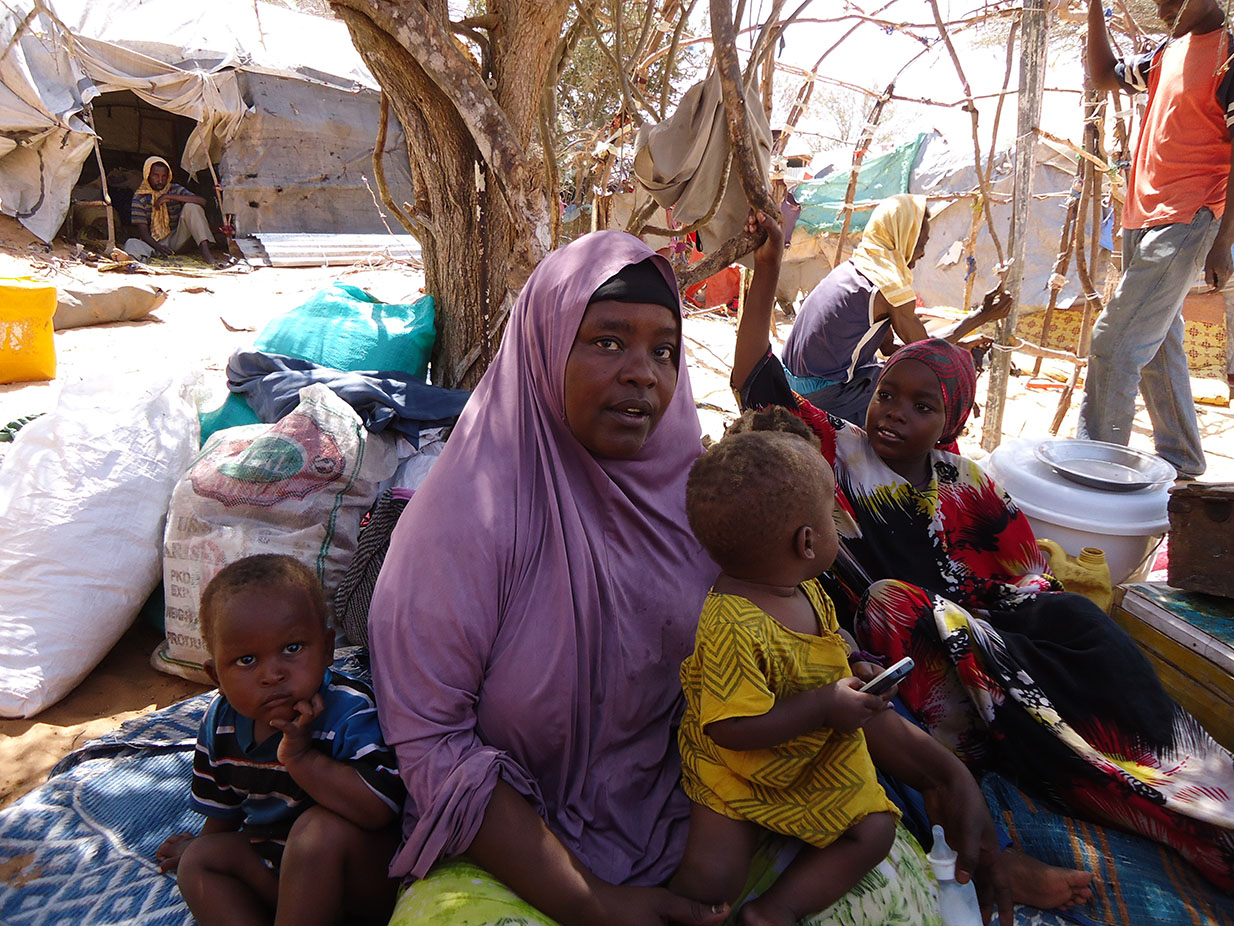
Among them is Farhia Daud Omar, a mother of 10, who recently gave birth. Her family came to Kulbiyow hoping to find humanitarian assistance, but instead encountered a distressing situation with lack of food and basic necessities such as shelter.
Whilst they try to survive on one meal a day from members of the host community, they now face the added stress of the seasonal rain that began shortly after their arrival.
“Rain fell on us while we were staying in a low lying area. The water washed away the little food we had. I couldn’t find a place to shelter the children, so we had to move again to an open area,” Farhia told Radio Ergo.
The local community in Kulbiyow has tried to help by sharing small amounts of food and water. Without shelter, the displaced families cannot store what they receive.
Farhia’s newborn baby, less than a month old, was delivered during the family’s 25 day journey. When she went into labour, she was left behind in an isolated area with another woman, while her husband continued ahead with the rest of the children.
Three days later, health workers from Kulbiyow reached her after being informed of her situation. She said they provided treatment, including rehydration and medication, and transported her and the baby to the village.
“At that time, I was very sick. My body was swollen and I had anemia. They treated me, and I recovered,” she said.
Farhia is worried now about how to feed her children and protect them from mosquitoes, cold nights, and extreme heat during the day.
“We sleep on mats on the ground. There are no mattresses or anything else. That is how we live,” she said.
This family has lost nearly all their livestock -35 cattle and 25 goats -leaving them with only three animals that are no longer productive. With their main source of livelihood gone, all they can do is ask for external support.
The families who fled Buulo-Haaji first settled about three kilometres from Kulbiyow, but they were forced to move again after rains flooded the area. They are now living about two kilometres away on higher ground.
Hassan Salad Nur, another displaced pastoralist, said his family of 17 was facing similar struggles. He has 10 children to feed.
“For two nights, we had nowhere to shelter from the rain. It fell directly on us. We only had torn plastic sheets, and even some of the animals we brought died in the rain. I lost six goats,” Hassan said.
Hassan’s family fled Santaro village near Buulo-Haaji after drought dried up water sources and wiped out their herd of 40 cattle and 30 goats. He said the loss of their animals left them in a state of uncertainty, forcing them to depend on others.
They received small quantities of food and oil, but much of it was damaged by rain as they had nowhere to store it. Adapting to life in Kulbiyow has been difficult, especially without social connections.
“There is no shop where I can get food on credit because I don’t know people here. Those who know me are aware that I lost my livestock, so they cannot help much,” Hassan told Radio Ergo.
He described the widespread impact of drought across their home area, saying that locations like Santaro, Abaloley, and Baqdaad had all been affected, leaving people and animals without water or pasture.
“Last year at this time, our life was better. Now we are in a situation that I don’t know how to manage,” he added.
Local community members say they have tried to assist the newly displaced families despite facing their own challenges.
Mohamed Abdullahi Omar, a community elder in Kulbiyow, said residents and local leaders organised contributions to support those who arrived.
“We collected livestock and money from the community to help them. Traders also contributed, and we worked together to provide what we could. It was self-help,” he said.
He stressed that the support provided was not enough to meet the growing needs, especially as more families continued to arrive without any supplies. The host community itself, he said, had been affected by the same drought conditions, limiting their ability to sustain assistance.