(ERGO) – Fighting between the Somali government and AUSSOM forces and Al-Shabaab in two militarily strategic villages in Lower Shabelle region, not far from the Somali capital, has left thousands of ordinary farming families stranded in misery after having to flee their homes and farms.
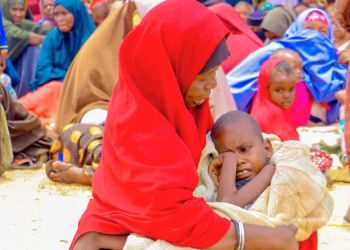
Furqaan Ahmed Mohamed, 38, and her family of eight fled their home in Anoole village in May when the conflict flared between the two sides.
They walked for three days along the 45 kilometre route to the town of Afgoye, where they and hundreds of other families have formed makeshift camps. River bridges had been destroyed making the journey an ordeal.
“The bridge was broken on both sides, making it impossible for vehicles to cross. Only on foot could you pass, and even that was very difficult. We had to be helped to get across,” Furqaan recalled. Charitable local people, she said, eventually helped her carry the children across the river.
They are now in Eyle camp, surviving on cooked food handouts from fellow displaced families, who had settled in the camp after fleeing the same war zone before her in May.
“You can imagine how it feels to live in someone else’s place, where you can’t get things the way you want. When we were in our own village, we were all working and able to eat three meals a day,” she told Radio Ergo.
Her youngest child, just two years old, cries because of the long days of hunger, having been used to regular meals at home. The family sleeps in a shack without any mattresses, on a thin mat that was given to them.
They have to buy water priced at 4,000 Somali shillings (about 70 cents) per jerrycan..
“We survive on 20 litres a day, but it doesn’t meet our needs,” Furqaan said. “At night rain pours on us, and during the day the sun burns us. There’s no place to rest. With no shelter, no water, and no toilets, this is the life we live.”
Three of her children in grade four and grade eight are now out of education. They also lost their main source of income, a small shop in Anoole selling food and household goods.
Furqaan estimated she had property worth $700 in the shop, but there was no transport to carry the good with her so they fled with nothing but their lives.
This is the first time Furqaan has been displaced from her home. She said her elderly husband cannot support the family, as he has no strength nor resources to depend on.
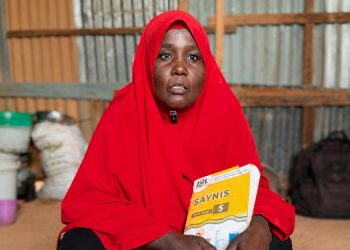
Also in Eyle camp in Afgoye is Nafiso Aden Abdirahman, a 40-year-old widow with 10 children. They have received no assistance since arriving at the end of May, forcing Nafiso to beg so her children can eat once every 24 hours.
Her husband died three years ago, leaving her to raise the children alone with no relatives to turn to. She had planted sorghum, maize, and beans on their four-hectare farm in Anoole in March, investing her savings of $200 in seeds.
However, the conflict closed in on them so they had to leave before harvesting any produce.
The family lives in a hut built from cartons, cloth, and tree branches provided by others in the camp. The shelter cannot hold them all, so at night the younger children sleep inside while the rest lie outside. During the day they sit under trees for shade.
“I spread a blanket on the ground, and I don’t even have a mattress. That’s what pains me. This is the life we live. We just pray to God for something better,” Nafiso said.
“Our situation is very difficult. We left our area because of fighting, there was shelling going on, and so we fled to save ourselves and our children.”
The chairman of Eyle camp, Ahmed Ali Abdi, said they had formed a committee within the host community to collect food and small items for the displaced families, but these efforts were not enough to meet the overwhelming needs they all faced.
“If we get something enough for one meal one day, we distribute it. Otherwise, they remain hungry. Their situation is critical, as they have neither food nor water, and they are crammed together,” he said.
According to the camp chairman, more than 500 families have arrived in the camp since May, fleeing fighting in Sabiid and Anoole in Lower Shabelle, where a battle for supremacy has been going on for control of the supply routes leading to Mogadishu.