

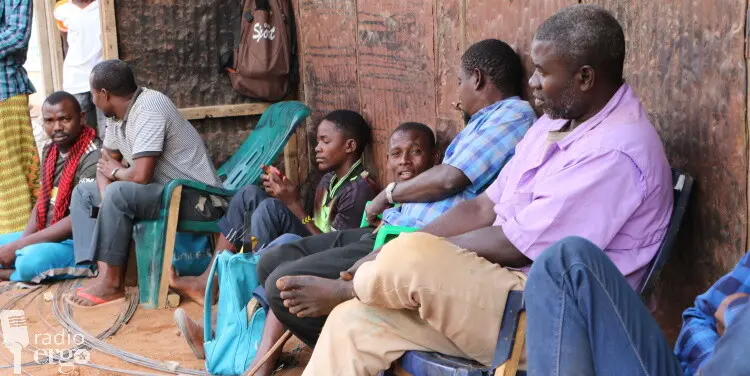
Nearly 100 men who earned a living breaking and selling stones for construction in El-Aqwan, on the outskirts of Galkayo in central Somalia, have lost the work they relied on for years due to changes in demand for building materials.
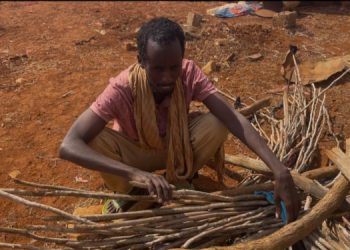
Abdirahman Said Farah, 45, supported his 10-member family through stone work for 14 years until July. Builders have turned to using cheaper cement blocks, so Abdirahman’s monthly $250-$300 earnings dried up.
“Stone work was my livelihood. I raised my children and paid for their education with it. Now it has stopped. Hunger and destitution have come. We were cooking two or three meals a day though now, if we can manage dinner, that’s all,” he told Radio Ergo.
Abdirahman said his family lives on small handouts from relatives. Each morning, he walks an hour and a half into Galkayo looking for work as a porter, but usually returns at sunset with nothing.
He still has 18 truckloads of stone prepared with no buyers.
“This problem was caused by the cement blocks. Factories were brought in, and sand and gravel are being turned into blocks, replacing the stone. There are also stone-crushing plants. These are the main challenges we face. I have become a man with nothing. The work I used to depend on has stopped, and it has badly affected my life,” he said.
The family was evicted from their home in September when he failed to pay $40 rent for two months. They are now crammed into a single room in a relative’s house, where the younger children sleep inside and the older ones lie on mats outside under the open sky.
Four of his children from grades four, five and six school in August as he couldn’t pay the $35 school fees over the past four months.
“Because of poverty, they had to stop going to school. The school told me to pay or take my children out. Now they have no education and no health care either. If a child falls sick, we can’t afford the hospital in town, and the MCH here charges fees we cannot pay,” Abdirahman said.
This is the second loss of livelihood in the last five years for many in El-Aqwan, which is in part of Mudug hit by long drought forcing pastoralists to sell of their herds if they had any animals remaining.
Abdirahman’s family came from Qorasayn, in western Mudug, where they kept a herd of 170 goats and six camels. The 2011 sima (equaliser) drought wiped out their animals, forcing them to move to El-Aqwan, where he took up stone work.
Abdi Abdullahi, another stone worker, said his family now survives on just one meal a day provided by neighbours and relatives. He has no other skills or trade to rely on.
“The work has disappeared. When a man loses his work, hardship follows. Before, when I sold a truckload of stone, I bought milk, vegetables, and flour for the family. Now all that has stopped. People used to buy stone, sand, and clay from us. Our living depended on it, and we are badly affected,” he said.
Abdi’s family also faces water shortages. The small rainwater catchments they used to drink from dried up in early August. They now fetch water from a brackish well 20 minutes away. His children have suffered diarrhoea and stomach pains from the salty water. With no income, he cannot afford to take them to Galkayo for treatment, and there is no hospital in the village.
Abdi used to earn $150-$200 a month from stone work. The family’s electricity was cut off three months ago after they failed to pay a $30 bill.
As the sole provider for his wife and seven children, Abdi is trapped with $1,800 in debt, accumulated from loans over a period when he was working and survival borrowing recently.
His family also used to be pastoralists, who lost 190 goats, camels, and cattle to recurring drought in Dagari, Mudug, six years ago.
The head of El-Aqwan stone workers’ cooperative, Aweys Mohamed, said displaced families as well as poor locals who depended on stone were suffering severely and had no capacity to create jobs for themselves.
He criticised local companies for hiring foreigners instead of locals. Appeals to aid groups and businessmen to invest have gone unanswered
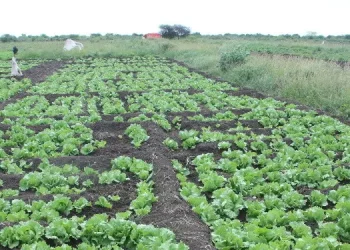
“The challenge facing the stone workers is that once their only livelihood disappears, life cannot go on as before – economically or in terms of food. We have tried to find alternatives, such as in excavation sites, but with no success. Rather than handouts, what these people need is work so they earn with their labour. Farming could help, but this area lacks water,” Aweys said.
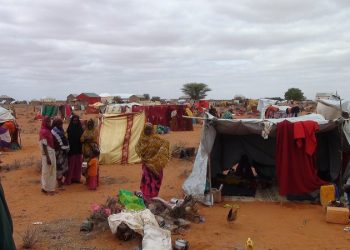
He noted that in El-Aqwan, where displacement camps are located, the host community and the IDP families now share the same hardships, since casual labour opportunities are disappearing.