(ERGO) – Hundreds of families displaced by fighting between government forces and Al-Shabaab in Mahas and Moqokori districts of Somalia’s Hiran region are facing a health crisis due to the closure of medical facilities.
The conflict led to the closure of 26 health centres that were supported by organisations including Save the Children and had been providing free medical care. Their closure in July has left displaced families with no access to treatment.
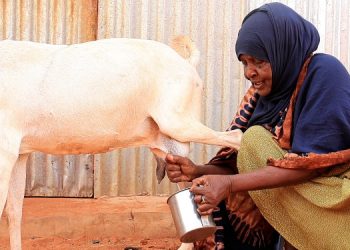
Halima Abdulle Jimale fled the conflict to Bukuri village with her elderly mother, aged 100. Her mother suffers from diabetes and high blood pressure and can no longer receive the regular check-ups and medication she depended on.
“She is very sick, and we do not sleep at night. All the medical equipment I was using to monitor her condition was left behind. I can’t afford to buy medicine. We are new here, and there isn’t even a single pill available. We desperately need a health centre,” Halima told Radio Ergo’s local reporter.
Her family’s ordeal deepened when her brother, a member of the local Macawiisley militia and the main provider for their family, was killed in clashes with Al-Shabaab on 27 July.
A day after his death, the family abandoned their 40 livestock because of mounting insecurity and fled.
Now Halima is responsible for 10 children including her late brother’s children and his wife. They survive on scraps of food shared by neighbours. She says she cannot even afford one dollar to buy the milk her mother relies on.
They reached Bukuri, 68 kilometres from Mahas, with help from relatives. After their vehicle broke down in Ali-Ganeey village, they were stranded for three days before another car gave them a lift. Now they face homelessness and hunger, surviving on food shared by neighbours.
“Our house had a big tree for shade, a stone room, and a toilet. Now Al-Shabaab are occupying it, and we cannot go back. We left behind everything we owned. We fled with nothing,” she said.
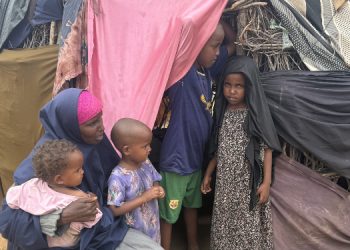
The family is currently living in a makeshift hut offered to them by relatives, who themselves have little.
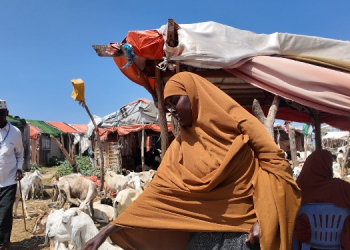
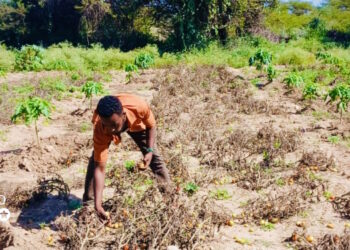
Shuriye Mahamed Dhalin, an 80-year-old father of 15, also lost everything. He had relied on farming and 45 goats, but his family abandoned both when they fled on 21 July.
He noted that four of his children had been sick for two weeks but he cannot easily access or afford treatment. The nearest functioning health centre is in Beledweyne, 31 kilometres away.
“My children are ill with colds, rashes, and some even have measles. I am also unwell, suffering chest pains, cold, and injuries from a fall. Yet I haven’t received even a single pill. There is no healthcare here,” he said.
Shuriye, now in Ilanle village in Beledweyne, said his family had relied on free health services in Mahas for two years.
He worries that hunger will push his children into malnutrition. The family cooks once a day if relatives in Mogadishu send money. Otherwise, they go without food.
“We live on one-dollar handouts, sometimes getting help, sometimes not. We have no food, no shelter, no medicine. We spend the day under a shack built by others and sleep there at night. We don’t even have blankets to protect us from the cold.”
This elderly man said he had looked for casual work without success. His wives have also tried to get cleaning jobs, but none are available.
Five of his children have dropped out of school since the displacement. They had been attending free primary and middle school at home, but now the family cannot afford fees.
Mahas health coordinator, Mohamed Farah Sabriye, said pregnant women and new mothers were among the most affected, unable to access hospital care or transport.
“The health impact of this displacement is massive. People who once had free services now cannot even get a paracetamol tablet. Pregnant women have given birth on the move without receiving any care,” Mohamed stated.
He said they had informed the Somali government and Hirshabelle administration, but no action had been taken.
According to the Somali Disaster Management Agency (SODMA) and Hirshabelle authorities, 26,000 families have been displaced in Hiran in the past four months, facing severe humanitarian conditions.