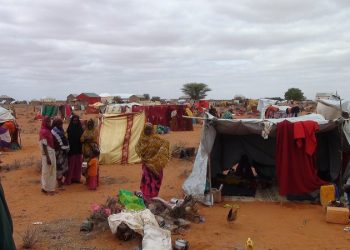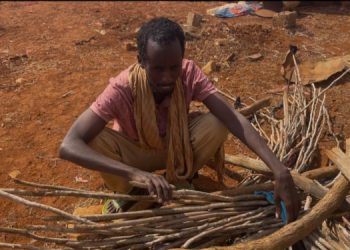


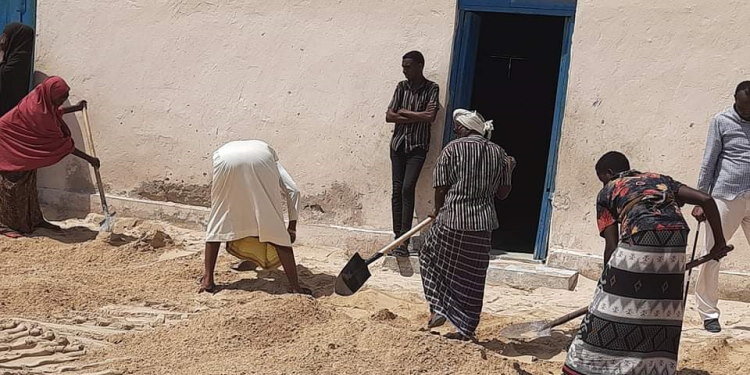
(ERGO) – Shifting sand dunes in Puntland’s Nugal region have destroyed the recent harvests of farmers living in Godobjiran, where drought and loss of vegetation have led to environmental catastrophe.
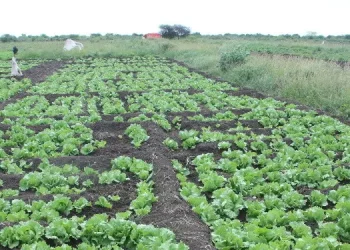
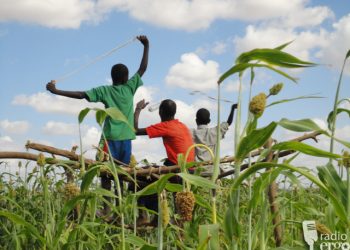
Mohamed Shire Adan, whose three‑hectare farm has supported his family since 2017, saw all the vegetables and grains that he had planted after good seasonal rains buried beneath metre‑high drifts of sand.
He had planned to sell beans and watermelons wholesale in Garowe and Galkayo in June, expecting at least $3,000 in income. Instead, by harvest time his crops and profits lay deep under sand.
“The farm my family depended on has been buried, and we can now eat only once or twice a day,” he said.
“We used to have abundance from the farm and cooked three times a day. The children had school and education, but I’ve had to stop their formal education due to lack of money. The Koranic teacher is still teaching the children, as I’m hoping I can find something to pay him.”
In February, Mohamed borrowed $1,200 from traders for seeds and labour, confident the harvest would enable him to clear the debt. Today those creditors demand repayment despite his ruined fields.
“I feel dazed by the losses I’ve incurred and the debt I owe, the debt at the shop, the cash I put into the farm that I can’t pay back — it’s countless, it’s abnormal…it’s the biggest loss I’ve ever had, and it’s been caused by the sand,” he told Radio Ergo.
Pushed by winds from off the coast, the sand had been inching onto his land over the past three years. The advance accelerated this May, after repeated droughts in the area stripped away the grass and shrubs that held the soil in place.
Community efforts since 2023 to plant windbreaks and install sand‑net barriers have failed to halt the sand encroachment.
Another local farmer Diriye Abdirahman Ahmed, who planted his two‑hectares in March, says he has sunk from prosperity to destitution.
His family of 10 now cooks only once a day and is living on 12 kilograms each of rice flour and sugar donated by relatives.
“Our family’s life is very difficult now. Sometimes we have lunch and dinner, sometimes only one meal. We depended on this farm, but the sand has ruined it. None of the crops I planted will grow as the farm has turned into mounds of sand. I don’t have the capacity to deal with it, nor do I know anyone else who can do anything about it,” Diriye said.
He had invested $800 in the farm, expecting to recover that amount and make a good profit from the sales of his harvest.
“In the past we sold our produce in Garowe and Galkayo, making up to $3,000. We lived on some of that and also reinvested in the farm.”
This year instead, he has debts totalling $230 to shopkeepers, who won’t offer him any more credit.
The chairman of the local farmers’ cooperative, Adan Jama Qasaal, confirmed that every farm in Godobjeran over an area of 10 square kilometres had been engulfed by sand. The catastrophe affected 38 households with an average of 12 members in each.
He said they needed a bulldozer to clear the sand from the agricultural land, and open up the blocked mouths of the valleys.
“We also need to track the sand to its source, and conduct reforestation there. We are good at self‑reliance and we work hard, but we don’t have the money to buy a bulldozer. We’ve shared our plight with the regional and district authorities, the crisis is it’s well known, but we haven’t received any concrete action from Puntland,” he said.
The cooperative made a formal appeal to the Puntland Ministry of Agriculture in June for heavy machinery and support for large‑scale tree‑planting, but hasn’t received a response.
Environmental officers say that desertification driven by climate change, overgrazing and deforestation is the cause of the problem of shifting sand. Once vegetation dies back or is cut down, exposed soil is vulnerable to wind erosion, allowing sand to smother fields and irrigation channels.