

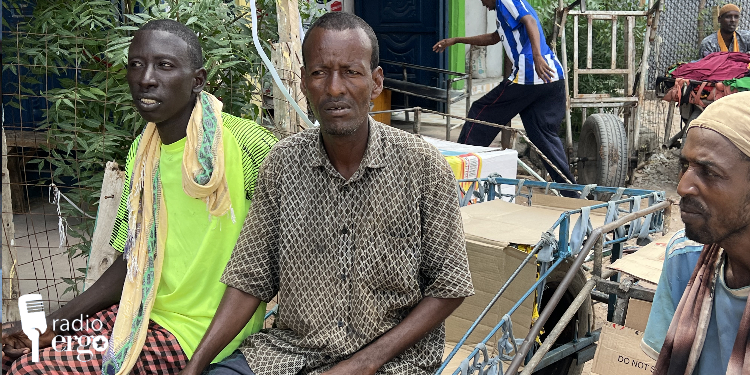
(ERGO) – Hundreds of Somali refugees living in the Dadaab camps in northern Kenya have lost their jobs as motorised tuk-tuk rickshaws have pushed manual handcarts out of the market.
A committee representing over 700 traditional porters using handcarts to move goods around in the camps says that companies owning tuk-tuks have pushed them all out of a living.
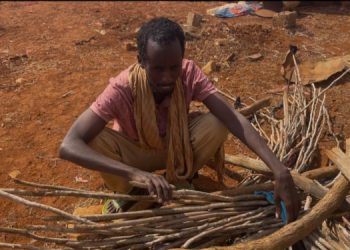
Ali Abud Hassan, 48, a refugee and a handcart operator, has been unemployed since February and can’t support his family of 10 any longer.
He only has the food rations from humanitarian agencies of 22 kilograms of rice and sorghum, which barely lasts the month.
“The food aid was just a supplement that we never fully relied on as it was the job I lost that was keeping us going,” he said.
“Life has become very hard. Imagine what it’s like here without a job. Every day I wander around the camp but find nothing. In the end, I just return home. That’s now my daily routine.”
He used to earn 600-700 Kenyan shillings a day, or 20-25,000 a month, that covered the daily food needs of his family. They have gone from eating two to three meals a day to cooking just once, often relying on food bought on credit, or on handouts.
Ali has tried several times to find work outside the Dadaab camps in towns in Kenya, but has been thwarted.
“I wanted to look for work in places like Nairobi, Garissa, and Eldoret, but I have no documents to travel. When I try to leave, I’m asked for my papers. Without legal status, I can’t even leave Hagadera camp,” he said.
He expressed hopelessness saying he had no plan, especially as his unemployment coincided with a sharp decline in humanitarian food aid available in the camps.
“The food they give us is no longer enough. Mostly it’s just sorghum with a bit of oil, if there’s any oil left at all. The oil ran out recently,” he said.
Ali fled to Kenya as a refugee from Gadudey in Lower Juba in 2011, leaving behind a 12-hectare farm that he could no longer make a living from due to insecurity and recurring drought.
Some porters can still be found at their usual stations in the camp markets, like Ibrahim Ali Sagar, a refugee father of 10, who looked visibly stressed. He had left his children at home without food.
“There’s nothing in my hands today, just like when I woke up this morning. God is my witness. I don’t even have a shilling in my pocket. This is how we live now. There were no tuk-tuks here before and people used to load goods onto handcarts, now I just sit here until sunset!” he complained.
He earned less than $2 that week, despite coming every morning to the market hoping for work.
“If I give up, I have no other option. I don’t have other skills or a different job to go to. I don’t want to sit at home hopeless while my children look to me for support.”
He fled Salagle, Middle Juba region, in 2011 due to the extreme drought that wiped out his herd of 40 cows. Handcart portering had kept them going for the past five years.
Similarly, Ali-Haji Makoma, a father of nine who arrived in Hagadera camp two years ago, said he hadn’t had any work with his handcart for the past three months because his customers were using tuk-tuks.
Ali-Haji, 40, said he had no choice but to borrow money to buy food for his family.
“When I go to town, I have nothing to do. I just walk around and return home. There isn’t even sugar, nor anything to cook with,” he told Radio Ergo.
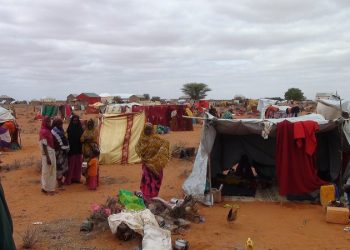
Exacerbating their situation, Ali-Haji’s family lives on the outskirts of Hagadera, where access to basic services such as water, education, and healthcare is minimal. The food aid they receive monthly isn’t enough, forcing his children to go to bed hungry.
“Sometimes, if God makes a way, I borrow a kilo of maize meal and promise to repay it. That’s how I feed my kids. I can’t afford anything else. What can a jobless man do?” he asked.
Ali fled from Harawe village in Jilib, Middle Juba region, in 2023 because their 10-hectare farm was devastated by consecutive droughts and he had no harvests.
The unemployment among porters, as well as other casual labourers, has deepened the economic hardship for many refugee families in Dadaab, whilst humanitarian aid has been reduced year after year.