

(ERGO) – Five of Habibo Mohamed Susow’s 10 children were enjoying free education at Al Mustaqim primary school until December, when their family and hundreds of others were forcibly evicted from the internal displacement camp where they were living in Mogadishu.
Around 300 students were enrolled at Al Mustaqim school in Deynile district, which was also forced to close when the eviction took place from Al-Adala IDP camp.
Habibo’s children are now at home, as she cannot afford to send them to a fee-paying school where tuition costs are around $10 per month.
“It’s a huge burden on me. Previously, I was happy that my children were getting an education. They even taught me at home, and I learnt how to write my name and get things done. But now, I am very worried about their future,” she said.
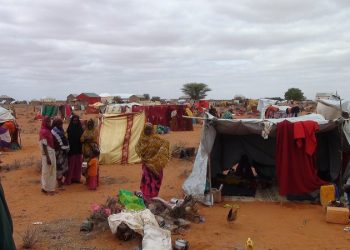
Evicted to the outskirts of Garasbaley in the city, where no camp has formed and there are no services, the roughly 400 families who had been living in Al-Adala camp are struggling to ensure basic needs for their children.
Habibo works as a porter, carrying goods from local shops to homes, earning at most $2 a day that enables her to make one meal a day for her children. They live in a one-room hut they put up on open ground.
“My job does not allow me to provide education for my children. I was relieved when they were in school and now I am very worried about their future. The school building was demolished when the entire camp where we lived was destroyed,” she said.
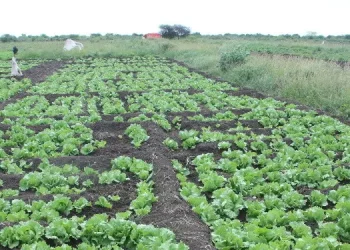
Habibo and her family were first displaced from Qoryooley district in Lower Shabelle region in 2024 by conflict. They had a one-hectare farm growing maize, beans, and watermelon that they had to abandon when they fled to the camps in Mogadishu.
Al Mustaqim primary school was established in Al-Adala camp by international NGO, Save the Children in August 2024 and was run by two local organisations, Daryeel Guud Bulsho, and Mustaqim 28.
The school had four classrooms built of iron sheets and a staff of six teachers whose salaries were paid by these organisations.
Fadumo Isse Adan, a mother of four, who is also among those evicted from Al-Adala camp to Garasbaley, said having her children out of school is making them sad.
“The worst of this issue is that there is no education here. Children don’t even have a school, and there is nowhere to study. If you are looking for a job in the city, you can’t afford the transport. You have to walk to Weedow or Tabeelah,” she said.
Fadumo’s husband earns a maximum of $2 a day operating a handcart in Bakara market in Mogadishu but it isn’t enough to cover both food and the children’s education.
“These circumstances have caused my family constant worry and a sense of loss. If I were to look for porter jobs, I wouldn’t manage to afford the cost of transport, which hinders us from finding solutions to the financial difficulties we are facing,” Fadumo said.
“The father of the family goes to Bakara to haul goods; when he finds work, he brings something home. If he doesn’t, he just returns empty-handed. He walks there, and what’s worse is that there are checkpoints along the way at night. I cook only once at night, and financially what he brings is not enough for us.”
Fatumo’s family was displaced from Buur-eyle area in Bay region seven years ago due to drought. They lost 50 goats, which were her family’s livelihood, forcing them to join the displacement camps in Mogadishu.
Also evicted from Al-Adala camp is Sahra Daud Mohamed, a disabled mother of eight. Four of her children were attending Al Mustaqim school. They are idle now in the desolate area in Garasbaley where they had to settle.
“I live here with no water, no food, and I can’t build a shed or a kitchen for myself. I have nothing in my hands. I could send my child to a free school, but I can’t afford a fee-paying one. As the mother, I’m sick and disabled, and there is no one else to look after me,” Sahra said.
She worries about her children’s lack of education that will inhibit them from developing their lives. She is unable to work due to her disability and they survive on food given by neighbours, which allows them to cook one meal a day.
“We struggle with water because I can’t afford to buy it. I ask those who buy water to share a little with us, but it’s not enough for my family. Still, I’ve had to be content with what little we get,” she said.
“I’ve never been in a situation like this before. I have no experience with this kind of life, and there’s no plan ahead. Before this, I worked sorting charcoal and used to earn $6 a day, which was enough for our daily needs.”