

Halima Hussein Omar and her family of 11 people are facing severe hardships in a displacement camp near Dhusamareb in central Somalia’s Galgadud region, after being displaced by drought and conflict from their farm far away in Bay region.
Two consecutive seasons of drought devastated their family’s four-hectare farm in Qansahdheere district in Bay region, which was their primary source of livelihood.
As Qansahdheere is still under siege by Al-Shabaab as it has been for the past 10 years, food is expensive and often inaccessible to the poor. Halima’s family secretly loaded a donkey cart and travelled to Baidoa, although they didn’t find they could access any aid or support there.
Halima was advised by relatives living in Arlaadi IDP to join them there in Dhusamareb. At the time, they were informed that aid organisations were issuing cash and food aid cards in the camp.
So she and her family travelled from Baidoa to Dhusamareb using $240, some of which was contributed by her relatives and the rest gathered from selling their stored sorghum. It took them nine days to reach Aarladi camp in January – but once there they found that the food aid had been stopped.
“I feel a great burden without food,” Halima said in distress. “We have nothing here. There is no food in the camp. We have young children here, no medicine or hospital, no shelter from the heat, and the children have no school.”
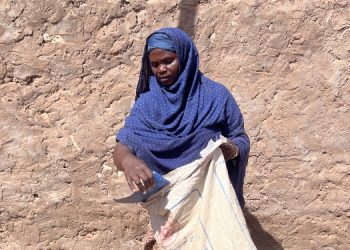
Halima searches for laundry work in Dusamareb town every morning but usually returns empty-handed. On rare days when she earns money, it’s a maximum of $3 that she spends on food for one meal for her large family. On days she earns nothing, her children go to bed hungry.
“I cannot bear the long-term hunger. It creates a lot of sadness. I cannot borrow money from shops in the city because I don’t know anyone here,” she told Radio Ergo.
Fifty-three other families like hers have recently joined Aarladi camp, escaping similar destitution and livelihood loss in other regions.
The camp faces a severe water shortage, with water sold at high prices. Halima’s family cannot afford the $0.25 to $0.40 per litre and have to rely on the kindness of neighbours giving what water they can spare. An organisation previously supplied water, but this support has been cut off.
They live in two plastic huts built by the Norwegian Refugee council (NRC) that provide little protection from the scorching sun or the cold at night.
Her six children, who used to attend primary school at home in Qansahdheere, dropped out of education because they couldn’t pay the $24 monthly tuition fees.
Halima, raising her children alone after separating from her husband, receives no support from either family.
Fadumo Abdi Hassan, displaced from Miliqo in Harardheere district in Mudug region, faces similar struggles with her family.
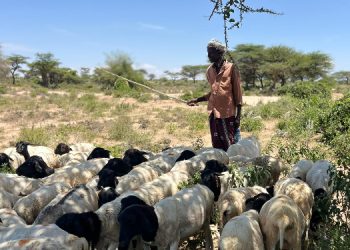
Conflict and drought led to the loss of 60 of their 80 goats, with 17 more dying during the journey to Arlaadi camp.
“We are in a bad situation,” Fadumo said. “There is no free water. We rely on neighbours for water and food. I cannot do manual labour due to a broken hand. We are now in a difficult situation such as we have never experienced before.”
Fadumo’s family left their village on foot, with relatives helping transport the children to the camp. She is desperate to return home, as she is unable to adapt to displacement and has no source of living.
The chairman of Arlaadi camp, Kuulow Isaaq Ibrahim, reported that the 53 newest families from various regions had arrived since December were receiving no assistance. The camp, home to a total of 257 families, lacks basic services like water, health, education, and shelter.
“These people have nothing and their situation is difficult. They need food, employment, and medical services. We are asking for help for these vulnerable people,” Kuulow said.
The chairman noted that the camp’s resources were stretched, with basic services unavailable. Two weeks ago, they provided treatment for 30 families in very poor condition. The camp’s school, attended by 120 children, has closed due to lack of funds, further devastating prospects for displaced families.