

(ERGO) – For three years, Omar Mohamud Ali, 60, and his family of six have lived in Biyo iyo Caano internal displacement camp in Mogadishu’s Kahda district, yearning for their old farming life back home in Lower Shabelle region.
Omar was a farmer for 15 years in Yaaqbariwayne in Lower Shabelle, where the family had a self-reliant livelihood and used to earn a significant profit each year from their agricultural produce.
However, relentless drought in southern Somalia eventually stripped Omar of everything – except the heavy burden of his unpaid debts. Still, despite the losses on the farm, their current life of mere survival in the city’s camps offers little to encourage them for the future.
“We are not used to the life in the city. Urban living is extremely hard. Allah is the one who bears our burden. Sometimes, my wife goes to Bakara Market hoping to find work like carrying loads or washing clothes. Most times, when she doesn’t find anything, she comes back on public transport with nothing,” he told Radio Ergo.
Omar grew vegetables and cereals in Lower Shabelle, harvesting twice a year. In 2020, he was hit twice by floods. Then he lost three consecutive crop cycles due to drought and one occasion when river water failed to reach his farm after planting, leaving him with a $500 debt for seeds and machinery. He still owes the money.
“I lost seven times in all. Once, the river water dried up. I tilled the land with a tractor but couldn’t afford to pay the tractor fees, which added to my debts. Then I borrowed money to plant again but couldn’t repay that either. Even water costs money, which I can’t afford, and my farm has now been abandoned,” he said.
In addition to poor crop yields, farmers in their area faced financial pressures from Al-Shabaab, who imposed unaffordable levies on them and made them feel insecure.
However, while Mogadishu may offer better security, he still longs for his farm that was once his family’s main source of income.
“If we received support, we would return home. Farming is what we know. We grew tomatoes and sold them for 300 Somali shillings per crate. With funding, we could revive the farm,” he said.
Omar’s family left their farm in 2021 as conditions in Lower Shabelle worsened. He intended to stay in Mogadishu only temporarily, but like many other displaced people has found it impossible to return home.
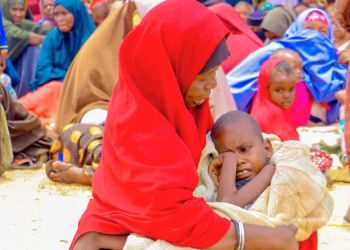
Recently arrived in Biyo iyo Caano camp is Sahro Mumin Hasan, a mother of nine, whose three-hectare farm in Hawadley, Middle Shabelle, was flooded by the river. All the vegetables on the farm that supported her family were destroyed leaving her no option but to move away.
Joining the IDP camp in June, she has been finding laundry jobs in Mogadishu to make ends meet for her family. When she can’t get a job she and her children are left without food, often sleeping on empty stomachs.
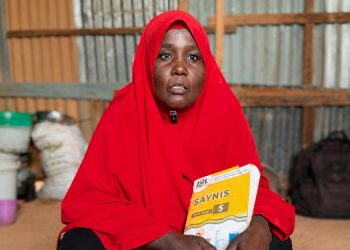
“Life as a farmer was better. I don’t understand city life and cannot adapt to it,” Sahro told Radio Ergo’s local reporter. “I search for small jobs all day, but they don’t significantly change my circumstances. As a farmer, I lived a comfortable and self-sufficient life. I want to return to my farm and rebuild it, but I lack the money and I cannot repay the debts I owe.”
Her husband, who lacks skills or education, is unemployed. Despite her best efforts as the sole provider for her family, they are constantly underfed and huddling in a flimsy shelter made of sticks and plastic sheets. On rainy nights, they often stay awake as the water pours in and soaks them.
Mosquito infestations in the camp are a constant worry and Sahro is concerned about her children’s vulnerability to malaria as they don’t even have bed nets.
Additionally, she has a $1,500 debt to traders back home in Hawadley, which she borrowed to invest in her farm before the floods destroyed her crops.
The businessmen are frequently demanding repayment, leaving her anxious and unable to plan for her family’s future. But she left her farm while it was under floodwater and expects nothing from it now.
One of the committee members for displaced people in Kahda district, Mohamed Nur Hasan, said that in 2024 so far Biyo iyo Caano camp had received 5,000 farming families fleeing their homes.
These families were displaced by a combination of floods, droughts, conflicts, and debts. Climate change had reduced their agricultural yields and most farmers lacked the knowledge to adapt to these changes.
“The camps are overwhelmed and cannot accommodate the growing number of displaced people. Essential services such as shelter, food, and water are extremely limited, further worsening their living conditions,” Mohamed said.
Most displaced farmers struggle to integrate into urban life as they lack the skills to secure alternative stable employment.