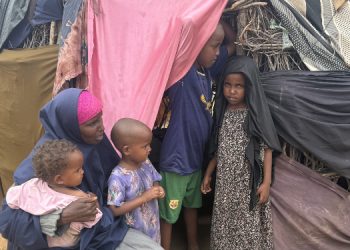


Rahma Aweys Ahmed, a displaced mother of 12 children, is among dozens of small traders whose roadside businesses have been closed as part of a Kismayo city beautification initiative by the local authorities.
Rahmo sold fresh produce, utensils, and other items from her stall, making $5-10 a day that paid for her family’s needs.
She and her children, who live in Badar-One IDP camp, are now living on the food she had on her stall. She kept the utensils and non-perishable items hoping to resume her business from home.
“When we were evicted I decided to start my business again in my house. I brought the shelves here and reconstructed them. I have reinvested the little money I had in this new shop. My children don’t get three meals a day at the moment, though, they only get food at night as we don’t cook before that,” she said.
Rahmo’s children couldn’t return to Tabyo primary and middle school after the holiday in September as she couldn’t raise the $15 for their fees.
“I am worried about the losses and the children need education. We are barely surviving. We are not getting income and it’s very worrying now that we have lost our business,” she said.
Rahmo, who is divorced from her husband, started her business three years ago with $50 that she had saved through a rotating saving scheme and built it up to support her family.
“I started by selling sweets, then I added fresh produce including tomatoes, potatoes and kale in one kilogram amounts. Then I added a quarter kilogram each of flour, rice and sugar. That is how I began,” she said.
Rahmo said she has appealed to the local authorities for a new plot of land to continue doing business, instead of retreating to the IDP camps and relying on aid handouts.
She and her family were displaced from Jilib, Middle Juba, in 2017, where their four-hectare farm was ruined by prolonged drought.
The 190 evicted traders are mostly IDP families from Badar-One and Badar-Two camps.
Trade was brisk along the busy roadsides but it is harder for them to earn a living in other areas away from traffic.
According to the head of social affairs in Kismayo city administration, Najib Barre Salad, the purge of small traders was aimed at restoring the beauty of the city and improving security.
“We know the people are vulnerable, but the roads are more important than everything else. We are requesting them to be patient and work with the workers repairing the roads. We want a beautiful Kismayo and one that can compete with other cities. We can achieve this by working collectively, both the people and the government,” he said.
However, he said there are no current plans to relocate these traders to a new site.
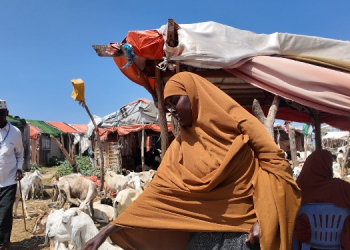
Habibo Nasib Ga’al, 42, also lost her roadside table where she sold firewood and livestock feeds. She earned $4-6 a day from her business that closed in July.
She now takes food on credit to feed her eight children just one cooked meal a day.
“When we had the business we were doing well, but now I don’t have money since our business has collapsed,” said Habibo.
She has some unsold firewood at home and hasn’t been able to pay her supplier since being kicked off the roadside.
“We have been evicted, donkeys and carts are not allowed to enter the city. I haven’t paid $11.5 to my supplier since I haven’t sold the firewood,” she said.
Two of her children have had to drop out of school.
Habibo and her family joined Badar-Two camp after being displaced from Barsugani district, where they lost their seven-hectare farm to prolonged drought.