Radio Ergo - Somali Humanitarian News and Information
  • Home
  • Topics
    • Latest Stories
    • IDPS/Refugees
    • Natural Disasters
    • Health
    • Social
    • Food Security
    • Education
    • Agriculture & Livestock
  • Programmes
    • Locust Programme
    • Farming Programme
    • Radio Doctor Programme
    • Women Programme
    • Entertainment Programme
  • About Radio Ergo
  • Contact Us
  • blankSomali
  • blankEnglish
No Result
View All Result
Radio Ergo - Somali Humanitarian News and Information
  • Home
  • Topics
    • Latest Stories
    • IDPS/Refugees
    • Natural Disasters
    • Health
    • Social
    • Food Security
    • Education
    • Agriculture & Livestock
  • Programmes
    • Locust Programme
    • Farming Programme
    • Radio Doctor Programme
    • Women Programme
    • Entertainment Programme
  • About Radio Ergo
  • Contact Us
  • blankSomali
  • blankEnglish
No Result
View All Result
Radio Ergo - Somali Humanitarian News and Information
Home AGRICULTURE & LIVESTOCK

Somali Region pastoralists selling off goats to buy water for their dwindling herds

Radio Ergo by Radio Ergo
October 10, 2023
in AGRICULTURE & LIVESTOCK, FOOD SECURITY, LATEST STORIES, NATURAL DISASTERS
0
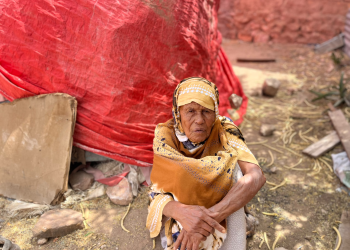
Displaced women in Gedo make good money in livestock market

A somali mother sells her livestock/File Photo/Ergo

0
SHARES
Share on FacebookShare on Twitter

(ERGO) – Residents in Bohol-Arus in Afdheer zone, Ethiopia’s Somali Region, are on the verge of losing their livestock and have been selling them off to buy water.

An estimated 500 families have had to buy water from trucks at $30 a barrel because the rain-fed ponds in the village have dried up.

Ahmed Hassan Mohamed, 37, told Radio Ergo that the crisis became extreme in mid-June.

“Bohol-Arus gets water delivered by trucks occasionally although we as families can’t afford it. Myself, I keep goats and am having to sell off one goat each time to buy water. I use the income for three or four days then it’s finished. I can’t keep up like this,” said Ahmed, fearing he could lose his entire herd at this rate.

He has sold off eight goat so far but there is no sign of an end to the water shortage is continuing. In August, he and others migrated to Gurajo village 13 kilometres away hoping to get water from a hand-dug well.

However, they returned to Bohol-Arus on 3 October as the water was running out and tensions were growing among all the pastoralists trying to access the well.

They returned to their area disappointed but cautious not to get caught up in conflict over water.

“This could be solved if we had a place with a water source, even a river. We don’t have the capacity to travel long distances. I don’t have other income to use to sustain my goats, so now I’m forced to stay in my area although it’s dry with no water and I have seven children to support,” he said in frustration.

Ahmed has 12 vulnerable goats and fears they might not survive the severe water shortage. He is also worried for his family’s survival if they lose their livestock, as they are short of food.

“Food has become scarce, we used to eat three meals but now we miss out on two meals. We cook beans whenever we can get them,” said Ahmed.

Ahmed has lost 97 goats over the past two years of drought and the family has been impoverished.

Another villager in Bohol-Arus, Abdullahi Mohamud Abdi, 40, has 15 goats that are too weak to walk far in search of water. They are too thin to sell and he is keeping them trying to avoid total loss of his family’s livestock and living.

“We are people living in the rural areas, we used up everything we had to get water, we don’t have a government to support us. There is just a small number of animals that have survived the drought,” he said.

Abdullahi said that since August he had sold off five goats to buy water for the rest of the herd. He and his wife and eight children mostly eat sorghum once a day.

“These few (goats) can’t bring us much income if sold. I don’t know where to run to now. I don’t have much. So it’s really a very hard situation if we don’t get God’s mercy, we just depend on God,” he said.

The local water pond which has the capacity of storing 1,000 barrels of water did not fill up during the poor ‘gu rainy season.

Abdullahi says he has lost 160 goats and 35 camels over the past three years.

An environmental scientist, Abdi Mahad Hassan, said the local pastoralists were unable to make plans to store fodder or water ahead of the drought. Having lived in Bohol-Arus, he says the government needs to support people in drilling boreholes.

“The people in the area have tried to drill boreholes but the water is about 30 metres down and they can’t dig that deep. It’s necessary to get drilling equipment from the government, that’s the only way to get water,” he said.
Previous Post

Hargeisa IDP families move to their own land in the city

Next Post

Radio Ergo audience feedback 5-11 January 2023

Related Posts

Airstrikes wipe out livelihoods in Lower Shabelle farming village
FOOD SECURITY

Airstrikes wipe out livelihoods in Lower Shabelle farming village

April 17, 2026
Somalia live news, Somalia latest news, Mogadishu live news, Somali news
FF Feedback

Radio Ergo audience feedback report 9-15 March 2026

April 17, 2026
Hard-up Awdal farmers turn to gold digging
FOOD SECURITY

Jobless men turn to gold mining in Sanag region

April 16, 2026
Marginalised families in Puntland displacement camps face hunger, discrimination and neglect
FOOD SECURITY

Selling thatching grass in Bari valley provides new income for drought-hit families

April 15, 2026
School closes as UNICEF cuts funding leaving IDP children in Baidoa out of education
EDUCATION

Schools close across Galmudug due to drought

April 14, 2026
Drought-hit Lower Juba pastoralists flee towards the Somali-Kenyan border
IDPS/REFUGEES

Drought-hit Lower Juba pastoralists flee towards the Somali-Kenyan border

April 13, 2026
Next Post
Somalia live news, Somalia latest news, Mogadishu live news, Somali news

Radio Ergo audience feedback 5-11 January 2023

FOLLOW US ON FACEBOOK

DAILY PROGRAMMES

IDAACADDA 17-APR-2026

IDAACADDA 17-APR-2026 by Radio Ergo

IDAACADDA 17-APR-2026
Episode play icon
IDAACADDA 17-APR-2026
April 17, 2026
Episode play icon
IDAACADDA 16-APR-2026
April 16, 2026
Episode play icon
IDAACADDA 15-APR-2026
April 15, 2026
Episode play icon
IDAACADDA 14-APR-2026
April 14, 2026
Episode play icon
IDAACADDA 13-APR-2026
April 13, 2026
Search Results placeholder
Radio Ergo Weekly Newsletter
We respect your privacy.
blank
blank
blank

© Copyright 2014 - 2024 Radio Ergo

No Result
View All Result
  • Home
  • Topics
    • Latest Stories
    • IDPS/Refugees
    • Natural Disasters
    • Health
    • Social
    • Food Security
    • Education
    • Agriculture & Livestock
  • Programmes
    • Locust Programme
    • Farming Programme
    • Radio Doctor Programme
    • Women Programme
    • Entertainment Programme
  • About Radio Ergo
  • Contact Us
  • blankSomali
  • blankEnglish

© Copyright 2014 - 2024 Radio Ergo