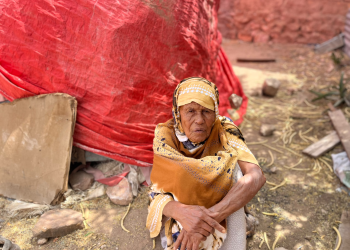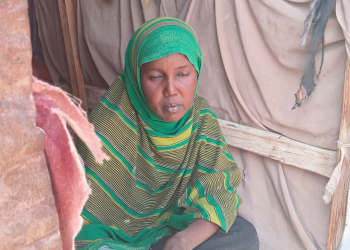


(ERGO) – Ibado Liban Guled is happy that her family is now living in their own house after 12 years of hardship living in the squalid Nasa-Hablod B camp in the Somaliland capital, Hargeisa.
They were pastoralists in Dabagoriyale village south of Hargeisa until drought in 2011 wiped out their 80 goats and moved to the camp in Hargeisa, using free transport to the urban areas offered at that time to drought victims by the local authority.
They are among 650 displaced families from the camp allocated land in various sites across the city by Hargeisa municipal council.
“Now I have property and I own it independently! Before I would get very worried and life was difficult. We still have some small things to work on, but we’ve already got the bigger things now,” Ibado said.
Her husband is the family’s breadwinner, earning $4-6 a day working as a porter.
“There is nothing that we don’t have, we are now thinking of our long term growth and building a permanent house. When we moved here we were told to work, and we are working!” she said.
Ibado says they have already built themselves an iron-sheet house and toilet on their 12 square metre plot of land, thanks to her sister’s gift of $150.
The IDP camp was on land owned by private citizens, who only allowed them to set up temporary structures, so there were not even any proper toilets. The eviction notices they received used to cause her family great anxiety as they had nowhere else to go.
“Where will you go? And when will we be evicted? That was my constant worry when I was living in the camp, but we no longer worry now. There were several fire outbreaks, we couldn’t even get a good sleep in the camp,” she said.
She said the government gave them free water in July and August when they first moved to their new land, but then the water stopped. They now have access to water but pay city prices of $1.5 a barrel.
Milgo Mohamed Mohamud also relocated from the IDP camp to the city after her family received a piece of land. She described the camp they moved out of as a prison.
“There is a huge difference between our lives now and before. Before life was too hard. We were always worried for our children whenever they left the house, but now we thank God we are doing better,” she said.
With no latrines in the camp, she used to worry whenever her three daughters walked into the bush at night to go to the toilet. They now live with four other families in a compound with shared toilets.
Milgo’s family of 10 children lost their belongings in two fire outbreaks in the overcrowded Nasa-Hablod camp in 2019 and 2020.
“We were asleep at night when fire broke out. We lost everything we owned,” she said, recalling one of the fires.
“We ran for safety without clothes, there was no worse calamity for us than that. I can never forget the two women whose bodies were recovered in the fire totally charred. We were faced with all kinds of hardship,” she said.
Milgo never thought they would own land in Hargeisa, but she and her family now live in a two room house made of iron-sheets that they invested $450 to build.
They no longer worry about food and water. Her husband is a construction worker and earns $15 for jobs. She said he got called up 17 times in the past two months. They can pay $13 for the five oldest of their eight children’s primary school fees.
Milgo’s family were displaced in 2011 after losing 10 camels and 70 goats in Abdaal village, 90 kilometres from Hargeisa.
The director of disaster management at Hargeisa municipal council, Ali Mohamed Noor, said they allocated these families new land in Hargeisa after they had endured years in the camp with few amenities.
“The local government offers services, some of our services include helping the vulnerable people. The IDPs include some who come from the rural areas and some who have been living in the cities. These people are no longer IDPs, they are part of the residents with land ownership. They get all the rights that the other people get,” he said.
However, most IDPs have not resettlement of funds to restart their lives. The average one-room rent in Hargeisa of $40-100 is beyond their means.