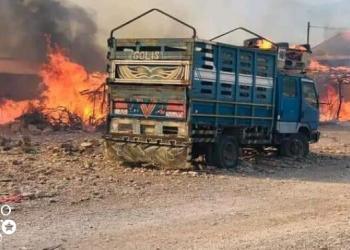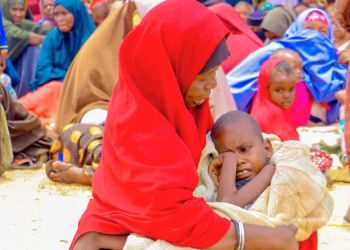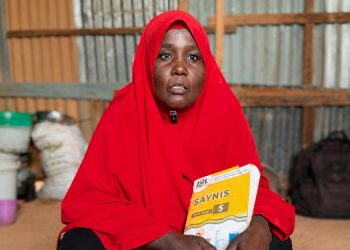


(ERGO) – Mursal Nur Mire, a pastoralist in central Somalia’s Mudug region, is fearful of losing his family’s last remaining 90 goats and five camels, after drought and a critical water shortage have returned to his village in June.
His family have suffered terrible losses in the past few weeks. Mursal, his son, and his mother owned a combined total of 550 goats and have lost 325 of them between the beginning of June and 15 August.
In addition, 20 of the family’s camels have died in the same period in Jehdin village, 20 kilometres from Galkayo.
“Our needs are mounting. Our wealth is being destroyed by the water shortage and our livelihood is diminishing. We can’t travel to other areas as we don’t have vehicles to travel. We will soon have to go to the IDP camps due to the water shortage,” a despairing Mursal told Radio Ergo’s local reporter.
Jehdin area received rainfall during the recent Gu season from April and the livestock were getting water and some grazing. However, the rain stopped at the end of May and the grazing quickly disappeared. In addition, the water available in the local well has been rendered undrinkable by humans or animals due to heavy mineral contamination.
The family has been buying a costly barrel of water on credit every week from commercial truckers from Galkayo. The businessmen demand $7-8 a barrel, claiming costs are high as the terrible dirt road to the village causes frequent breakdowns of vehicles.
Mursal, a father of seven, has accumulated a total of $2,600 in loans from business people in Galkayo. He took 12 kilograms each of flour, rice and sugar on credit at the beginning of July but that has now run out.
Seeing his livelihood dwindling in front of him, he feels under pressure to pay back the water seller.
“I have taken huge loans and it’s past the time I agreed to pay the money. He asks me every time to send the money. The water scarcity has led to livestock dying, and the people are at risk, there’s no water around here and there’s constant thirst. We are tired looking for water,” Mursal told Radio Ergo’s local reporter.
The family’s remaining livestock are too thin to be sold in the market and they have no other source of income.
Another pastoralist in Jehdin, Aydid Isse Botan, has lost 30 goats from his herd of 70. He tried to migrate with them to other areas to seek water but the feeble animals could not walk the journey in the current conditions.
“The livestock haven’t had water for two months and they are weak. There’s not been fodder or water, so we are in this harsh situation, some people are just like me and others are worse,” he said.
He has grouped together with his relatives to set up a plastic-lined shallow trough where they hold water for their livestock to drink. Together they have taken $1,100 loans in food and water for their families and livestock.
Aydid’s family of nine children received some food from their relatives in Galkayo on 20 June but he is afraid this will run out soon.
“If there’s no change to our current situation, we might not continue living. This place is risky. We don’t have anything! We’re just holding on to these goats but we don’t have anything else that can provide us a livelihood. If there was water our situation could have got better but now we don’t get anything,” he said.
Around 1,500 pastoralist families in Jehdin are critically affected by the return of the harsh drought conditions since May. The well in the village is among 11 in Galmudug state where the water has turned sour due to contamination.
A study by the state ministry of water and land resources concluded that recurrent drought had contributed to the buildup of minerals in the water. The well in Jehdin was dug two years ago and at first provided clean water, but this year the water changed.
The deputy commissioner of Jehdin, Bashir Hussein Mohamud, said families were facing severe water shortage. If they lost all their livestock they could face famine as they depended on the animals for survival.
He said the authority had no capacity to address the situation but in the last two months had requested aid organisations and Galmudug administration to help them improve people’s access to water.
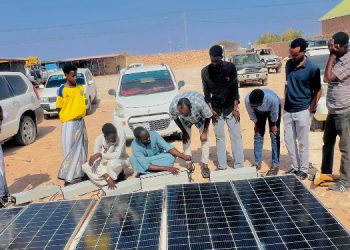
“We are requesting that a well be drilled in this area, we have the wealth [livestock] and we have a solar system and we need the well as soon as possible. We need the diaspora, business people and elders to give us priority and not treat us like the other people,” the village commissioner appealed.