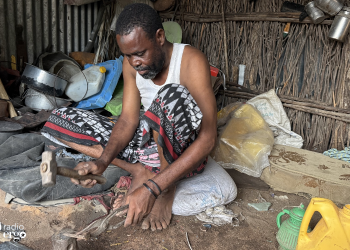
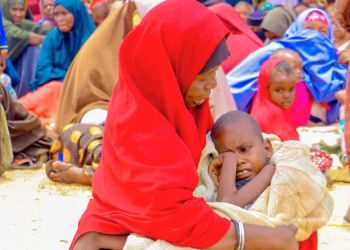
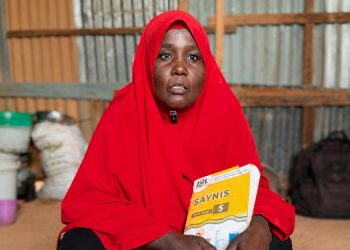
(ERGO) – The lives of Isse Abdirahman Muse’s and his family of 10 people have been thrown into precarity since flash floods in May washed away their house and farm, leaving them homeless and short of food.
He is among the 3,000 farmers living in eight villages in Ufayn district, northern Somalia’s Bari region, who have been counting crop losses caused by the floods. These farmers had planted their seeds between March and April and were planning to reap their produce in June.
Isse lost various types of vegetables and fruit on his three hectare farm outside Ufayn, including tomatoes, spinach, pepper, melons, oranges, papayas, guavas, and bananas.
“Our whole lives have been affected. When you work somewhere, you get the money you need to support your family, but when you lose the income you’re faced with problems. Our income reduced significantly and when the farm flooded we had to start all over again. I’m someone who had some property in the past but lost his wealth,” Isse said.
His farm had been dry and bare for a long time due to the prolonged drought and water shortage. He had no income during that period and relied on loans.
Local business people have now stopped offering him food on credit and are asking him to pay back what he owes. He has already taken $700 worth of food and household goods on credit and has a loan of $600 to pay back for the inputs to his farm.
Isse has 12 kilos of flour, rice, and sugar from his brother in Ufayn that the family uses to cook once a day. The food will last for about two more weeks.
“Our situation has been getting worse, only God can lift us from these hard moments, we can’t do much. We will remain patient and hopefully recover afterwards,” he said stoically.
Isse’s family has been sleeping under a tree covered with pieces of cloth, giving scant protection from the cold nights and sunny days.
The floods washed away the fertile top layer of soil on the farmland. It will take a lot of manual work to remove all the small stones and to fill in the holes before planting again.
However, on 25 June he laid off his three workers as he was unable to pay their wages of $150 each.
“A worker is hired for pay and if you don’t have anything to pay them, how can you ask them to work for you? I owe them money but can’t pay it. All the medicine, food, and everything else we have bought needs to be paid for. When it is possible to pay, we will pay,” he said.
Isse said he has no other skills to earn a living and has never experienced such a loss since he started farming nine years ago.
Another farmer in Gara’ village, Abdi Jama Abdi, lost all the vegetables he was growing on his two-hectare farm in the flash flooding in May. His hopes for a $3,000 profit from the sale of his produce have been dashed.
“I was self-sufficient but now our crops have disappeared and our situation has changed. My family depend on the crops but we don’t have anything now. That is our situation, we don’t have funds to change our situation,” he said.
Abdi’s family of 11 children are living off food he buys on credit from a relative owning a store in Ufayn. He is worried about how to repay his $1,700 debt.
Three water wells on his farm were buried under sand and silt deposited by the floods. The water pipes and two generators were also damaged. Farm animals now graze on his unfenced farmland.
The chairman of the farmers’ cooperative in Bari region, Saeed Abdi Salah, said the farmers had been struggling to recover from the drought and had not expected these floods. He said their plight could be lessened if they received some aid.
“If they got help in their areas, and they got their water wells and generators restored, they would have been better off. The people in all these areas are in similar condition and all we can do now is to call for help,” he said.
The cooperative does not have the capacity to assist but has sent requests to aid organisations and Puntland’s ministry of agriculture for help.