After the first good harvest in four years, farmers in the besieged southern Somali town of Hudur in Bakool region are now busy ferrying fresh produce grown on their farms to sell in the local market.
Daud Mohamed Kheyr has been harvesting up to 10 sacks of fresh vegetables a day from his four-hectare farm. He loads the sacks onto his motorbike to sell to small retailers in the market.
“I’m growing various crops including onions, lettuce, spinach, pumpkins, lemons, and guava. We take them to the market every morning.
My family’s life has really improved as we can eat some of the food and sell the rest,” Daud told Radio Ergo.
He is making $25-$30 a day from the sales and with that income his family of 20 people has been able to increase their consumption from two to three meals a day.
Life has been tough for residents of this town, where fresh food had to be smuggled in from Baidoa and Beledweyne at high prices as the local farms had failed due to drought.
Daud said that last year at the height of the drought he tried to irrigate his farm with water he would transport from distant wells using his motorbike. But he was not able to transport enough water and the crops all failed.
After recent rainfall, the two wells on Daud’s land have now filled up with water. He says he will not have to worry about water scarcity for the year ahead.
“In the past few years even the wells ran out of water. Now we have enough water as the wells have been replenished. When it rains, the farm doesn’t need that much extra water but we can now be sure that there is water in the wells when we need it,” he said.
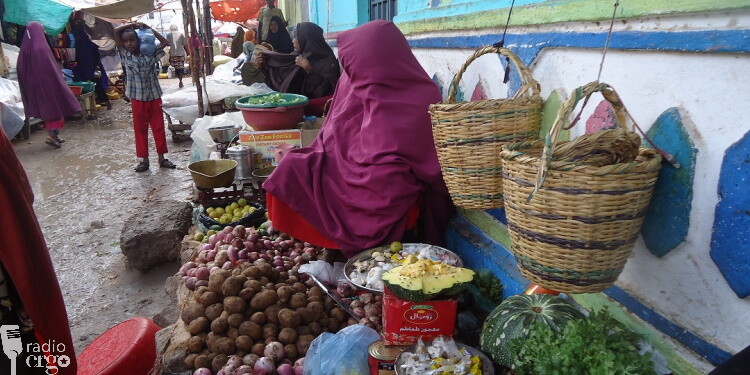
With plentiful fresh produce now available locally at good prices, small retailers like Fatima Hassan Mohamed have been enjoying a boost to their businesses.
The sale of fresh produce is dominated by women like her, who work hard to support their families.
“We are getting all kinds of vegetables and we’re doing much better than before. Previously, you couldn’t buy vegetables but now the farms in the area have flourished and things are cheaper. Financially I am doing very well getting $10-12 a day for my household,” Fatima said.
Potatoes are still scarce as local farmers did not manage to access the seeds. Other commodities too remain expensive due to the town’s state of siege imposed by Al-Shabaab militants controlling the rural outskirts.
Fatima, a mother of eight, said she had been spending $150 on supplies ordered from other regions that often went rotten on the long, slow journey to Hudur. Now she can stock up on supplies locally for just $50 a month.
Fatima’s income is vital for the family, as her husband works on construction sites where there are few jobs.
“All my eight children are in school now. Our business is still struggling and we are trying to feed the children and educate them, but we are getting by now,” she said.
The reduction in prices of fresh vegetables is a blessing for local householders like mother of 10, Safiyo Maallin Ali. She said her food bill had gone down to three dollars a day on vegetables from being more than double during the last three years of drought.
“Vegetables are now 100% better. This year, God has relieved us of our struggles, especially the lack of water. Pumpkins, tomatoes, lettuce – we are getting all kinds of vegetables from the market now,” said Safiyo, who makes a living doing laundry jobs in town.