

(ERGO) – Hundreds of pastoralist families who migrated to Ooman village, just east of Galkayo, have been stuck there for a year facing shortages of water and livestock fodder and food.
Ibado Ali Salad, 37, said she and her family migrated to Ooman from Hajubi-Sufi village in Mudug region, about 50 kilometres away, looking for vital resources to keep their livestock and livelihood going, but their hopes were dashed.
A barrel of water is delivered by commercial tankers and sold to people in Ooman at $3 due to high transport costs. As most families cannot afford that amount, Ibado walks with other women the two kilometres to the nearest borehole to buy water at $1 and carry it back.
The water borehole was constructed by Direct Aid Kuwait. Although the water is technically free, they have to pay the locals running the generators a dollar to access the water.
“The water doesn’t last long. We keep going to fetch more because we need to bathe and do other things. For a year, this is how we have been getting water,” Ibado complained.
The trucks have refused to deliver water to us anymore as we haven’t paid them and they refuse to operate on credit.”
Ibado and her husband used to have 100 goats but they are now left with 40 feeble animals. They are too thin to sell so the family has no income. She is constantly worried about food and water for her eight children. Her husband used to earn an income on construction sites but had to quit after developing a back injury.
“My husband doesn’t work now although even when he worked he didn’t earn much. He got about $4 on a good day. He had severe pains and our relatives helped him go to Mogadishu for treatment, where he had back surgery and since then has been off all work,” she said.
As Ibado has no job either, whenever they need food she contacts her relatives to help them. She has already taken food and water on credit and her debts have risen to $300.
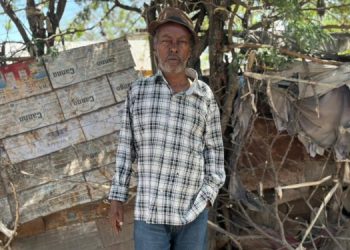
Also in a similar predicament is Abdirisak Hashi, 29, a father of three, who arrived in Ooman six months ago with his family from Lama-aramdur village in Mudug. However, conditions were little better in Ooman than where they had left. He used to own 100 goats and has only 20 left.
“There are no food or cash distributions by aid organisations. Personally I depend on my relatives for help, I call out to them when the situation gets hard and that’s when they send us something,” he said.
According to the deputy commissioner of Ooman, Mohamed Ali Salad, besides the food and water shortage, these families face lack of health care.
He noted that if someone falls sick, the nearest treatment or medicine they could access is 10 kilometres away in Qarsoni village. People mostly have to travel 45 kilometres to Galkayo for anything more serious.