

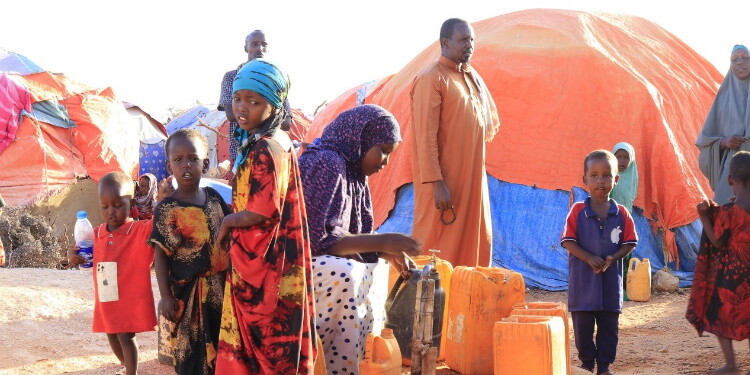
(ERGO) – Piped water installed by a local firm in four camps in Adado, central Somalia, has brought water and relief to 3,600 displaced families who fled conflict and drought.
Fadumo Hassan Weheliye, a mother of eight, said her family can now cover their needs.
“We are thankful for this water! We can now bathe with the water, and wash clothes and other things. The only thing we don’t have is storage facilities, but our life has really improved. We can drink and use water for cooking, which is such a relief,” she said.
There are six stations for accessing water in the camps piped from Hogol borehole, two kilometres away, named after the borehole drilling company that installed the pipes and taps.
People had been putting their shillings together to hire vehicles to bring water, and sometimes spending hours waiting for their share.
“We had to hire vehicles to bring water, and you can imagine how much water each family could get. It was never enough, we couldn’t get enough water for cleaning or cooking tea,” she said.
Fadumo and her children live in a small shack in Harardhere camp. The water is a blessing although they still worry about their shelter and food. This single mother goes out every morning to seek laundry jobs that at most earns her $5 if she finds any work.
Fadumo and her family were displaced from southern Mudug during the Somali government’s offensive against Al-Shabab. She abandoned her 80 goats in the village and escaped with her young children. Her husband was killed earlier in an explosion carried out by Al-Shabab in Qayib, Galgadud.
For Jamad Mohamed Ali, a mother of eight, getting 40-50 litres of water a day from the standpoint in Masamage camp means she no longer has to carry heavy loads whilst pregnant.
“Water was a big issue, we would go to town and knock on people’s door to beg for water, they would give us some we knocked for a long time. The piped water has lifted a big burden from us,” she said.
Jamad received $84 a month from Care International for October to December to buy food. Now that the aid has ended, she has to ask neighbours for help. She left her 60 goats in Kamasle village in Galgadud when conflict broke out.
“We left everything behind and we don’t know where our goats are. It has been three months since we joined the camp,” she said.
Hogol’s manager, Dahir Abdulle Hassan, told Radio Ergo they installed water pipes in December in Harardhere, Marsamage, Kaambari and Daryel camps as they saw the IDPs could not afford the prices of water in town.
“Our company is not very big, but we thought that we would continue providing free water until the situation changes or they get help,” he said. “We hope to continue supporting these families until the situation changes, we will not just cut off the water.”
He said Hogol plans to increase the number of taps to reduce the queues to access the water.