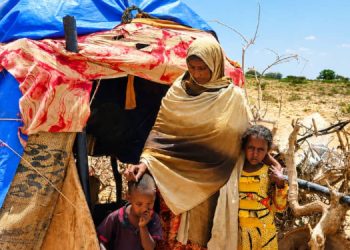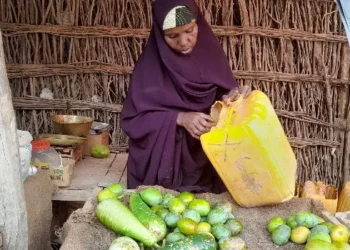


(ERGO) – It has been a harsh introduction to the Somali capital for Asha Barre Ahmed, a widow who left Bay region with her three children when drought and insecurity finally made life in their village of Rahole impossible.
After walking for seven hours and finding a lift with a passing vehicle in Dinsor, they arrived in Filibin camp in Mogadishu’s Garabasley district on 29 October to find absolutely no aid.
“We have been in Mogadishu for about 10 days. We are depending on the people in the camp, we don’t have anything. Just last night we slept hungry and you can imagine there was barely any sleep that night. We don’t have clothes and we share a small hut with other people, during the day we rest under the trees,” Asha told Radio Ergo’s local reporter.
“I tell myself this is the capital of Somalia. There is the government and aid organisations and surely we could get help given our situation.”
Within the last three years, she lost all her 170 goats and 40 cows in Rahole due to drought and the crops on her two-hectare farm failed. The upsurge in conflict clinched her decision to leave.
Her husband left some years earlier, travelling to Libya hoping to get to Europe in search of a better life, as he observed the increasingly harsh strictures imposed by Al-Shabab control in their village. But he drowned in a well-publicised tragedy at sea, leaving her widowed.
“He was one the people who died in the sea in 2016 after their boat capsized. We were informed by one of the neighbours who also went on that trip,” said Asha, worried now how she will look after her children alone in a squalid camp in the capital.
In recent weeks, there has been a huge influx into Filibin camp of about 150 families in situations as desperate as Asha’s, fleeing conflict, drought, and poverty in Bay, Lower Shabelle, and Hiran regions. They left rural livelihoods that once gave them independence but have found nothing in Mogadishu to help them back on their feet.
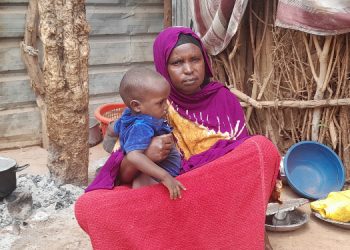
Dahiro Mohamed Abdi, 58, and her seven children recently joined the camp from Kunta-warey village in Lower Shabelle. She earns a meagre dollar or two washing clothes for households in Mogadishu. Having had a tumour in her neck removed in surgery four months ago, she has to take painkillers to continue the demanding work.
“We cook at night and eat the same food leftover the following morning. We struggle to just get those two meals a day. Unlike the older people, children can’t stay without food,” she said. She and the children are living in a small hut in the camp that offers scant shelter from rainfall.
They finally abandoned the village when food stocks from their last good harvest at the end of 2021 ran out. The drought killed Dahiro’s 40 cows and meant nothing would grow on her one-hectare farm. Uncertainty and insecurity left her little choice than to move.
According to Nasro Farah, the leader of Filibin camp, around 50 families had been living in the camp for some years. Their number has been swollen dramatically by the newcomers, mostly women and children who walked long distances to get there. She says the conditions are harsh.
“If someone joins a camp they don’t know and doesn’t have a job, it’s very hard. They also have children to look after and they need what every other person needs,” she told Radio Ergo.
The camp has no access to water or health services. People have to buy 40 litres of water for 4,000 Somali shillings from a well three kilometres away. There is just one toilet that has already clogged up from overuse and lack of maintenance.
Nasro said she feared that more desperate families would be arriving in the coming days, heightening the risk of outbreaks of disease as well as the challenges of hunger and shelter.