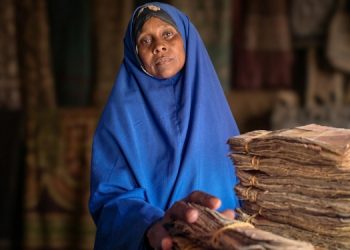


Somali grandmother Anab Hussein Mohamed, 54, is desperate to find food and shelter for her family including her six children and two malnourished young grandchildren.
The family was displaced from Aato in southern Somalia’s Bakool region in August due to a devastating combination of the drought, conflict, and food shortages with high prices.
They are now living in Qurdubey camp in Dollow, in neighbouring Gedo region, and getting only occasional meals from other struggling IDP families in the camp.
“The last time we got food was the night before last. We don’t cook any food, besides what we get from other families you will not see food in our house,” said Anab, cradling her tiny sick granddaughter in her lap.
The settlement has no health facilities or feeding programmes and Radio Ergo’s local reporter who visited the site noted that many children appear malnourished.
“We are not expecting any aid now. There is nothing we have got until now. We don’t have water, we sometimes get it from the river and women carry the water on their backs,” said Anab.
The family had to trek for five days to reach the camp. They lost 225 goats and 42 camels in their village and after the last of their livestock perished, Anab tried to make a living selling firewood.
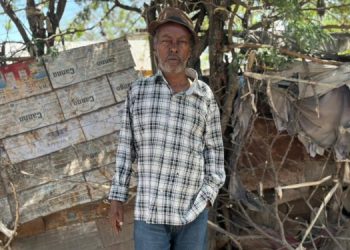
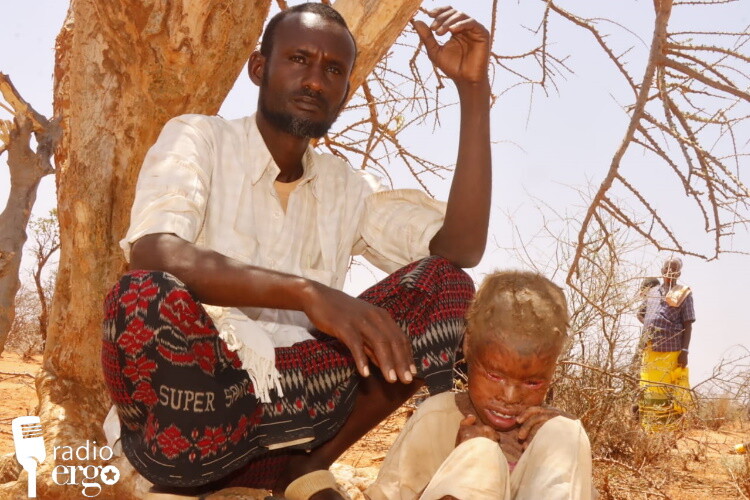
Among the many families in Qurdubey sheltering under trees or bushes strung with pieces of cloth is Nur Abdullahi Alaale, the father of six-year-old Hashim who has albinism.
Radio Ergo’s correspondent saw how Hashim’s face and body had been burnt raw by the harsh sun, leaving him in pain and distress. Hashim was also too weak to move around. His father said their situation had become unbearable due to the extreme weather patterns.
“He used to get nutritious fat and healthy food from the livestock. Now we don’t have any livestock and we are all living in the same perilous situation. The worst thing for him is the lack of proper shelter from the sun,” said Nur.
Shortly after our reporter’s visit to the camp, Radio Ergo was informed that well-wishers had put forward $300 to admit Hashim to a nearby hospital for treatment.
Nur and his family were pastoralists in Yeed village in Bakool and migrated at the end of August after losing all their 200 goats and 80 cows. Like others from his area, they have no source of income and rely on other families in the camp for food.
“We don’t have food. We don’t have savings and the last time we ate was the previous night when we shared a quarter kilo of rice,” said Nur, who added that they had not received any aid since joining the camp.
An estimated 5,000 families displaced from Yeed, Aato and Washaqo in Bakool following conflict that erupted there in July are living Qurdubey.
Abdirahman Falir Omar, an official in the office of Somalia’s special envoy on drought, was visiting the area making a follow-up after the earlier visit by the envoy. He told Radio Ergo they had noted the stark shortages of food, water and shelter, as well as the fact that families have no means of transporting water back to the camp from the river two kilometres away.