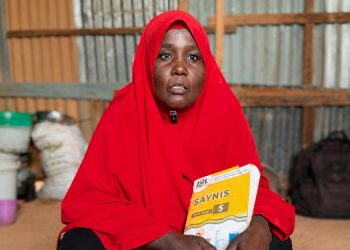


(ERGO) – Deko Ali Osman, a 50-year-old widow in Puntland, has suffered from almost every crisis that has beset Somalia over the past two years, including drought, locusts, displacement, and loss of livelihood.
She and her eight children have been living in a room offered by a relative in Badan town, Sanag region, since August 2020. The host family is also struggling in the harsh economic times and Deka is only able to cook one meal a day, which she divides for lunch and breakfast.
“We depend on donations from well-wishers. The family of the relative who helped us with this room doesn’t look down at us. When their father goes to work, we all share what he earned that day as one family,” said Deko.
Residents of Badan store rainwater in tanks because the area has no wells. However, the last rainfall was poor, and the stored water ran out in December. Those how can afford $5 a barrel buy water from commercial delivery truck coming from Yalho, 30 kilometres from Bosaso.
The last time Deka bought two barrels of water she relied on $10 sent by her sister in Bosaso.
Once, the family was self-sufficient, but Deko’s husband, who was the sole breadwinner, died last year. He left nothing behind for the family, as their entire herd of 50 goats had been wiped out by the drought in 2017.
After that, the family went to live with an uncle, who was a farmer in Mashhaleed, Las Khorey, in Sanag. But in 2019, the first wave of desert locusts invaded the area, destroying all their crops and vegetables. The uncle also died in 2020.
This left Deko no choice but to move with the children into a IDP camp near Badan, where they stayed for some time in miserable circumstances until she was offered the room where they currently stay.
Deko called Radio Ergo’s audience feedback platform in February 2021 and shared her full story with a Radio Ergo reporter.
She invested $50 given to her by the children’s grandfather last September to set up a small vegetable stall in Badan, hoping to be able to escape the snare of poverty and growing dependency. But the collapse of the Somali shilling, which led to huge depreciation of the local currency and a refusal by businesses to accept shillings as cash, forced her to close down after just three months.
Deko had been hoping that the small amount she could make from the stall could support her children’s basic daily needs, without having to rely on others.
“I owe $150 to the women I used to buy the vegetables from, since I was forced to close down the business without selling the last goods I bought on credit,” she said.