Radio Ergo - Somali Humanitarian News and Information
  • Home
  • Topics
    • Latest Stories
    • IDPS/Refugees
    • Natural Disasters
    • Health
    • Social
    • Food Security
    • Education
    • Agriculture & Livestock
  • Programmes
    • Locust Programme
    • Farming Programme
    • Radio Doctor Programme
    • Women Programme
    • Entertainment Programme
  • About Radio Ergo
  • Contact Us
  • blankSomali
  • blankEnglish
No Result
View All Result
Radio Ergo - Somali Humanitarian News and Information
  • Home
  • Topics
    • Latest Stories
    • IDPS/Refugees
    • Natural Disasters
    • Health
    • Social
    • Food Security
    • Education
    • Agriculture & Livestock
  • Programmes
    • Locust Programme
    • Farming Programme
    • Radio Doctor Programme
    • Women Programme
    • Entertainment Programme
  • About Radio Ergo
  • Contact Us
  • blankSomali
  • blankEnglish
No Result
View All Result
Radio Ergo - Somali Humanitarian News and Information
Home AGRICULTURE & LIVESTOCK

Somali pastoralists invest in wire fencing for animals to avoid cutting trees

Radio Ergo by Radio Ergo
September 18, 2020
in AGRICULTURE & LIVESTOCK, LATEST STORIES, SOCIAL
0
Somali pastoralists invest in wire fencing for animals to avoid cutting trees
0
SHARES
Share on FacebookShare on Twitter

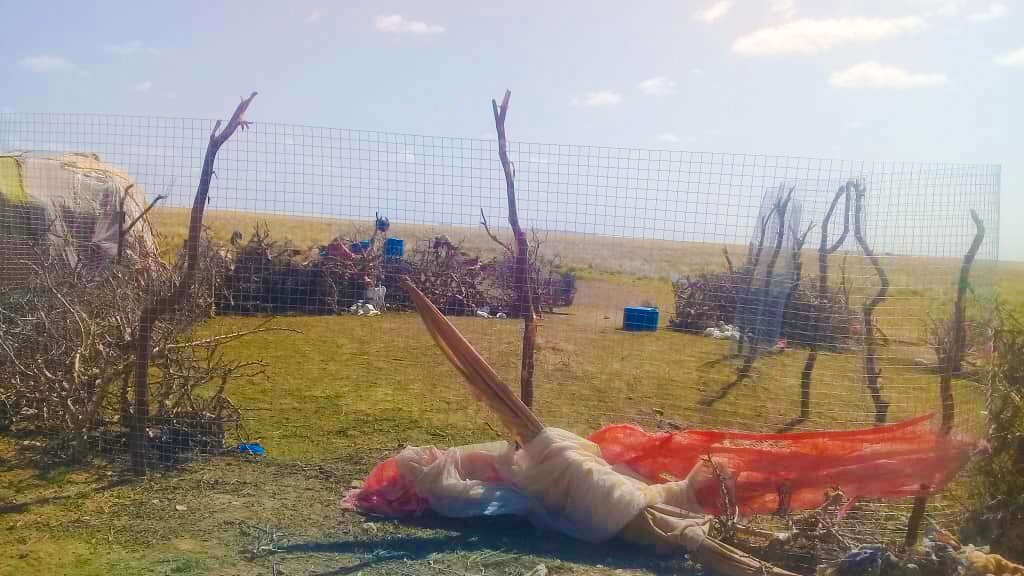
(ERGO) – Pastoralists in the northern Somali region of Sool have started using wire fencing to corral their animals to avoid cutting down endangered indigenous thorn trees.

For about the cost of a goat, which is $70 to $80, they are investing in steel fencing wire to make an animal pen that can simply be rolled up and carried when they move away in search of water and grazing.

Khadar Salah Mahamud, a herder in Himidka, 90 km north of Lasanod, told Radio Ergo they switched to wire fencing after seeing the adverse effects of tree-cutting on the environment on which their livelihoods depend.

“We realised that our grazing lands were becoming barren due to the relentless cutting of both the small and large trees. A family would likely cut up to 100 trees just to build an enclosure for their herd,” he told Radio Ergo.

He continued: “Apart from saving the trees, the fences have saved the families the hassle of building enclosures. They can easily roll up the fencing and move with it. Also, unlike the thorn bush fences, the wire fences don’t have thorns that prick the animals.”

Khadar, a father of six, keeps 180 goats. He bought wire fencing four months ago for $80. He estimates that 120 pastoralists like him living in the vicinity of 40 square kilometres, in Himidka, Banadde and Buranod areas, have caught on to the idea.

Hassan Yusuf Diriye, father of 13 and a pastoralist living in Buranod, 85 km north of Lasanod, told Radio Ergo that he was one of the first people to stand up to protect the trees. He has been encouraging others to follow his example.

Hassan believes trees are vital to the local environment and the sustainability of the pastoralist way of life that has suffered setbacks from repetitive harsh droughts in recent years.

“The animals appear more comfortable with the wire fencing,” he declared. “It protects them from the hyenas which were getting through the thorn bush, and it saves the trees that they depend on as fodder.

Already we see many trees coming back to the area.”

Hassan cautioned that many types of trees that used to be common, like Acacia and other thorn varieties, are now becoming rare. He and others have been engaged in efforts to protect trees for nearly a year and have already seen success, as some of the trees are growing back.

Jama Ahmed Du’ale, an environment expert and professor at Nugal University in Lasanod, welcomed the pastoralist’s effort and initiative to protect the trees.

“Trees are living beings, just like people and animals; they are indeed essential to our ecosystem. So I really commend the steps the pastoralists in this region have taken. They ought to be congratulated for their efforts to safeguard our environment and protect what is left of our trees,” he said.

Previous Post

Radio Ergo feedback report and analysis, 9-13 September 2020

Next Post

New livestock market in central Somalia boosts trade

Related Posts

blank
AGRICULTURE & LIVESTOCK

Farmers in Bay region suffer crop losses due to pests and disease

June 4, 2026
Silent disease diabetes takes toll on families in Somaliland
FOOD SECURITY

Silent disease diabetes takes toll on families in Somaliland

June 3, 2026
Teachers jobless as Baidoa IDP schools close due to funding cuts
EDUCATION

Teachers jobless as Baidoa IDP schools close due to funding cuts

May 22, 2026
Somalia live news, Somalia latest news, Mogadishu live news, Somali news
FF Feedback

Radio Ergo audience feedback report 14-20 May 2026

May 21, 2026
Young Somali refugees in Dadaab invest in family-supporting businesses
FOOD SECURITY

Young Somali refugees in Dadaab invest in family-supporting businesses

May 20, 2026
blank
AGRICULTURE & LIVESTOCK

Livelihoods support aids displaced households in Middle Shabelle

May 18, 2026
Next Post
blank

New livestock market in central Somalia boosts trade

FOLLOW US ON FACEBOOK

DAILY PROGRAMMES

IDAACADDA 05-JUN-2026

IDAACADDA 05-JUN-2026 by Radio Ergo

IDAACADDA 05-JUN-2026
Episode play icon
IDAACADDA 05-JUN-2026
June 5, 2026
Episode play icon
IDAACADDA 04-JUN-2026
June 4, 2026
Episode play icon
IDAACADDA 03-JUN-2026
June 4, 2026
Episode play icon
IDAACADDA 02-JUN-2026
June 2, 2026
Episode play icon
IDAACADDA 01-JUN-2026
June 1, 2026
Search Results placeholder
Radio Ergo Weekly Newsletter
We respect your privacy.
blank
blank
blank

© Copyright 2014 - 2024 Radio Ergo

No Result
View All Result
  • Home
  • Topics
    • Latest Stories
    • IDPS/Refugees
    • Natural Disasters
    • Health
    • Social
    • Food Security
    • Education
    • Agriculture & Livestock
  • Programmes
    • Locust Programme
    • Farming Programme
    • Radio Doctor Programme
    • Women Programme
    • Entertainment Programme
  • About Radio Ergo
  • Contact Us
  • blankSomali
  • blankEnglish

© Copyright 2014 - 2024 Radio Ergo