Radio Ergo - Somali Humanitarian News and Information
  • Home
  • Topics
    • Latest Stories
    • IDPS/Refugees
    • Natural Disasters
    • Health
    • Social
    • Food Security
    • Education
    • Agriculture & Livestock
  • Programmes
    • Locust Programme
    • Farming Programme
    • Radio Doctor Programme
    • Women Programme
    • Entertainment Programme
  • About Radio Ergo
  • Contact Us
  • blankSomali
  • blankEnglish
No Result
View All Result
Radio Ergo - Somali Humanitarian News and Information
  • Home
  • Topics
    • Latest Stories
    • IDPS/Refugees
    • Natural Disasters
    • Health
    • Social
    • Food Security
    • Education
    • Agriculture & Livestock
  • Programmes
    • Locust Programme
    • Farming Programme
    • Radio Doctor Programme
    • Women Programme
    • Entertainment Programme
  • About Radio Ergo
  • Contact Us
  • blankSomali
  • blankEnglish
No Result
View All Result
Radio Ergo - Somali Humanitarian News and Information
Home IDPS/REFUGEES

Drought displaced pastoralist women in Hargeisa make a living crushing stones for building

Radio Ergo by Radio Ergo
April 10, 2018
in IDPS/REFUGEES, LATEST STORIES
0
Drought displaced pastoralist women in Hargeisa make a living crushing stones for building

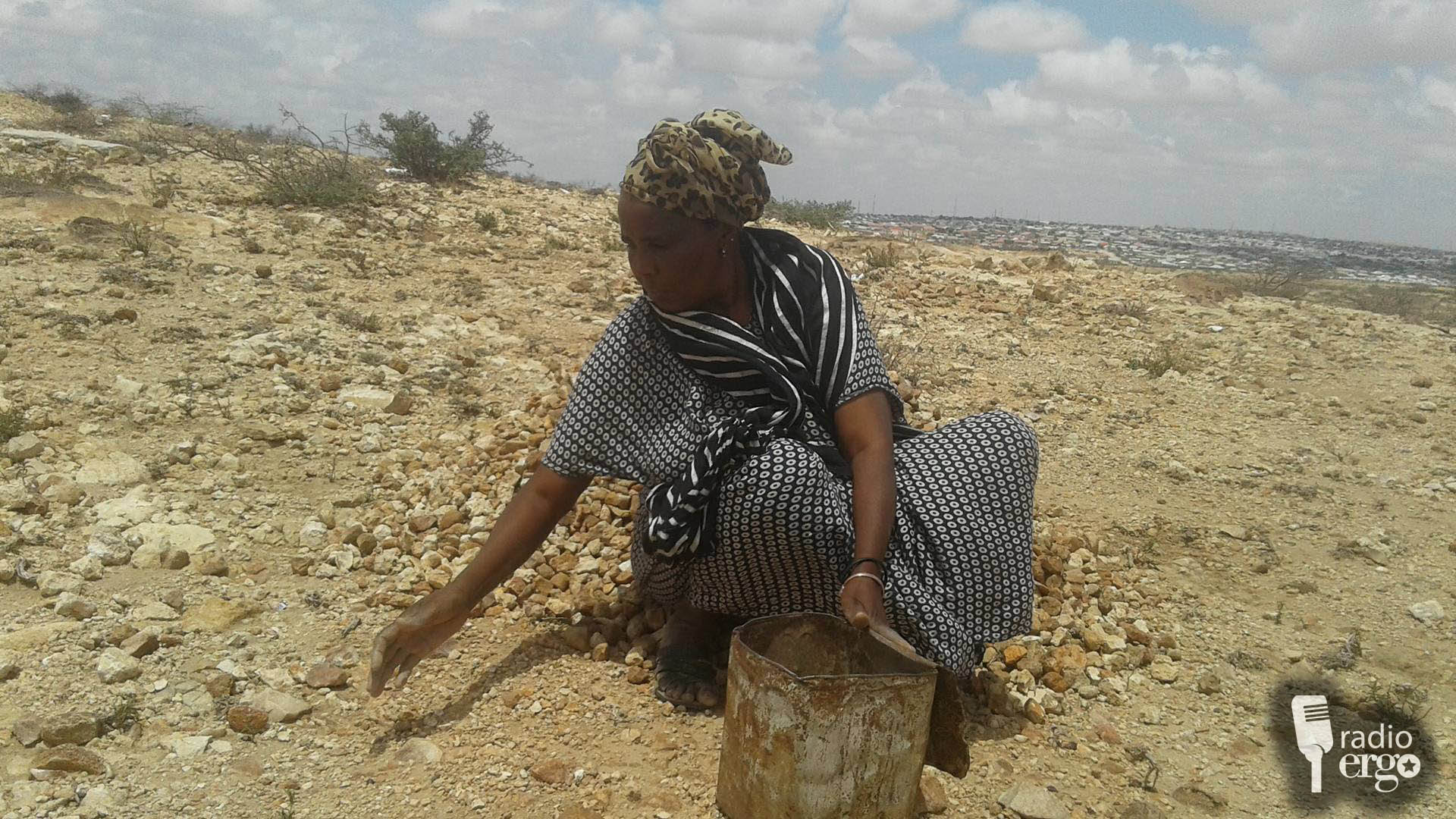
Basra Mohamed collecting up rocks and stones for crushing into gravel/ Ilyas Abdi/Ergo

0
SHARES
Share on FacebookShare on Twitter

(ERGO) – Fadumo Adan Egal, 60, goes out every day with a bucket and a sack to climb the hills around the Nasa-hablood 2 displacement camp where she lives on the east side of Hargeisa to collect up rocks and stones for crushing into gravel.

Fadumo and a female neighbor work together, and can make $20 between them over a period of four days.  It is tough physical work but the women have families to feed, and selling gravel for construction has become a regular source of income for them.

There are 540 families living in makeshift shelters in this camp in Somaliland.  Fadumo, like many of them, used to be a pastoralist but the family’s livestock died in the harsh drought and their livelihood collapsed.

She is one of 200 pastoralist women now making a living breaking stones into gravel in the hilly areas of in eastern Hargeisa.  She walks five kilometres each morning to the quarrying site.

“I work half the day and spends the other half taking care of my sister, who is paralysed,” Fadumo told Radio Ergo. “No one else works for us, I cook the food and care for her.”

Most of the women working here are raising families and looking after households alone. Some lost their husbands and others are divorced. They would rather earn independent income than have to wait for handouts, or beg from relatives.

Three women displaced by drought started the quarrying here in 2016. More women have joined over time. Basra Mohamed Muse works 12 hours a day to support her four children. She started working three months after the death of her husband. “Indeed it is very hard work, but I do it because of the circumstances; I cannot watch my children sleep hungry,” she said.  Her earnings pay for the children’s food, education and health bills. Two of her children are in Sheikh Nur School, a government run school charging $5 monthly fees.

Mohamed Hussein, a truck driver, told Radio Ergo he buys whatever gravel is ready for collection when he arrives. He said he and the women have been doing good regular business. Mohamed gets the gravel he needs, and he pays the women on time.
Previous Post

Floods wash away Somali drought-victims’ houses in Dollow IDP camp

Next Post

Somali famine refugees in Dadaab suffer cold nights awaiting imminent closure of their camp

Related Posts

Somali refugees in Dadaab decry cutting of cash transfers for food
AGRICULTURE & LIVESTOCK

War and drought in Puntland continue to punish displaced families in Bari region

February 3, 2026
blank
FOOD SECURITY

Enterprising IDPs in Dhobley, Lower Juba, turn cash aid into sustainable living

February 2, 2026
Old and vulnerable left behind in drought-hit Hargeisa village
IDPS/REFUGEES

Old and vulnerable left behind in drought-hit Hargeisa village

January 29, 2026
Somalia live news, Somalia latest news, Mogadishu live news, Somali news
FF Feedback

Radio Ergo audience feedback report 15-21 January 2026

January 29, 2026
Mass displacement of drought-hit families in Somalia’s South West state
FOOD SECURITY

Mass displacement of drought-hit families in Somalia’s South West state

January 28, 2026
Lower Juba farmers get good harvests that help recovery from 2023 river floods
AGRICULTURE & LIVESTOCK

Mudug pastoralists earning good income from farming vegetables

January 27, 2026
Next Post
Somali famine refugees in Dadaab suffer cold nights awaiting imminent closure of their camp

Somali famine refugees in Dadaab suffer cold nights awaiting imminent closure of their camp

FOLLOW US ON FACEBOOK

DAILY PROGRAMMES

IDAACADDA 08-FEB-2026

IDAACADDA 08-FEB-2026 by Radio Ergo

IDAACADDA 08-FEB-2026
Episode play icon
IDAACADDA 08-FEB-2026
February 8, 2026
Episode play icon
IDAACADDA 07-FEB-2026
February 7, 2026
Episode play icon
IDAACADDA 06-FEB-2026
February 6, 2026
Episode play icon
IDAACADDA 05-FEB-2026
February 5, 2026
Episode play icon
IDAACADDA 04-FEB-2026
February 4, 2026
Search Results placeholder
Radio Ergo Weekly Newsletter
We respect your privacy.
blank
blank
blank

© Copyright 2014 - 2024 Radio Ergo

No Result
View All Result
  • Home
  • Topics
    • Latest Stories
    • IDPS/Refugees
    • Natural Disasters
    • Health
    • Social
    • Food Security
    • Education
    • Agriculture & Livestock
  • Programmes
    • Locust Programme
    • Farming Programme
    • Radio Doctor Programme
    • Women Programme
    • Entertainment Programme
  • About Radio Ergo
  • Contact Us
  • blankSomali
  • blankEnglish

© Copyright 2014 - 2024 Radio Ergo