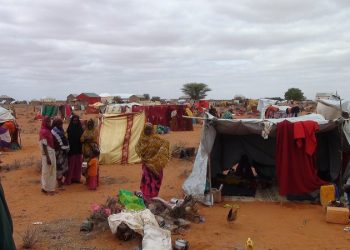


(ERGO) – Nimo Mahad Samatar and her seven children have been sleeping out in the cold for 10 days, since being told to prepare for the closure of IFO2 camp in the Dadaab refugee camp complex in north-eastern Kenya.
The rains have begun, on and off, and already the family has been outside during four uncomfortable nights of rainfall.
IFO2 camp has been set to close for some time. Previous information given by the UN’s refugee agency running the camps, UNHCR, indicated that the closure was set to take place from 31 March. The inhabitants of the camp have been waiting to be moved to one of the other camps.
Nimo demolished her hut 10 days ago in readiness to move. They removed and kept all the materials from the fragile structure that they would be able to use again to make a new shelter.
“I don’t understand why UNHCR has delayed our move although they promised to give us houses in IFO 1 camp,” Nimo said.
“We thought that we were going to move to the other house and use the materials we saved from this shelter to set up the new one.”
Almost half of the 18,000 families left in IFO2 are homeless because they have taken down their shelters in anticipation, according to Ali Abdulle Ali, the camp leader. Ali said that only around 2,000 families have moved to join IFO1 and Dhagahaley camps since last month, when UNHCR started allocating houses in the other camps.
The majority of those living in IFO2 fled to Kenya during the 2011 famine in Somalia. Some have arrived subsequently, including from remote and insecure regions of southern Somalia.
Nimo was given a new card with her name showing that she can claim a piece of land in one of the other camps. But for the time being, she does not have anyone to help her to build a new house or to move the family and her belongings.
According to Ali, refugee leaders were called to a meeting in Dadaab where UNHCR officials talked about the relocation process. The camp leaders and representatives were asked to spread the word among the people that they were going to move and join one of three other camps, as IFO2 was being closed due to reduced funding levels.
Assadullah Nasrullah, Associate External Relations Officer at the UNHCR sub-office in Dadaab, said the process of closing IFO2 camp would be completed at the end of this month.
“We advised them not to demolish their house unless they are told to do so. So I am wondering why people are demolishing their houses when they have not yet been assigned plots in other camps,” he added.
Nasrullah said the families would not all move at once. They would prioritize them in consultation with the camp leaders. UNHCR has prepared shelter materials for those moving and cash grants to assist with transportation and other needs.
UNHCR confirmed that main services offered in IFO2 were stopped at the end of March, including the main hospital and schools. However, students will be able to carry on with their studies once they move to different camps.
Abduqadir Hussein, 57, has been taking his 90-year-old mother to the hospital for regular check-ups. His mother has high blood pressure and was hospitalized for three days just before the hospital closed. He is worried now the hospital has closed and they are still waiting in IFO2 to be moved.
“It was a regular thing and the doctors had even asked us to bring her back if she got sick again,” said Abduqadir.
The only ambulance serving the area has also been removed. Nasrullah said emergency services are still available in the camp. However, some refugees told Radio Ergo they are going to other camps to seek medical attention.
The Kenyan government suspended the registration of refugees arriving in Dadaab some time ago, despite the requirements of international refugee law. It has stated on numerous occasions its determination to close Dadaab. A voluntary repatriation exercise facilitated by UNHCR has been ongoing since 2014.