

Fadumo Hersi, 75, has been sleeping out in the cold under a tree for the past three weeks since being evicted from her shelter in Hargeisa, capital of Somaliland. She has her mentally ill son, 37, tied to the tree and her belongings around her so she can keep a close eye on them.
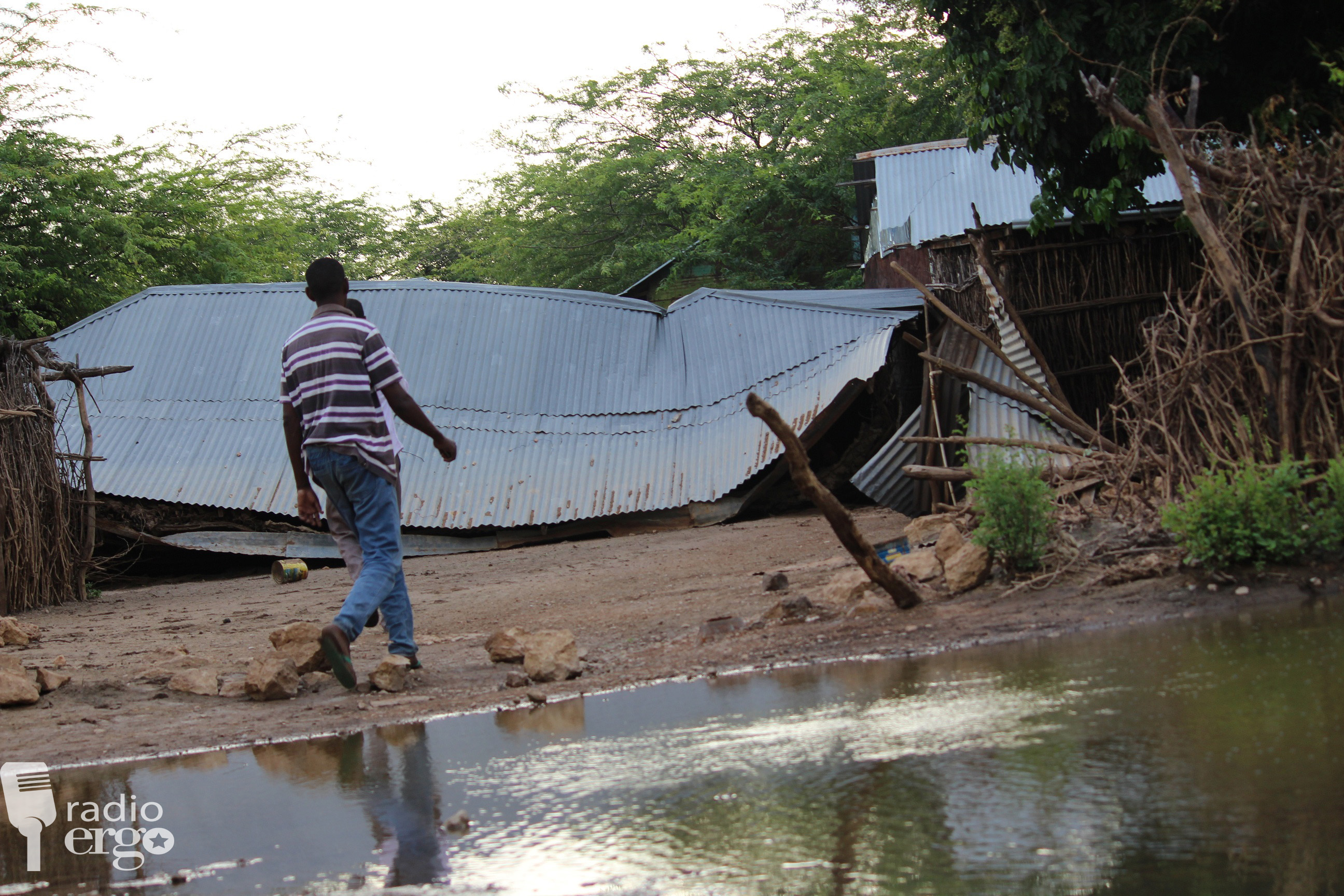
Fadumo is among the roughly 100 drought-displaced families evicted from their shelters in the past few weeks, after the land they had been allowed to occupy on the outskirts of Hargeisa was sold to a private developer.
The families are mostly destitute pastoralists, who lost their livestock in the drought, and others who have fallen victim to drought and hardship.
Fadumo told Radio Ergo she and her four grown-up children were living live off handouts from their neighbours. They have been living in Hargeisa for two years after migrating from drought-hit Dhuato, 45 km to the south of Hargeisa.
Four hundred other families have been given notice to evacuate the land they have settled on before 25 December. The land had been given to the IDPs by a former government minister, who recently sold it.
Families have been moving together into their new state of homelessness, lighting bonfires at night to protect themselves from wild animals and thieves.
Khadijo Ismael Yusuf said she had been prevented from settling in other places so had decided to move out to the mountainous area, 15 km away.
Khadija, a mother of seven, said the worst threat was the insecurity sleeping outside at night. Thieves were constantly coming to steal their property. Her daughter survived an attempted rape a week ago.
“A combination of fear and cold has made us numb. I don’t sleep at night as I am always scared and on guard,” Khadija said.
The administrator of Hargeisa local authority, Ali Hassan Awale, who spoke to Radio Ergo’s local reporter, said they planned to relocate these people at the end of this month to Naasa-hablood in the nearby mountains.
The eviction of IDPs from land that has risen in value due to its proximity to rapidly urbanising areas has become common in the country. The displaced are at the mercy of the land owners and have no recourse to protection.