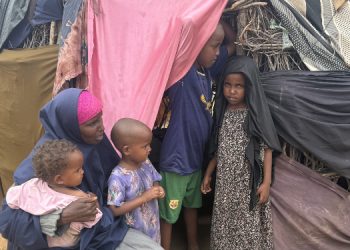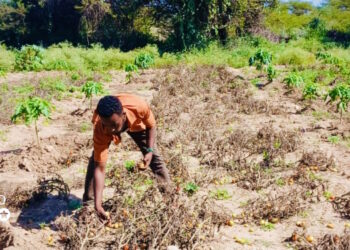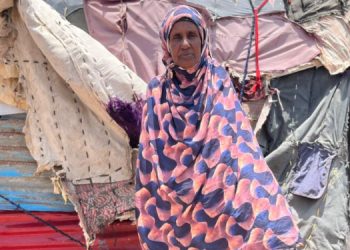


Somali refugees in Hagardera refugee camp in Dadaab, northeastern Kenya, have expressed concern over the Kenyan government’s recent announcement that the camps should be closed and refugees repatriated. While there are a variety of views, most people interviewed by Radio Ergo’s local reporter in the camps said security was not good enough yet for them to return to Somalia.
Deqow Ismail Sanweyne, 21, Waberi High School student, was born in Hagardera after his family fled from the Lower Juba region in 1991: “I was born and brought up here in Hagardera and I have never been to Somalia but still it is my country. Security back home is not yet stable as there is fighting and many people still continue to escape the conflict. I am a form four student now and going back to Somalia will cut short my education journey. However there is no doubt if peace and security improves in my home country, I will go back without hesitation.
Safia Mohamed Nur arrived in the camp as a young girl with her parents in 1998 from Kismayo in Lower Juba region. “We are refugees and the same problems that forced us to leave our country are still there. We fled from conflict, killings and rape. We appreciate the Kenyan government for the hospitality and the warm welcome. But if it insists that we leave, we must go because there is no home other than Somalia. I believe the situation back home is still unstable and three months or three years repatriation plan is not enough and we should not be forcefully bundled into tracks without our consent like animals.”
Yassin Mohamed Osman, 24, arrived in Hagardera at the age of one in 1992. He was brought up and went to school in Hagardera and is now a father of two. “I was shocked by the Kenyan government’s eagerness to repatriate us. I was born in the border town of Liboi and I don’t know much about Somalia except what I hear in the media. My parents too haven’t been there for a long time. If am forced back home I will be like a stranger and forced to start life from zero. There is still ongoing fighting and not all Somalis are criminals. I therefore urge the UN agency for refugees and Kenyan authorities to reconsider their refugee repatriation idea. There is not even any education system there.”
Salado Warsame Said: “I am not against the decision to return to my home country. I am willing and ready anytime but what we should understand is that the same problems that forced us from my home are still there, which is fighting and conflict. I am mother of several children and I am afraid as a mother to go back again where there is rampant conflict and killing.”
Mohamed Ahmed Mohamud: “I am very glad to return to my home country. One always lives in fear in a foreign country that is not his.”
Halima Abdi Yussuf, a high school student:“I would love to go back to my home country. I was born here but I am treated like a foreigner. I don’t get my basic rights. I am not allowed to travel freely to other parts of the country. It is like being in an open air prison – better return home where you are allowed to travel freely.”
Abdinajib Farah Ahmed came to Hagardera in 2001 from Lower Juba region. “I would urge the authorities to reconsider the decision of repatriation. I am not against returning back home but there is not enough security. If we are forced to return, we would either join the two groups in the country – the Somali government forces or Al-Shabaab militant group, because there is no other option for youths to survive there.”