

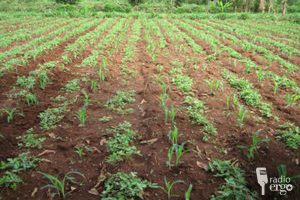
 Agro-pastoralists in Arabsiyo district west of Hargeisa have seen a doubling of their milk yields after the introduction of drought-resistant types of grass imported from Brazil.
In a project funded by the European Union and implemented by the International Centre of Insect Physiology and Ecology (ICIPE), two types of grass from Brazil were distributed to local agro-pastoralists during the dry season in May, with the aim of improving the quality of pasture.
Small-scale farmers are pleased with the results of the first phase of the project.
Agro-pastoralist Abdulkadir Mohamud in Huluq near Hargeisa told Radio Ergo that his production had increased with the new grass.
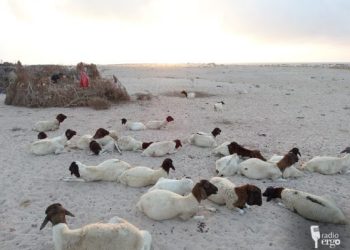
“I have six cows, 30 goats and 40 square metres of farmland that serves as pasture for my animals. My production has doubled in the last five months since I have been using this new technique,” he said.
“One cow used to give me one litre of milk per day but now it produces two litres per day because of feeding it with the imported grass.”
Abdulkadir said he had managed to send his four children to school as well as affording other family needs, which had been challenging before.
Dr Mohamed Hassan Mohamud, head of ICIPE for the project, said the project aimed to empower local farmers through better management of pasture harvesting for use during the dry season.
“The three years project is expected to increase the farm produce such as milk while empowering the participants with drought management techniques,” he said.
Dr Mohamed said the imported grass had added benefits of increasing soil fertility while averting Stemborer incidence, which is very common in the area.