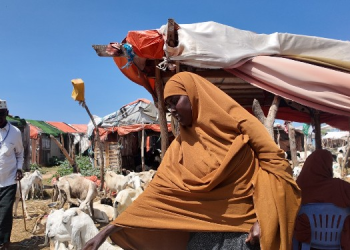


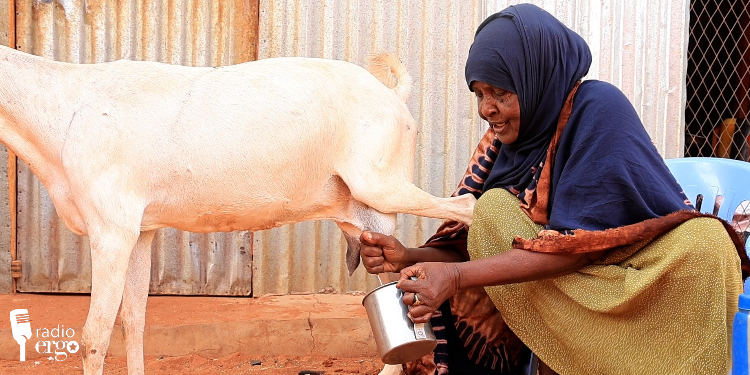
(ERGO) – Livestock-keeping families in Guriel, central Somalia’s Galgadud region, are losing their goats and sheep that are feeding on plastic waste strewn across the town and all over grazing areas.
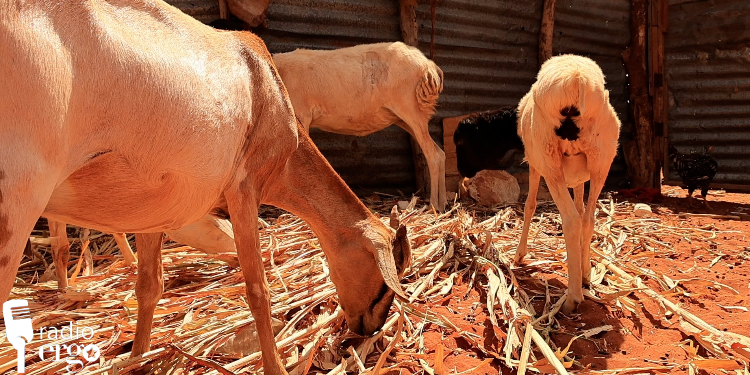
Fadumo Gelle Abdi said 29 of her goats had died after eating plastic. She decided to stop allowing her animals to roam and began feeding them in an enclosure instead.
Many locals are doing the same, although the costs are significant. Fadumo spends about $400 a month on sorghum, wheat and bran for her 67 sheep and goats. As the herd produces only four litres of milk a day, worth $10, she is accumulating debts.
“They have no meat or milk. We can’t take them out to graze because plastic has become their food,” she told Radio Ergo. “No one works to support me – I depend entirely on these goats to feed my family, but I’m struggling to keep them. I am surviving on debt.”
Fadumo, 60, raises eight grandchildren alone. She used to sell milk brought to town by pastoralists until supplies diminished due to drought. She invested in her own herd in town.
She has to pay $50 a month for the four in school. Her animals are their only source of income – but the upkeep cost of feeding them in the enclosure is more than they earn.
A livestock veterinarian, Dr Ibrahim Dahir Osman, conducted his own survey showing that 75% of Guriel’s residents keep livestock these days. As drought has forced pastoralists to move farther from towns in search of grazing, more and more urban residents have started keeping their own animals for ready access to milk and meat.
Most rely on natural grazing, where the biggest danger is eating bags and other plastic waste that causes blockage in their digestive system leading to malnutrition and death. Dr Ibrahim estimated that around 3,000 animals die this way every month.
“Someone keeping 10 animals in Guriel today may find that only one or two are safe from plastic waste,” he said.
The vet performs surgical procedures to remove ingested plastic from 150 to 200 goats every month. He charges $7–$10 per animal, depending on their owners’ means. He treats those who can’t afford the treatment free of charge.
He removed a total of 148 kg of plastic from seven goats belonging to Fadumo, and charged her $55.
“An owner feeds an animal hoping to get milk, but the feed costs money. The animal then eats plastic and becomes sick. Its stomach fills up, and instead of gaining meat, it becomes thinner,” he said.
Livestock owners often mistake the condition affecting their animals for other diseases.
Saed Abdi Mohamed has kept goats for 10 years in Guriel, since giving up on livestock brokering. He has a herd of 80, and recently lost 17 animals without realising what was causing their deaths.
“I took my animals to Dr Ibrahim and told him about the problem. He said they needed treatment, just as a person would need to see a doctor, because they had swallowed plastic,” Saed narrated.
“I never believed an animal could be operated on, with its stomach opened and waste removed, and then continue to be useful. But I have seen it happen!”
Saed’s household of 11 depends on the herd.
“Livestock are our main source of income in this region. We have no farms or other sources of livelihood. I urge the Galmudug government to tackle plastic waste. It is killing our animals, and if we lose them, we lose our way of life,” he said.
In 2024, the federal government announced a ban on the importation and use of plastic bags and other single-use plastic.
However, residents continue raising complaints about waste dumping in public places and the lack of action being taken by authorities.