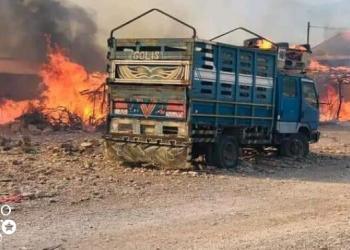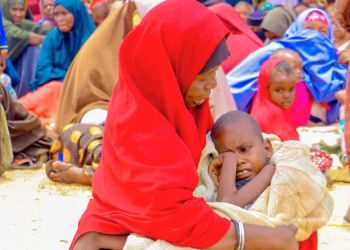


In Gabobe village, on the outskirts of Hargeisa, 40 vulnerable families have been abandoned after other residents migrated away in search of water and pasture following two years of drought.
Those left behind are elderly people, disabled, and households without the means to relocate. With their livestock wiped out by drought, they are struggling with acute water shortage and hunger.
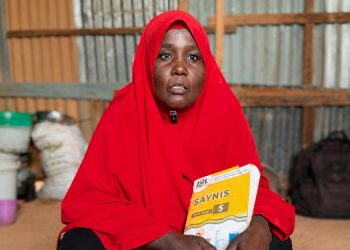
Sirad Mohamed Elmi, 76, is living in Gabobe with three elderly relatives and her sick son. She told Radio Ergo that her daily survival is perilous as all their animals perished. Her family relies on small amounts of assistance from relatives in Hargeisa.
“If we are lucky, we eat once a day. Before, we depended on our livestock. We sold animals to buy food and paid for what we needed. Now drought has destroyed the animals, and it has pushed us into extreme hardship,” she said.
All hand-dug wells in the area have dried up, leaving residents dependent on water fetched from Ba’ado area, about three kilometres away.
Sirad carries a single jerrycan on her back, walking the long distance to access free water points. She says the journey is exhausting.
“I am 76 years old, and the distance is long. The load is heavy, and I get very tired,” she said. “But necessity leaves me no choice. I can’t afford to buy water brought by tankers from Hargeisa.”
Water vendors charge about two dollars per barrel.
Sirad is also dealing with deep personal grief. Over the past year, one of sons died suddenly after falling into a water well. Another son was bitten by a snake in Hargeisa and still suffers severe pain in his leg.
She can’t afford to take him to a health facility and worries that he may become permanently disabled, as she has been warned by people familiar with the impact of snake bites.
She is also responsible for three elderly male relatives who have no families of their own and depend entirely on her.
“They are old and have no one else. They rely on me alone, and you can see my condition. I can barely manage myself,” Sirad said.
There are no shops in Gabobe. The single shop within accessible distance sells goods at high prices, making it difficult for families to buy even basic food items.
“Sometimes even one or two dollars can’t buy you anything,” she said.
Sirad says she has accumulated $300 in debt over the past five months. She has been warned that her credit limit has been reached and she won’t get further credit until she settles her debt.
Her family have been pastoralists for generations, although cycles of failed rainy seasons have killed about 100 goats they owned due to lack of pasture, water, and diseases.
All those remaining in Gabobe are facing enormous hardship. Jamal Mahad Mohamed finds it hard to provide one meal for his family of 10.
They also rely on food bought on credit, which they cook once a day when possible. Jamal says he owes shopkeepers about $500.
“People I owe money warn me constantly,” he said. “Need forces me to plead with them, telling them I will repay when the rains come. It is very hard to get even something for us to cook.”
Jamal says he has often travelled to Hargeisa, 20 kilometres away, searching for casual labour jobs without success.
“There are fewer labour jobs now, and I know no one in the city who can help me,” he said.
Two of his children have had to drop out of Koranic school. Their school closed after most families migrated away.
Jamal says he could not afford the $200 demanded per household for transport to relocate.
“Everyone else left because they had vehicles and money,” he said. “We were left behind because we had neither.”
Since mid-2024, the area has received no rainfall. Out of 80 animals—camels and goats—he lost 30 due to drought. The remaining 50 produce no milk, cannot be sold, and have no pasture.
“I could not buy fodder, and there was no grazing,” he said. “If the rains do not come soon, I fear they will all die.”
The deputy chairperson of Gabobe village, Faisa Yusuf Arale, told Radio Ergo the situation for families left behind was extremely dire.
“Forty families, including elderly people and people with disabilities, remain here,” she said. “They have no food, no water, no pasture, no health facility, and there’s no road. Livestock have been lost, and the few remaining animals are dying of hunger and thirst.”
She said the village administration has no financial capacity to respond and has reported the situation to the Somaliland government and humanitarian organisations, appealing for urgent assistance.