

(ERGO) – More than 50 women in the coastal town of Marka, southern Somalia’s Lower Shabelle region, who made a living from traditional house plastering using a mixture of mud and animal dung, have been put out of work by the drought and forced into deepening poverty.
The plastering work, passed down through generations of women, has vanished over the past five months, as drought has forced herders to migrate to distant areas in search of pasture, while some lost their livestock entirely. This has made cow dung used in plastering extremely scarce.
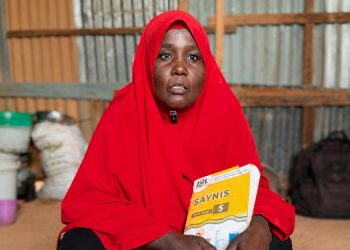
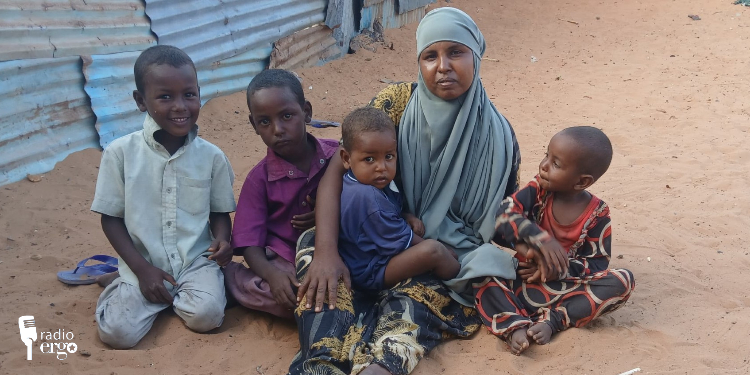
Ruqiya Ali Faqe, a single mother of nine children, has been unable to provide regular meals for her family since last August.
“Sometimes I go out, and the children go out separately to look for something, sometimes there is nothing at all. When we return, we drink water and sleep,” she said.
Ruqiya’s ability to provide for her children has collapsed. She moved in to stay with relatives in El-bashirow neighbourhood, sharing a single room that leaks during rain, as she can’t afford rent payments.
She used to earn at least $10 three times a week from plastering work, but as the sole provider she has no other skills to offer, and also suffers from diabetes and other ailments.
Ruqiya explained that the drought and the lack of natural materials for plastering would probably herald the end of the plastering tradition.
“All houses have changed. Roofs are built, metal shelters are built. Iron sheets are built from top to bottom, what can be plastered? When I used to work, I paid my own rent and earned money. I was a woman sitting among her children. Not being able to buy medicine or clothes for my children worries me a lot,” she said.
Collecting firewood wasn’t possible for her due to the safety risks of walking alone into the bush. There aren’t any laundry jobs in town, as most residents are themselves poor or displaced. Nearby farms have been affected by drought, so there are few jobs in planting, irrigation, and harvesting.
Sadly, five of her children had to drop out of school as she couldn’t meet the $20 monthly fees for Koranic classes and primary education.
Another plasterer, Kaltumo Ali Ahmed is raising seven children in Abasibka neighbourhood, an area largely inhabited by low-income families. Her husband is bedridden with diabetes, leaving him unable to work. Kaltumo finds it hard to go far for long looking for alternative work due to his needs.
“My children have nothing to eat,” she said. “Their father is bedridden and I can’t afford to buy medicine for him. I can’t leave him alone, and I don’t know where to get help,” she told Radio Ergo.
Kaltumo earned around $15 two to three times a week plastering mud houses that covered basic food needs and monthly rent of $20 for two rooms. Unable to pay the rent, she moved to a shack made of grass and scrap materials. There is no toilet, forcing them to use nearby bushland, which she says exposes them to danger from wild animals such as dogs and hyenas.
Additionally, the area has seen conflict between government forces and Al-Shabaab, adding fear to an already desperate situation of increasing poverty among such families.
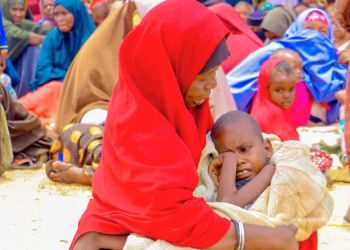
Farhiyo Ahmed Mohamed, a single mother of nine, was forced to move to El-farey displacement camp in Marka in September, after losing her plastering income of around $12-$15 a week.
In the camp, residents share cooked food with her family, but the support is inconsistent and everyone’s resources are stretched thin.
“What hurts me most is my children, my mother, and myself,” Farhiyo said. “We have nothing to eat. At night, we go to sleep hungry. People in the camp help us when they can, but everyone here is struggling.”
Farhiyo also cares for her mother, who suffers from high blood pressure, although she can’t afford her medication.
She says watching her children drop out of school has been one of the hardest consequences of losing her livelihood. Three of her children were attending middle school and although the school itself was free, they now live too far away and can’t to pay for transport.