(ERGO) – As inter-clan conflict increases in southern Somalia’s Lower Shabelle region, hundreds of families forced to flee their homes in Dudumaaye, Gareeri, Beled Amani, and Awgaduud are living in difficult conditions on the outskirts of Wanlaweyn.
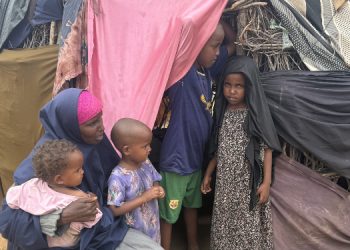
Hussein Abdullahi Hussein, 47, who fled with his family of nine, said they are living fully exposed in an open area without shelter, clean water, or basic support. He has lived all his life in the region, and said the fierce conflict erupted so suddenly that they escaped with nothing.
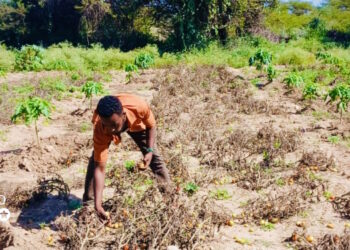
Hussein relied entirely on his five-hectare farm in Dudumaaye. Armed members of one of the warring clans burned the farm, destroying months of his work and wiping out the vegetables and grain he was due to harvest next month.
With no income and nothing saved from the farm, the family goes into Wanlaweyn town each day hoping to get small handouts from residents. Some days they manage a single meal, but other times they go hungry.
He had invested $1,500 that he borrowed to plant his farm, and those who lent him the money want repayment. In the fighting, his two huts and food store on the farm were burnt down.
“The conflict affected my farm, which our entire life depended on. Now it’s gone. There is no food, no water, and a lot of hardship here,” he said.
He has no means to rebuild, as he is saddled with debts and his farm that produced his only income has been destroyed.
Those who escaped the conflict to seek shelter in Wanleweyn can’t afford the 2,000 Somali shillings per jerry can of water charged by private well owners.
Hussein said they sometimes manage to stretch a single jerry can for an entire day with help from nearby families, and often go without water for a day or more.
Ahmed Mohamed Nur, who fled the same area with his wife and 10 children, has been displaced for two weeks. He said their biggest anxiety is uncertainty about the future.
Without shelter, they stay under trees during the day and sleep on the ground at night. They depend entirely on whatever support their relatives hosting them than share with them.
“What troubles me is what our future will be. We are homeless, living in someone else’s home. What will happen to us? Will we die of hunger, me and my children? This is what keeps me worried,” he said.
Ahmed’s farm, like Hussein’s, was destroyed in the conflict, just as he was preparing for harvest. The hay he had stored to sell during the dry season was burnt.
He estimated he would have earned around $5,000 from the harvest. He owes $270 for what he borrowed to buy farm inputs and the ploughing machine.
Ahmed, 70, says he and his family have been relying on cooked food provided occasionally by the relatives hosting them.
When the fighting broke out, Ahmed fled on foot with his children, carrying the youngest three on his back on the 25 kilometre journey that took one day and night. He said he was unable to retrieve anything from their two-room house or the farm before escaping.
Ahmed said he doesn’t have the strength or the ability to rebuild his farm, which was the only livelihood he ever knew. He is also anxious about his mounting debts.
The host community in Wanlaweyn is also feeling the strain of those arriving from the clash-torn areas.
The deputy head of the district’s social affairs, Omar Osman Aden, said residents have shared their already limited resources with the newly arrived families. The administration registered 1,500 families, though more continue to arrive in smaller groups.
“The 1,500 families are already far beyond what we can manage,” he said.
He urged the warring sides to immediately cease hostilities and work with local leaders to restore peace.