(ERGO) – Hundreds of pastoralist families in the rural area of Idoole, 30 kilometres northeast of Adado in central Somalia’s Galgadud region, are facing a severe water shortage after the only functioning well they relied on broke down.
The collapse of the well in October has left people and livestock – including many who flocked to the area from drought-stricken locations hoping to find water – struggling in harsh conditions.
Displaced families from Miirhayley, Hinjilab, Hog-dugaag, and Bowdo-dogore have descended on Idoole seeking water.
Khalif Mohamed Siyad, who moved to Idoole on 10 October from the outskirts of Miirhayley, hoped to find pasture and water for his 60 remaining goats after light rains fell in the area.
He found the well damaged and the small patches of pasture depleted after many pastoralist families had already arrived.
Khalif said that the only available water sources – five old hand-dug wells unused for 13 years – were salty, contaminated, and unsafe. His family of 10 had to use the water, which caused illness among his children.
“What affects us most is the water shortage, which has caused illness. The children became sick from the salty water which made them vomit. The hand-dug wells we found here are not usable; both people and livestock got sick from them. There is neither fodder nor water, both are missing. We have suffered a lot because of the water,” he said.
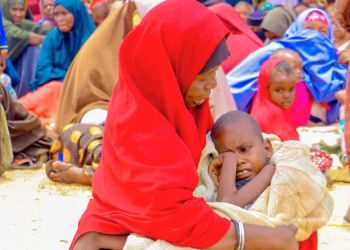
Families collect drinking water with whatever small plastic containers they can find. Khalif’s livestock, already weakened by three consecutive poor rainy seasons, have lost productivity, leaving him without income.
He last sold an animal four months ago, and the family now depends on occasional food assistance from relatives in Adado. When nothing arrives, his children go without meals, including his two-year-old. Khalif said credit is no longer available to him from shopkeepers, worsening his family’s situation.
“People are in a very dire condition, and hunger is what they are facing. We have no farms, and no other place where money can come from. There is no animal good enough to sell. People do not have full meals. We are waiting for relief from God,” he told Radio Ergo
He owes $740 in Adado and Miirhayley that he borrowed to buy water and food. Shop owners, aware of the condition of his livestock, have closed his credit book. His animals remain too weak to sell or milk, and the 80 kilometre trek that took seven days to Idoole exhausted them further.
Khalif said he cannot return home as the drought persists there. Five of his children, who used to study the Koran in Miirhayley, are now out of school. He fears they will forget what they learned because there is no school in Idoole.
The water shortage has impacted newly arrived families and the long-time residents. Abdullahi Mahmoud Hashi, who lives in the area with his family of eight and 40 goats, said they have also been forced to rely on contaminated hand-dug wells.
“This situation has severely affected us. There is no other well with clean water. People’s lives depend on water, and now it is gone. They have no money to fetch water from elsewhere, and they are living in hardship. The water from the hand-dug wells is salty. When people drink it, it causes stomach pain, diarrhoea, and coughing. Waste has been thrown in for more than 10 years. These are open wells that haven’t been maintained,” he said.
Abdullahi said he took three of his children to Idoole health centre on 15 November suffering from severe stomach pain and diarrhoea. The centre lacks medicine, and they were only given oral rehydration salts. His family boils the water to try to reduce contamination.
Abdullahi has debts of $600 since July, borrowed because his animals were too weak to sell. He waters his goats only once every seven days because drawing water from the wells requires four people pulling together, and help is not always available.
Like many pastoralists who have lived in Galgadud’s rural areas for generations, Abdullahi has no experience with urban work and depends entirely on his livestock that are now at risk of dying.
The chief of Idoole area, Sharif Omar Mahmoud, told Radio Ergo the well’s breakdown has affected hundreds of families, including those who once bought water delivered by truck. He said the engine, pump, and pipes have all failed, and the well is full of sediment.
“Repairing it is hindered because these are drought-affected people who have no income to repair the well, neither the long-term residents nor the newly arrived. They depend on livestock, which have lost their productivity,” he said.
They have reported the situation to the Galmudug authorities and aid agencies but have received no response. The health centre lacks medicine, and the salty water continues to cause illness.