

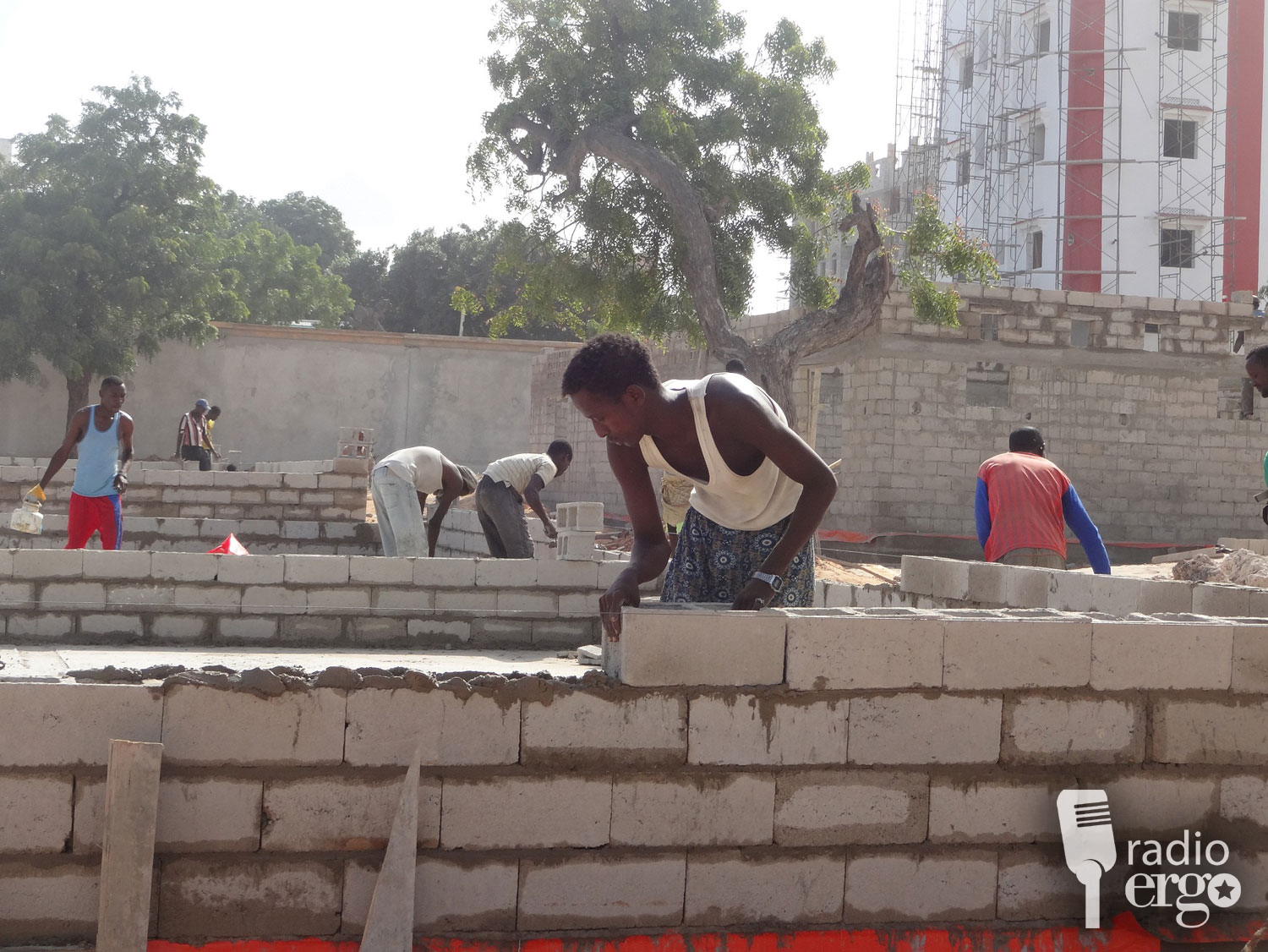
(ERGO) – Hardship is weighing heavily on labourers and their families in Hargeisa, as construction companies have created their own workforces and no longer use casuals.
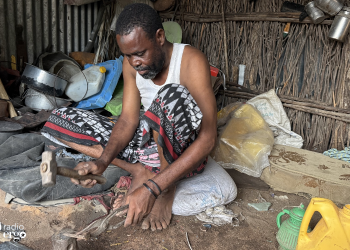
Among those struggling is Abdi Noor Farah, 36, who used to earn a daily wage carrying loads at construction sites. He sets out daily in search of work, but usually returns home after hours of waiting with nothing.
For the past four months, Abdi says he has found it hard to keep his wife and four children fed.
“It has affected us so much. Our lives depended on the work — whatever you earned that day is what your family ate. Now we only find work maybe twice a month. The wages aren’t even enough to cover debts. When you borrow from the shopkeepers they tell you, pay up and then leave us alone. I feel a heavy burden,” he said.
He has accumulated $500 in debts that he can’t repay. With no skills to fall back on, he says he was caught unprepared for the sudden loss of his livelihood.
“The engineers constructing the buildings brought in their own people. They formed a workforce. They brought their relatives. That’s why wherever you go now, you can’t find anything. Also, those workers have equipment that we don’t have,” he complained.
His family survives on small amounts of grain begged from local shops and his children miss out on milk and other basics.
He used to make about $8 a day, enough to cover food, rent, and other needs and didn’t need to ask for help. Now, he is forced to seek assistance from relatives or neighbours.
Mohamud Yusuf Jama, a father of four, says his family is similarly affected and food prices are also rising.
“Sometimes we eat lunch, sometimes only dinner. The pressures include lack of money, lack of school fees, lack of healthcare. When hunger strikes, it affects everything. If you get one item, another is missing – either water, oil, or charcoal. The needs are endless,” he said.
Mohamud had been earning $10-12 a day doing casual labour but now gets at most two days of work in a week and at reduced rates.
He was forced to move his family out of their two-room house when he could no longer afford the $10 rent. They now live in a hut costing $5 per month, with no electricity. His children have also dropped out of school due to lack of money.
“When I had regular work, my life was very good. My children were getting proper education. I could afford both Koranic lessons and school fees. But when the jobs became scarce, our children stopped learning and stayed at home. A child who is worrying about what they will eat has no motivation to study anyway,” he said.
As his debts at local shops reached $350 and the shopkeepers know he has no regular income, he has been cut off from accessing further credit.
Investigations by Radio Ergo found that one of the main reasons that companies have sidelined local labourers is the influx of foreign workers from Bangladesh, Yemen, and Ethiopia. They are willing to work for lower daily wages and in many case have better skills.
Mohamed Ahmed Yoonis, an engineer with a construction company in Hargeisa, said the decision to hire permanent workers came from the challenges of casuals not being available as needed. He also said local workers were not adequately skilled for some tasks.
“The need arose because skilled workers are required. Their skill is what led us to create our own staff. Another reason is communication and understanding, and the most important thing is that they have become accustomed to the work. Most of our casual workers are not committed when you are not watching them, they are not consistent with the work,” he stated.
He said Somali workers needed to develop their skills to maintain their jobs while also improving their interpersonal behavior and work efficiency.
Construction laborers in Hargeisa are calling on the authorities to intervene regarding the foreign workers taking over their jobs.