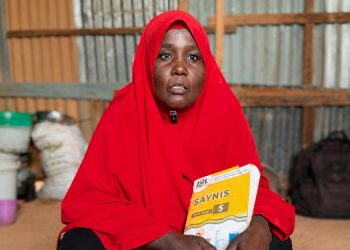


(ERGO) – Mother-of-eight Hamdi Abdullahi Ibrahim is living in fear of being thrown in jail if she doesn’t clear the debts she has incurred running her small shop in an internal displacement camp in Galgadud, central Somalia.
Many other women in the camp where she lives near Adado speak of experiencing jail terms because they got into an unbreakable cycle of unpaid debts.
Hamdi hasn’t been able to provide her family with regular meals for several months due to her shop’s closure and has also received threats from suppliers wanting their payment.
She set up her shop in 2023 with $700 that she borrowed from businessmen. Recently, with the lack of cash in the economy due to aid cuts, drought, and overall hard times, she took more and more goods on credit – reaching the point where her suppliers refused any further credit until she reimburses them.
Hamdi told Radio Ergo’s reporter that she is stuck in a chain, as she had been extending credit to her own customers in the camp. Collectively they owe her $1,300 – and most of those former customers seem to have disappeared.
“When I was trading, my children ate two or three meals a day. I was self-reliant and had something. Today I have nothing, and I can no longer get credit,” she said. “We used to cook three meals a day, but now we cook our dinner, breakfast, and lunch all in one.”
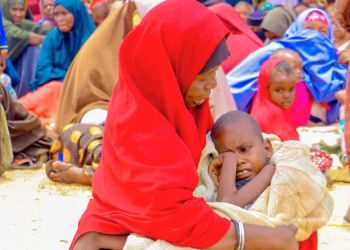
Hamdi said her children, the youngest aged two, often go to bed hungry. Once a week, on Fridays, they all go out to collect firewood from an area seven kilometres away from the town. The sales make $10 to $15 that lasts them about three days.
Meanwhile, Sirad Ahmed Yarow, who lives in Bari camp, has already experienced two stints in jail over unpaid debts.
Sirad says she has become a beggar since her small business failed and she can no longer support her family of nine.
“I have a debt of $900 for which I was jailed twice, and committee members from the camp bailed me out,” she told Radio Ergo. “I have no way to pay it back. I was helped by being bailed to get released from jail, but I haven’t found anyone to help me pay off the debt, and I can’t pay it myself. That’s why I was jailed twice.”
Sirad said she has been given two months to pay back the $900 she owes, or presumably face another humiliating jail term. Like Hamdi, her former customers in the camp have disappeared owing her a total of $1,500.
The pressure of business failure and debts cycles cause often irreparable damage to families in the camps.
Fardowso Abdullahi Hirsi, who lives in Daryeel camp in Adado, used to earn $7-10 a day from her small shop that supported her family of seven for two years.
Having started the shop with $500 borrowed from a local businessman, her debts grew and became unmanageable until the shop had to close in June.
Parallel with the business failure came the collapse of her marriage, as she and her husband argued over the money and he walked out on her.
“My husband and I separated because of the debt. When I was indebted and the children were crying, we got into a big argument over the debts – and he left,” she said. “I am now struggling to raise my children by myself, and I have not received any help.”
Fardowso has been going into town in the morning looking for laundry work. If she finds a job, she earns five dollars to buy food for a single meal.
After fleeing Maygag-dub in Bahdo in 2022 due to conflict between the government and Al-Shabaab, she had thought her small business in the camp would enable the family to restabilise. Instead, she says she is in a state of despair without hope of restarting her business.
Camp leaders and residents in Adado say scores of women are in trouble over small business debts that break up their families and leave them vulnerable to court proceedings and prison.
Fardowso says one of the hardest lessons she has learned is that you can’t trust customers who take goods from you on credit these days – even though this is the way that most businesses work.