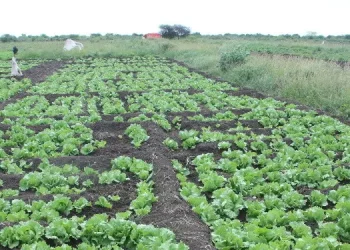
(ERGO) – A farming cooperative has helped former pastoralists in Abudwak, central Somalia’s Galgadud region, to find a stable livelihood after losing their livestock to repeated droughts. The former pastoralists are now earning a steady income selling a variety of food and vegetable crops in the local market.
Fartun Ahmed Halane, a member of the Wadajir farmers’ cooperative, earned $100 from a recent harvest on 4 August, which included watermelon, peppers, green beans, and tomatoes. She e has had similar earnings several times since June.
“Life was difficult before, but now it’s good. Our land is producing crops, and my family has enough food. Our lives have changed for the better, and we are working,” said Fartun.
Fartun sold her remaining 30 goats and five camels – all that survived of their 250-head herd due to drought – at the end of last year for $3,300. She used the money to start a three-hectare farm on her father’s land, five kilometres north of Abudwak town.
Her initial lack of farming knowledge was a challenge, but she has since benefited from training and tools provided by her cooperative. She believes that farming offers a much better life than pastoralism.
“I prefer farming now because we consume what we produce ourselves and we earn a good income. We even cook the beans we get from our farm. Every night I feel a new hope that I will expand my business and work more, and I pray to God to help us with our efforts,” she said.
Fartun and her husband work on the farm together. The income has been a great relief, allowing them to pay off a $300 debt and enrol four of their children in school for monthly fees of $30.
Abdullahi Ahmed Dahir, another former pastoralist, said his five-hectare farm earns him $400 to $500 a month, which is enough to support his family of 16.
He started farming in November last year after selling his last 72 goats for $3,000 and taking out a $1,500 loan.
“The drought killed our goats, and we invested what was left in farming. The produce from the farm has changed our lives. We were afraid that our livelihoods would be completely lost, so we sold the remaining animals,” he said.
Abdullahi said his income depended on the harvest, but his family’s life had significantly improved. He reinvests part of his earnings, uses some for family expenses, and saves the rest. This means his family can eat three meals a day, a major improvement from their previous struggle to afford even one meal. He has also been able to pay for 13 of his children to go to school.
He received training and tools from local NGO, HIRDO, supported by the UN’s World Food Programme, which helped him overcome his initial lack of knowledge. Abdullahi plans to start a business selling livestock feed and poultry and to expand his farm to become a major trader in the area.
The chairman of the Wadajir cooperative, Fuaad Mohamud Warsame, said an increasing number of pastoralists had joined the cooperative over the past six months, as their traditional way of life had become unsustainable. They now had about 200 families in the cooperative.
The cooperative provides new farmers with basic tools and training, which has led to a variety of local produce being available in Abudwak market at a lower cost, reducing reliance on imports from Ethiopia and other regions.
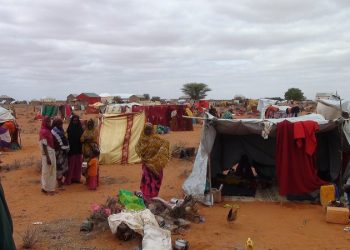
The farmers still face challenges, such as a lack of water and land, but the increase in the number of people turning to farming has saved many families from displacement and destitution.