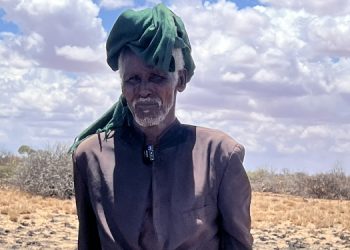


(ERGO) – Changing lifestyles in Somalia have left traditional shoemakers in Galkayo out of work and unable to support their families.
Salad Mahamud Hassan has been unable to provide even a meal a day for his wife and nine children since April, when he gave up on his shoemaking and repair business.
He is among 15 men in Galkayo who have been engaged in traditional shoemaking work as an occupation.
For 10 years, Salad worked without worry, but now he says he is consumed with anxiety about his family. He has no other skills and no savings to fall back on.
“My children are calling me right now, and I have nothing for them. I have no money in my mobile phone. I don’t get any work making or mending shoes anymore,” he said. “Sometimes we cook and eke the food out over the day if we get credit or contributions from neighbours.”
He used to earn about $10 daily, which covered food, rent, education, and other needs. He never needed help before, but now has to rely on assistance and begging.
The loss of income forced him to move his family to Danwadaag displacement camp outside Galkayo. He had accumulated $230 in rent arrears for their two-room house for the past three months. Now, they live in a poorly built hut in an area lacking basic services.
“We had no choice,” Salad told Radio Ergo. “Everything was manageable when the market was good – rent, water, education, everything. But now there’s nothing, I’m jobless and if you don’t work you go hungry. We can’t even find enough to eat anymore. When someone’s shoe broke and needed fixing, I used to earn a dollar or half a dollar fixing it – but now repairs are scarce. People buy good ones that don’t tear easily.”
Four of his children dropped out of school as he couldn’t afford the $15 monthly fees per child. He is saddened that they now stay at home. He owes $600 for food bought on credit.
At 45 years old, Salad is wondering whether he could learn another skill or trade.
Traditionally in Somalia, craftsmen such as shoemakers and metal workers belong to minority clans and often face discrimination and limited opportunities.
Shoemaker Mohamed Ali Culow and his family of 11 also moved to an IDP camp when his income dried up. He had managed the household expenses well for 15 years and was sad to move to Doonyaale camp, where conditions are difficult.
“I get $1.50 or $2 begging from people I know and use it to get something for the children once a day. There is no other income. We survive by going to the city and begging,” he said, dejectedly.
“My previous life was good. I used to earn $8 to $10 a day. We lived in a two-room rented house and had a high standard of living. My children studied. Two rooms cost $60 in rent, and I
used to save from what I earned. I set aside money each day and paid $50 for school fees. Five of my children were in school.”
He is saddled with a $700 debt for household expenses over five months that he can’t repay.
People have changed their ways, he observes, and now just throw away broken shoes to buy new ones instead of seeking repairs.
“The work deteriorated greatly, so I moved from the city to the camp. I settled here because of constant demands for rent. I told myself to leave with the children so they could survive. I couldn’t pay rent or school fees and I still owe a shop in the area $500 for food. I tell them I’ll pay month by month – but I have nowhere to get the money as the work has stopped,” he told Radio Ergo.
Mohamed, like Salad, is uncomfortable depending on food donated by other residents but he can’t stand seeing his children going to sleep hungry.
Their fellow craftsman, Hussein Dahir Ali, a father of five, had worked as a shoemaker and repairer for six years.
“I have never done any other job. I used to manage my children’s education, family life, and rent. Now we have no food to cook. Other people are helping us out,” he said.
Hussein, who lived in a two-room house costing $60 monthly, now depends on relatives who gave him space in one room for his children and elderly parents. He has debts of $300 for food from local shops.
“The sudden end of my work left me in shock! Three of my children have dropped out of formal schooling, but they attend Koranic school, where they were exempted from the $10 fee after people saw our hardship.”
Unlike his colleagues, Hussein can’t quite bring himself to give up on his old trade.
“Some days I come to the place where I used to work, hoping to find some jobs. A person who used to earn $10 a day can’t tolerate long-term joblessness and watching their children go hungry,” he said.