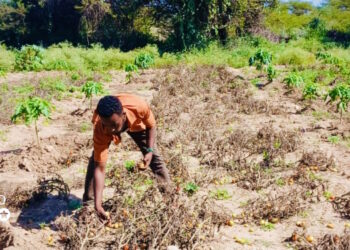
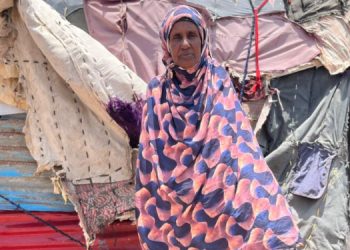
(ERGO) – Mohamed Ali Aden has been struggling to live off his family’s one-and-a-half-hectare farm in Awdhigle, in southern Somalia’s Lower Shabelle region, due to the failure of imported seeds that he has planted for the past two year.
“The imported seeds have caused us a lot of trouble,” Mohamed said. “The maize we used to plant used to produce good, visible grain. With these seeds, even if you overdo it and spend a lot of money on water and pesticides, your field will produce very little. We don’t know what to do. We’re confused about how things are going. We don’t understand!”
Most of his crops were lost, while the few he harvested were premature and unsellable. The family of 11 now survives on one meal daily, with food on credit from local shops. They used to eat three meals a day when the farm was productive.
“We can’t take on more debts. We owe the shops $1,300 for loans over two years. They won’t give us credit if the rainy season fails again. We have nothing to repay them with,” Mohamed said.
His $2,000 investment in the imported seeds and other inputs brought no returns. The family’s debt has grown, and their eight-year farming experience has not prepared them for this crisis.
“I kept telling myself that this year would be better than last. The soil would adapt, the weather would straighten out, the sand would get used to it. But every year it got worse. Sometimes the water ran out, sometimes the weather wouldn’t change. In the end, there was nothing,” Mohamed said.
This situation, common among farmers using imported seeds, has left families facing losses they never anticipated.
Abdiweli Mohamud Hassan, a farmer in Balad, Middle Shabelle, abandoned his two-hectare farm after six consecutive failed harvests using imported seeds. He spent $5,000 on planting costs last year, but earned nothing.
He now relies on irregular food supplies from relatives in Mogadishu to feed his family of 14. Without funds for new seeds, he fears another failed season.
Abdiweli said businessmen had encouraged them to buy the imported seeds, claiming they would yield higher profits. “They told me these seeds would resist drought and grow faster. But in return, I got very poor results.”
“I’m looking for seeds from this country now, but hundreds of farmers in my area have lost access to them. They’ve been using imported seeds for a long time. This situation has become a major burden, and we weren’t prepared for it,” Abdiweli said.
Sayid-Ali Mohamed Ibrahim, an agricultural expert from the Somali Ministry of Agriculture, acknowledged the challenges.
“There is a big difference between domestic and foreign seeds in terms of health, climate adaptability, and growth. For example, maize seeds grown in Somalia are compatible with this climate and will grow. Seeds brought from other countries may not adapt, as the climate here is always hot. What farmers expected to bring profit has instead brought losses,” he said.
Sayid-Ali advised farmers to contact the Ministry of Agriculture directly for verified seeds and training. He noted that while some imported seeds were of good quality, many farmers lacked the knowledge to use them effectively.
Mohamed and Abdiweli’s stories reflect a broader crisis. Hundreds of families in Lower Shabelle and Middle Shabelle regions have suffered crop losses and mounting debts after switching to foreign seeds, believing they would resist drought and yield higher profits.
The Ministry of Agriculture warns farmers to avoid unverified seeds and seek government-checked alternatives. Without support, recovery from back-to-back failures remains unlikely.