

(ERGO) – Abdi Ali Haroun’s profit from the crops he harvested on his three-hectare farm in southern Somalia’s Lower Shabelle region last December have enabled his wife and nine children to enjoy three meals a day, to access healthcare, and attend school.
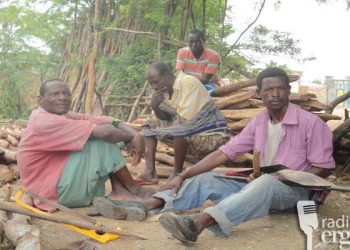
Abdi is one of 150 farmers who have benefited from the restoration of a canal system in Marka that has provided vital irrigation to the local farms, many of which had been abandoned due to acute water shortages followed by repetitive damaging river flooding.
“I harvested crops such as maize, beans, and tomatoes,” he explained. “My wife sells tomatoes and beans every morning at the local market in Bufoow Baad, earning $5 a day. We no longer worry about food,” Abdi said, delighted with the positive changes.
He now rents a two-room house for his family in the Isman Quulle area, located seven kilometres from Marka.
Once the access to water had been restored, Abdi was able to revive the farm that he had abandoned: “A brother, whom I consider God-sent, gave me some money and told me to use it to support my children. I rushed back to my farm with my wife and children. We cut down pomegranate trees and planted corn, beans, and tomatoes.”
In January 2024, floods destroyed the canals supplying water to the farms in this area. The farmers could not afford to undertake the repairs. Abdi had to move out of his $30-a-month house and built a makeshift shelter on his farm using rags.
At one point, he even considered selling his land but was dissuaded by a relative advising him to benefit from the newly repaired canal. Now he has plans to plant sesame as well that he believes will be a good investment.
Previously, he attempted to grow different crops multiple times, only to see them fail due to the lack of water. He fell deeply into debt. At one point he walked to Marka town to beg for food for his youngest daughter.
“I couldn’t find anyone to help me buy milk for my little girl. What could I do if the farm I depended on turned out like that? I went around the market all day asking and begging people to help. I lost hope,” he recalled.
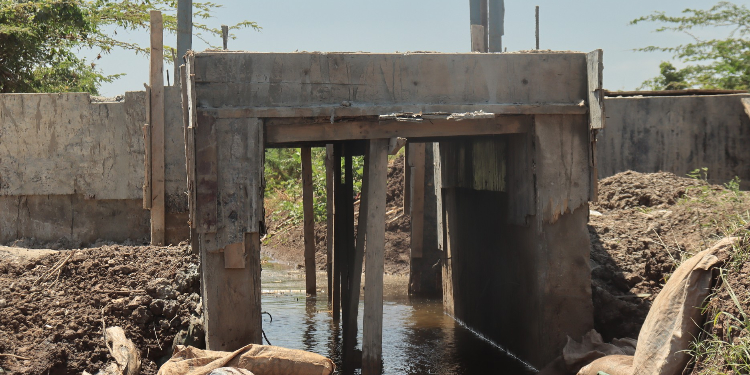
The reactivation of the Kumboole and Jafar canals in the Bufoow area, implemented by the UN’s Food and Agriculture Organisation (FAO), has revitalised local farming practices.
Dug four metres deep, these canals draw water from intake points and release it when needed while preventing flooding.
Mohamed Hassan Mohamud, another local farmer, said he can now provide well for his family of eight. He is renting a three-room house in Bufoow Baad area. Last year, he planted corn, tomatoes, beans, and pumpkins on his ancestral farm.
“The financial benefits allowed me to lift my family out of hardship,” he said. “Agriculture is the only way to achieve self-sufficiency and progress in life.”
Mohamed encourages other farmers who had given up hope to resume farming: “I suggest seeking loans to invest in farming. Work hard, and you’ll get food. You can’t live out of other people’s hands. Since the canals are operational again, I urge fellow farmers to return to their fields. People have children who need education and a secure future.”
Mohamed earned a profit of $3,000 from his recent harvest. With this money, he enrolled three of his children in Alnur School, paying $4 per child monthly. He also invested $800 in a small shop managed by his wife, which makes $5 daily.
Looking ahead, Mohamed plans to expand his three-hectare farmland and to purchase livestock.
“I used to work hard on my farm, but floods always destroyed it. This year is remarkable – I paid off most of my debts. I moved into a rented house, pay electricity and water bills, and eat three times a day. Thanks be to god!” he said.
Disheartened by water shortage alternating with Shabelle River floods constantly ruining his crops, Awale Ismail had migrated abroad in a bid to earn a living to support his wife and six children.
He ended up spending seven months in a Saudi Arabian prison in 2023 for illegal entry. Repatriated in July 2024, he found his family had been displaced and were facing severe challenges during his absence. Seeing the repaired canal, he decided to cultivate his farm again.
“We harvested sesame and vegetables, which helped us leave camp life behind,” he said. “Whoever helped us, may God reward them. We returned to farms we had lost hope in. The truth is, we cannot rely solely on rain – we have a river. If the canals are well-maintained, people will start farming again.”