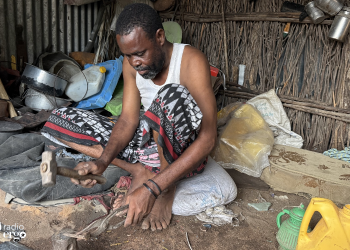


(ERGO) – 81-year-old Dahir Farah Hasan, a pastoralist from northern Somalia’s Nugal region, says he is too old and proud to bear the life he is currently leading, as a beggar on the streets of Garowe.
Devastating drought in the region combined with family tragedies have left Dahir and his wife, 35, with no choice but to gather small handouts from well-wishers. They began begging last year after relocating to the outskirts of the city.
Dahir admitted that begging is a deeply uncomfortable experience for him, as he feels ashamed asking others for help. He approaches men for assistance, while his wife reaches out to women.
“I stand by the roadside, stopping vehicles, and say my young children and their mother are without food. Some give $4, others half a dollar. That’s how we survive. In the evenings, we manage to cook rice once, and in the morning, we drink black tea,” Daahir told Radio Ergo’s local reporter.
They have nine children and 10 orphaned grandchildren to support.
Dahir suffers from severe knee pain, which limits his ability to walk far, while his wife has a throat tumour that keeps her awake at night. They haven’t been able to seek treatment.
His eldest son died of cancer two years ago, leaving 10 children. Dahir sends them what he can, though it’s far from sufficient.
Another son, who used to help support the entire family, died in 2023 in conflict among local clans fighting for resources and influence in the Goojcade area in Sool region.
“We had good livestock— 300 goats and 36 camels. When my son fell ill and was diagnosed with cancer, we sold them. He spent two and a half years in India [for medical treatment] and then passed away. That’s how we lost the camels, while the goats were wiped out by the drought,” Dahir said.
The family now lives in a small makeshift hut on hilly land two kilometres from Garowe. The hard ground makes sleeping uncomfortable, especially for an elderly man like Dahir, who often stays awake through the night to make space for the children.
Dahir expressed despair over the challenges they face, saying begging was neither sustainable nor dignified. He is haunted by the thought of relying on others indefinitely.
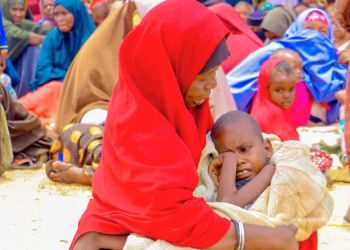
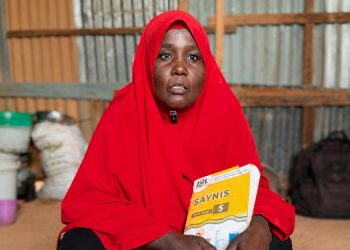
Many others, like Fartun Mohamed Hersi, 41, have been forced into begging. For the past three months, Fartun has been knocking on doors daily, asking for any help neighbours can offer to feed her 10 children.
“We were once herders, but we have lost everything. Now, when I can’t find food for my children, I turn to my neighbours, pleading with them saying, my children haven’t eaten today. If they have breakfast, they don’t have lunch, and sometimes dinner is a struggle,” Fartun shared.
Fartun and her family fled their home in rural Usgure village in Nugal region last year after losing the last of their 200 goats to the prolonged drought.
She came to Garowe hoping to find better conditions but continues to face severe challenges, including lack of adequate food and shelter. Her makeshift hut fails to protect them from the cold, wind, and rain. It is so tiny that the children have to sleep inside in shifts.
The family’s struggles worsened after the death of her husband in 2023 from oral cancer.
“He worked as a stone crusher, earning enough to support us. When he fell ill, we sold everything for his treatment, but he passed away after three years of suffering,” Fartun explained.
Her children’s education has also been disrupted. Seven of them were attending a Koranic school in their previous village but are now unable to continue due to financial hardships.
According to Puntland’s Ministry of Humanitarian Affairs, over 6,000 pastoralist families have fled to Garowe over the past two years due to recurring droughts.
Abdihakim Ahmed Salad, who represents IDPs within the ministry, stated that there are plans to resettle some of the most vulnerable families this year, though these efforts are yet to materialise.
He highlighted the deteriorating conditions of displaced families, many of whom came from Nugal and Bari regions. The recurring droughts have devastated the livelihoods of pastoralists and farmers, leaving them with no immediate recovery options, unless significant aid is provided.