

(ERGO) – Farmers in Karin and Laag near Bosaso in northern Somalia’s Bari region are celebrating good harvests from their date trees that have helped significantly in boosting their income.
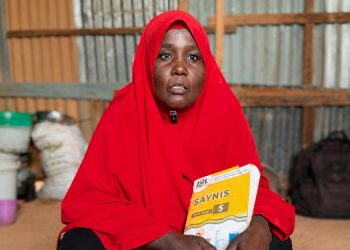
One of the farmers, Mohamed Rage Ali, sold his dates and other vegetable produce to markets in Bosaso, Garowe, and Qardho, earning a profit of $1,200 after clearing expenses and debts in October and November.
The main sales were from dates, which have brought much-needed stability to his family of 14 children.
“We now have enough food. It’s a change that has improved our quality of life. I no longer rely on debt, and I can independently meet our needs. This has significantly impacted our lives,” he said.
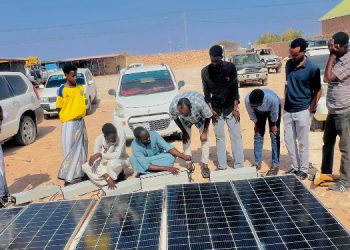
Mohamed was among 300 local farmers who benefited from the installation of solar panels in November 2023 to help them access ground water as well as comprehensive training implemented by the International Committee of the Red Cross (ICRC).
These advancements enabled the farmers to recover from losses they had incurred from their harvests of other crops due largely to drought.
Mohamed’s journey in date farming began a decade ago, when the ICRC distributed 42,000 date palm trees to local farming communities like his in Bari, Sanag, Nugal, Sool, and Mudug regions.
He said the profitability of dates compared to other crops became apparent once they entered the market.
Farmers in Bari region, accustomed to challenges such as low rainfall and extreme heat, have found dates to be a resilient crop capable of withstanding drought and other climate adversities. During locust invasions, the date palm trees have remained untouched.
With their deep-reaching roots, the date trees can access groundwater and survive drought, although they require significant water resources initially.
Abdirisak Musa Jama, who owns a six-hectare farm in Laag near Bosaso, began harvesting from his 250 date trees in September and earned $3,000 over three months. This income has alleviated the financial burdens faced by his family of 13 people.
Abdirisak noted that demand for his dates extends beyond Somalia to Ethiopia, with orders coming from cities such as Mogadishu, Garowe, Bosaso, Qardho, and Dhahar.
“Ethiopia places orders, as do cities within Somalia. These dates are appreciated for their taste and quality, and they are widely consumed. This production has been a major benefit,” he explained.
He remembers the ICRC experts conducting research back in 2015 to identify suitable land for date farming in the region. With $1,500 of his recent earnings, Abdirisak purchased a piece of land in 2024 that he plans to use to diversify his crops in the coming year.
“What I need now is investment to irrigate this land and grow more crops,” he stated. So far, he has sold 2,000 kilograms of dates, using $900 to cover his family’s food, education costs for his four children, and farm expenses over the past seven months.
Formerly a pastoralist, Abdirisak started date farming after drought and disease decimated his livestock, which had been his primary source of livelihood.
The head of the ICRC office in Garowe, Ahmed Abdulkadir Said, described the initiative as a significant success.
“Our primary objective was to ensure farmers had a sustainable income and the ability to withstand challenges. Dates were chosen for their climate resilience and economic potential,” he explained.
A recent ICRC report highlighted the transformative impact of date farming on the agricultural resilience and economic stability for local farmers, noting a success rate exceeding 70% among the 42,000 trees that were originally distributed.