

(ERGO) – Close to 3,000 farming families have been forced to flee their farms in Hawadley, in southern Somalia’s Middle Shabelle region, due to battles between the Somali government forces and Al-Shabaab.
The families from villages including Yaqle, Dagahow, Shanlow, Koteye, Jame’o, Busle, Banaane and Dhagahoow fled in early October. They are now mostly living in internal displacement camps with little access to food, clean water, or basic shelter.
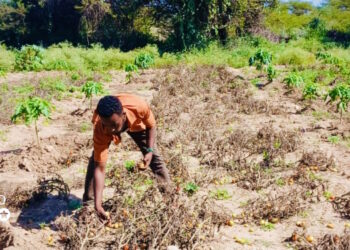
Abdullah Isaaq Nuur, a father of six, shared the distressing story of his family’s escape from Yaaqle. As clashes intensified, they abandoned their three-hectare farm and their valuable crops of maize, beans, and tomatoes.
They live now in Kulmis camp, on the outskirts of Hawadley, where life has become a daily fight for survival.
“We have no food for tonight or tomorrow. We depend on one and a half kilos of rice that I just bought on credit. I have nothing else to provide. We’re even battling mosquitoes without any nets. We left everything behind because the gunfire and shelling erupted suddenly, and we barely escaped with our lives. Everything essential to human life was left behind,” Abdullahi told Radio Ergo.
Abdullah’s farm was on the verge of providing him an anticipated earning of over $2,500 from his harvest. Instead, he is now burdened with debts of $373 owed to suppliers of seeds, fuel, and labour costs.
He said he had never experienced displacement nor being dependent on others. The security challenges disrupted his livelihood and mean his family can’t return to their farm to take advantage of the ongoing rainy season.
“No matter who you were in your community, a chief or a prominent figure, once you become displaced, you are just another destitute person. There is no work here, and our land has become a military zone filled with fear. I left food and beans behind in our home, but going back is impossible because it means death. Life here is tough, and we can’t return. This is a difficult test, and we pray to God for ease,” he said.
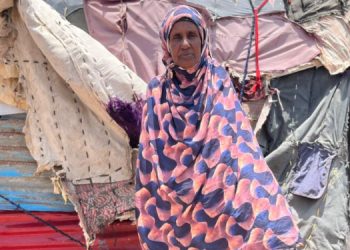
Apart from some help sent by his relatives in Mogadishu and Jowhar, they haven’t received any aid or formal assistance in Kulmis camp, where 600 families affected by conflict and drought are living.
The camp has neither a school nor a health centre.
Another farmer, Hassan Mohamed Aweys, fled Dhagahoow with his wife and 10 children. Their journey to Hawadley took three days on foot, as they had no access to vehicles.
The journey was perilous as Al-Shabaab, which controls the area, initially forbade residents from leaving. Under the pretext of going to his farm, Hassan carried minimal belongings, while his wife brought a 20-litre jerrycan of water and his children carried a mat.
“They said no one could leave the area, and anyone who escaped to the ‘infidels’ land’ would be beheaded. I had no choice but to risk it. This was the closest place I could reach because I couldn’t walk to Mogadishu, and I had no money for transport,” Hassan told Radio Ergo.
Hassan had been cultivating bananas, sugarcane, and vegetables on their two-hectare farm, which provided a stable income before the conflict. He had invested $566 in his farm and cannot repay his debts.
Now in Jinow camp, Hassan has rented a one-hectare farm near the camp, agreeing to pay the landowner $100 once the next harvest comes in.
He sent his 14-year-old daughter to work as a domestic helper in Mogadishu in mid-October and the family will rely on her expected earnings of $30.
The Hawadley district administration has confirmed the influx of displaced families arriving in the camps. The combined efforts of the administration and the local community have only managed to provide 10 kilos of food per displaced family upon arrival.
The deputy representative of social affairs in Hawadley administration, Mohamed Ali Idor, said the fleeing families had joined eight pre-existing camps, where they lacked clothing, bedding, and shelter. He emphasised that they were dangerously exposed to rain, cold, and intense daytime heat.
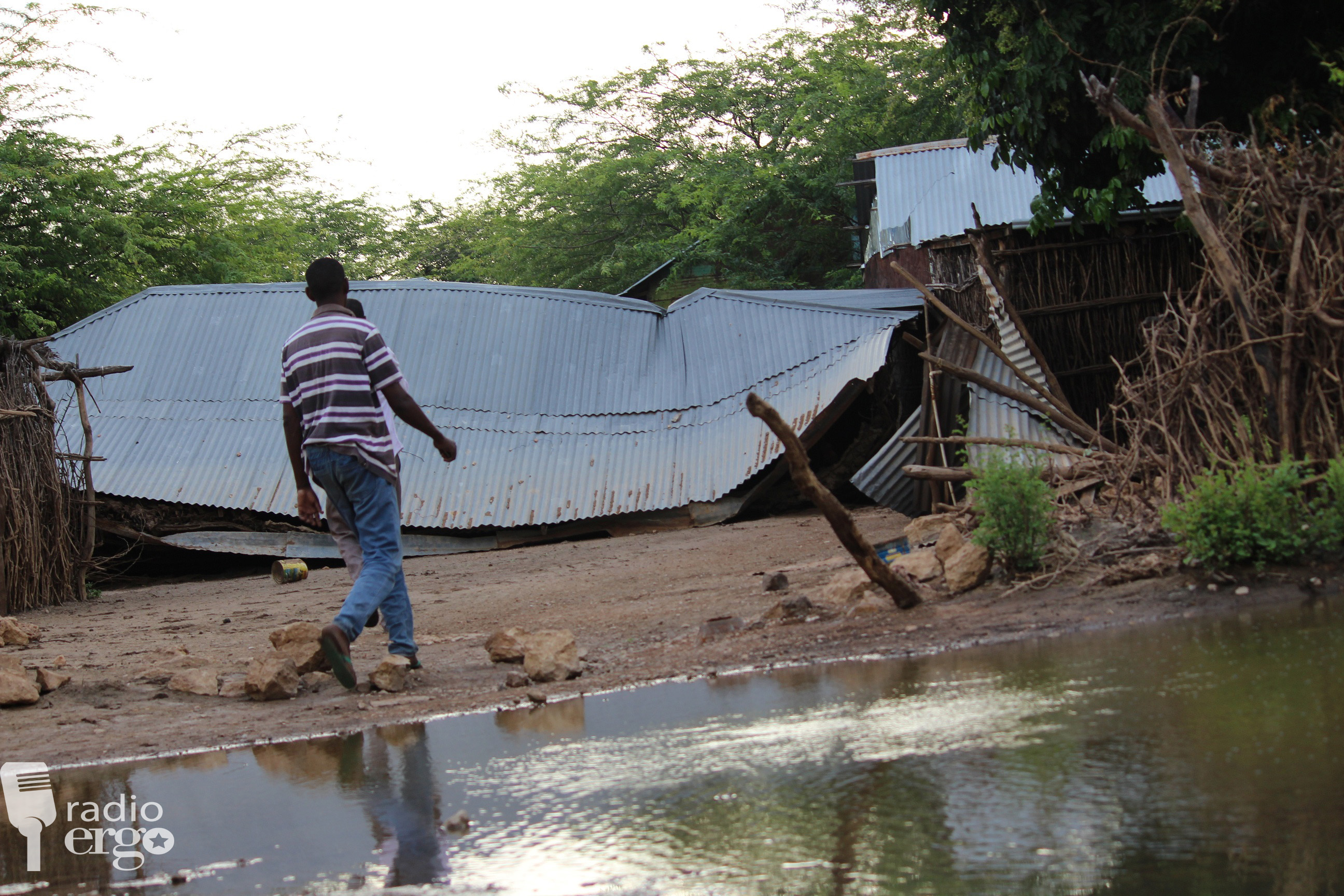
“These families have no plastic shelters for their homes, no mosquito nets, no blankets for warmth, and no medication. Many are falling ill. We have done all we can. This town itself has faced repeated challenges, including flooding in recent years. Even now, during the rainy season, there’s no water, and the farmlands remain dry.
The community hosting these displaced families lacks the capacity to support them further. Ideally, they should be returned to their homes, but that depends on the security, as we cannot send them back while fighting continues,” the official stated.
The displacement of these families and the ruin of many farms will undoubtedly affect the local food supply as time goes on.