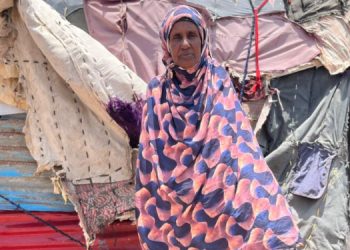


(ERGO) – Maydigo Omar Yarow, a 60-year-old widow and mother of six, wakes up before dawn and heads to a livestock slaughter site on the outskirts of Baidoa to scavenge for discarded bones and hide.
She collects them to sell to local restaurants that crush and cook them into broth, a dish that is popular among their customers.
Maydigo said other women in the camp informed her about this work they were already doing. The livestock owners whose animals have been slaughtered don’t ask the women for any payment for the bones they collect that earns them a decent living.
Maydigo makes $4 a day from selling the bones, which gets her family three meals and pays for the children’s education. Before that they went without food for days.
“This work is tough, but it has changed our lives. Before, we relied on help from my brother. Now, I can feed my children without asking anyone. I prepare three meals for them every day, and they go to school,” she said.
She began bone-collecting in May when collecting firewood in the rural areas became unsustainable due to increased competition. She only used to earn 30,000 Somali shillings ($1.2) per day at best from selling firewood. Life has been a struggle since the death of her husband from cholera in 2020. Her children, who are still young, depend solely on her.
More than 60 displaced women are involved in collecting the bones and hide from slaughter sites in this area of Baidoa, in southern Somalia’s Bay region.
The work is not without challenges. Maydigo said she often encounters thieves and wild animals on her way to the slaughter site. She leaves her home before sunrise as the bones are taken quickly.
“If you don’t get there early, others will take the bones before you arrive,” she explains. Sometimes coming home at night she has been robbed of the bones she collected.
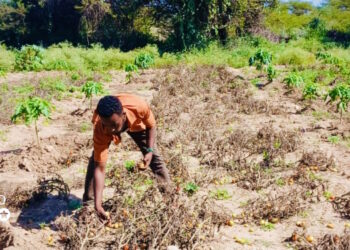
Maydigo’s family fled to the displacement camps in Baidao from Sarmaan village, 40 kilometres from Hudur, after losing their farm and livestock to prolonged drought.
Another IDP mother of nine, Hawo Salad Cali, 50, also collects bones to sell. She was displaced from Howlaha-Guud area, 45 kilometres from Baidoa, where her family’s five-hectare farm in was ruined by prolonged bouts of drought. They were forced to join Buur camp in December 2023.
With humanitarian aid to the camps halted in recent months, her family has relied on the help of neighbours to meet basic needs.
Hawo explains that she walks 10 kilometres a day to the Hanano slaughterhouse to collect bones, carrying them back on foot in heavy sacks. She earns around $6 from a day’s work, which she uses to feed her children and repay her debts.
Fetching water is an additional daily ordeal for these displaced women. Hawo walks two kilometres to a well outside the camp, carrying a 20-litre jerrycan home on her back. Each jerrycan costs 5,000 Somali shillings.
“I used to depend on aid, and my children often went hungry. Now I can take care of their food and even pay off some of the $100 debt I owe for food and clothing. Life is still hard, but it’s better than before,” she shared.
According to Isho Ali Abdi, a 37-year-old mother, the $5 she earns collecting bones and hide has eased her worries about providing food and clothing for her five children. She has been able to enroll two of her children in primary school.
“Before, my children stayed home without any schooling. Now thanks to this work, I can afford their education. They are learning and I can provide for them. It’s been a big change for us,” she said.
Every day, Isho carries up to 25 kilograms of bones on her back, walking long distances to sell them. Though the work is exhausting, her family’s financial struggles leave her no room to rest. The work is better than the laundry jobs she used to do, earning at most $2 per day that didn’t pay for her household’s needs.
Two years ago, Isho separated from her husband and has since taken on the sole responsibility of caring for her children. In April, her family was displaced from Shabelow village, 30 kilometres from Baidoa, after severe drought destroyed their five-hectare farm. The crops including sorghum, maize, and beans, withered, leaving them without food or income.