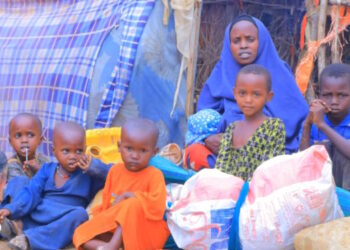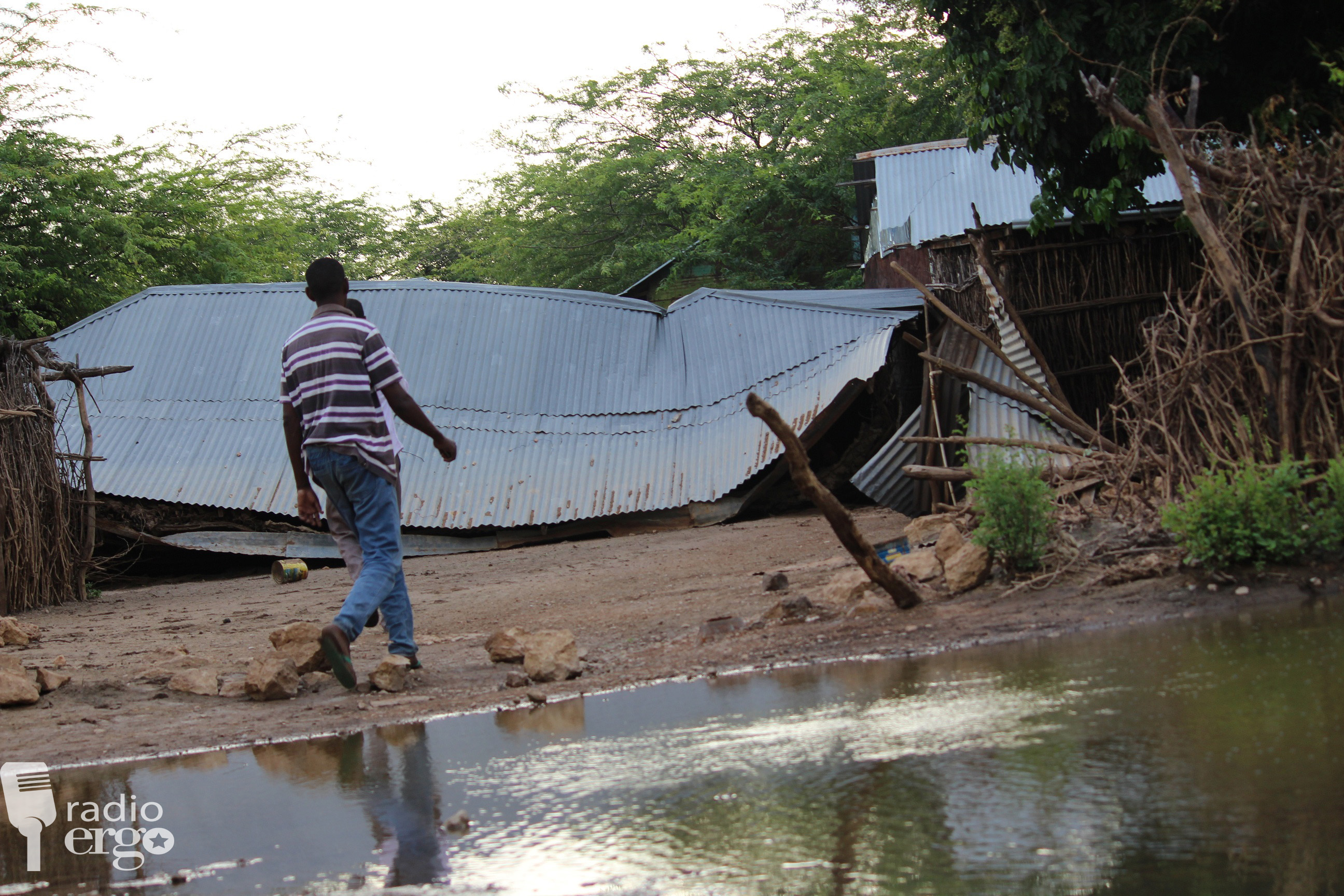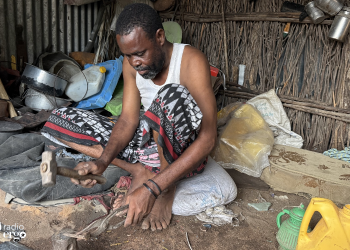


(ERGO) – Nur Jama Farah, 65, and his eight family members are finding it hard to get enough to eat after staying behind in drought-stricken Hood, in Somaliland’s Togdher region, after most others in their rural village migrated away to seek water and grazing after two seasons of failed rains.
Nur’s children are living on a few kilograms of food he manages to get on credit. They cook once a day. He says he prefers cooking at night so the children do not sleep hungry.
His only hope is $100 promised by a relative that he is waiting for. Lack of funds and livestock forced him to stay behind when the others left.
“There was severe drought here, and people left with whatever they could take and their animals. Those who stayed are old people like me. I have seven children, and the goats were taken in search of pasture. There is no food here or other essentials like meat, which we used to get,” he told Radio Ergo.
Nur is among 15 families left in his village, mostly elderly people who could not migrate alongside the 300 or more, who moved to grazing fields in Ainabo district in Sool region early in October.
He owned 15 goats in the village although he decided to send them with his relatives, who were to head to Ainabo last month in pursuit of water and fodder. Before the drought, these goats were a source of support for his family. Nur used to earn about $6 daily from milk sales, but this income source has now disappeared.
He expressed despair about the current conditions for his family.
“You can imagine the life in remote areas people with limited ability, no transport, and no money to manage their lives. We rely on Allah, but drought is at its worst, and the departure of the residents has left us isolated. Life is difficult, but we are people of faith,” he said.
In addition to food challenges, Nur’s children are no longer attending school. Five of them, previously enrolled in local primary and secondary schools, dropped out of education when the school closed last month due to a lack of students.
Families with children all left the area, leaving the village almost empty. Three of Nur’s children were in fifth grade, and two in third grade. Nur fears for the future of his children’s education, as they have stayed at home since the school closure.
Similar issues affect children from families who migrated to other areas, where access to education is limited.
Yusuf Ahmed Farah, a father of 10, has three children still attending school after he sent them to live with relatives in Burao. However, five of his children, who migrated with him to Ainabo, are no longer in school.
Yusuf relocated his family and livestock – 80 goats and 20 camels – from Hood to grazing areas in Ainabo in October. The persistent drought in his village forced him to seek fodder elsewhere.
“The drought pushed us out of our area. We moved to a place which had got rainfall. Residents from three districts gathered there. The grazing was limited and quickly depleted, but it has helped us for now,” he said.
Yusuf explained that economic challenges persist in the new areas where people moved to. The livestock markets there are overwhelmed, significantly lowering prices.
Last week, he was unable to sell two animals as the prices fell sharply in Ainabo market, forcing him to rely on small amounts of food acquired on credit.
“Food is scarce and only obtained in small amounts. Among pastoralists, there are those with large herds and others with fewer animals like us. But Allah provides, and we hope to find a way to manage,” he told Radio Ergo’s local reporter.
Yusuf’s family used camels to transport their belongings and children during the migration. He said the journey took two nights and two days. He is considering another migration if rain does not fall in the area.
The chief of Hood, Yusuf Ibrahim Faarah, told Radio Ergo that those left in the village were mostly vulnerable groups, including elderly individuals and people who had lost their livestock due to drought.
He added that water reserves had dried up, and essential services such as healthcare and education ceased after most residents left.
“This town missed the last rains, and people migrated. They moved to Harira, Wayrad, and Galol-dere villages. Those remaining are mostly elderly and some youth. There are some residents who were pastoralists who couldn’t move or because their livestock had already died,” the chief said.
In recent years, the number of families displaced from their areas has increased due to recurring droughts, causing water shortages, reduced grazing, and disruptions to livelihoods.