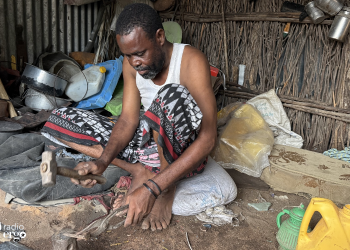


(ERGO) – Since mid-June, Abdirahman Ibrahim Mohamed’s family of 10 has struggled to eat a meal once a day after he lost his construction job in Berbera, in Somaliland’s Sahil region, where he had been working for several years.
He is one of hundreds of construction workers who have become unemployed as construction companies started hiring foreign workers to replace them.
Abdirahman explained that the loss of his job has affected his family in all aspects of life, leading them into uncertainty. Currently, they rely on occasional $50 remittances from relatives abroad, which is a far cry from the amount he used to earn.
“For the past three months, I have only worked for 10 days. I managed with what I earned during those days, and for the rest I had to either borrow or find other means of survival. This is all due to the lack of work. You can see how tough things have become now,” he told Radio Ergo.
Abdirahman was in construction for 24 years and had no alternative plan in place. His earnings, which ranged between $300 and $450 monthly, were enough to sustain his family.
As the sole breadwinner of his family, he feels increasing anxiety, particularly as he visits construction sites daily hoping to find work but usually returning empty-handed.
“The difference between night and day is stark. Previously, I had work, and I could provide for my family and even help others. But now, I can’t give anything to anyone, not even my dependents,” he complained.
He has been unable to pay for the education of seven of his children in middle and high school. He used to spend $80 a month on their education, but now his father has stepped in to cover these costs.
Abdirahman attributed the loss of local jobs to the influx of foreign workers from Kenya, Uganda, and Bangladesh, who are hired because they accept lower wages.
“There is no special skill they have over us. The only difference is that one person can do several tasks—being a carpenter, electrician, and metalworker all at once—while here, three local citizens, each specialising in one of these skills, are needed. The companies opt for one foreigner who can do it all, and sometimes have to lay off four locals who were doing the same job,” he observed.
Abdirahman and his family were pastoralists in Togdher region until he moved to Berbera 33 years ago after drought and disease decimated their livestock. With no other skills, manual labour in the city became his only option.
The unemployment issue has affected most casual workers for construction companies in Berbera. Many say their job opportunities have declined over the last two years, with 2024 being the worst year yet.
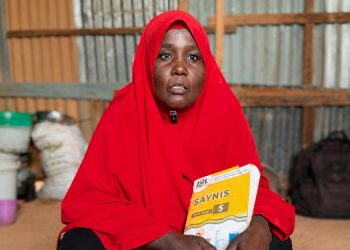
Diriye Abdi Jama, who also works in construction, shared a similar story. For the past three months, his family of eight has faced severe food insecurity. Diriye’s monthly income ranged between $300 and $400, which provided adequately for his family.
“This situation has hit my children the hardest. I have six kids and a wife, and we live in a rented house. The water tank costs $70 per refill, and the children’s school fees are $80. Rent is $60. It has caused so much stress that I have started getting grey hair early. Every day I wonder where to find something for my family,” Diriye told Radio Ergo.
He fears eviction because he has been unable to pay his rent for several months and owes $300.
Diriye explained that this year alone, they have taken their issue to the government four times but have received no response. He used to work over 20 days a month, but now he only works two or three days.
Mubarak Aydid, an engineer at the local Daar Construction Company, said they prefer to hire citizens but often turn to foreign workers since many locals don’t meet their job expectations.
“The foreign worker arrives with multiple skills. He can handle several tasks, whereas some of our workers waste time due to distractions like chewing khat and other habits. We expect eight hours of work, but they sometimes only give us four or five,” Mubarak explained.
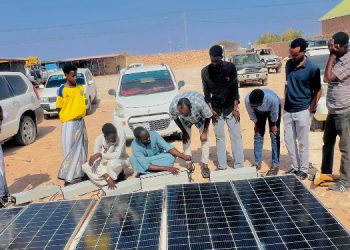
Director of Somaliland’s Ministry of Employment for the Sahil region, Farhan Mohamed Hassan, stated that around 3,200 foreign workers were employed in Berbera’s construction sector, while approximately 10,000 to 12,000 locals worked in the same industry.
“The demand for skilled workers in Berbera’s large-scale projects led to the influx of foreign workers. We are aware of the concerns from local workers, and we are working on a solution. Locals have a right to these jobs, as per our labour laws and constitution,” Farhan said.
He emphasised the need for Somaliland’s labour force to improve their skills, suggesting that each worker should be able to perform at least two different tasks to reduce reliance on foreign workers and alleviate local unemployment.