(ERGO) – Mohamed Abdi * (his name hidden for security reasons) and his two wives and 14 children have been camped out in Hareri-Jimad village, on the outskirts of Harardhere in central Somalia’s Mudug region, since fleeing conflict in their home area in February.
Mohamed said the family had walked for two days before reaching Hareri-Jimad, 35 kilometres away from their home in Aad district.
They were among 400 families driven out of Aad following a government offensive against Al-Shabab militia.
Although they escaped from immediate danger, they now face a dire situation. He said that all their belongings were confiscated by Al-Shabab. They get one meal from their relatives in the area, although the food is inadequate to meet their nutritional needs.
“We don’t have food, only God knows how we get it. If we get some little food, we cook it at night. Sometimes we get some vegetables and other food,” he said.
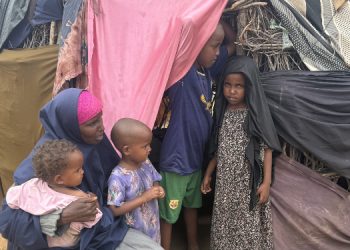
Mohamed said the children were really suffering from sleeping outside in the open.
“There are plastic bags called the red bags, we place these plastic bags onto trees, as you see, we are displaced families with nothing else. We try to find bags or sacks to cover us,” he said
With a water shortage in the area, they are only able to buy three jerry cans of water every two days using $4 their relatives give them for water.
Mohamed said he never anticipated being forced into displacement. He was running his own business making about $10 profit a day from the shop. He also sold goat meat in his butchery, making another $5 a day.
His shop was valued at $3,000 although Al-Shabab militia took everything over.
“God knows our situation; we were people in the village. There is nothing planned for us, but God will give us our sustenance. That is our situation, we are now resting under a tree shade,” he told Radio Ergo’s local reporter.
Ali Warsame* (also not his real name), 60, suffered a similar fate after being displaced from Bur-jiriqo village in February, when Al-Shabaab militia demanded that people evacuate from the area with no accompanying explanation.
He and his family are now living in Hal-bered village, 10 kilometres south of Harardhere, but they haven’t managed to make ends meet since their exodus from the Al-Shabab held area of central Somalia.
They face severe water shortage in their new area and get one jerry can of water from local neighbours.
“To be frank with you, we don’t have a goat, donkey, camel, or a farm and we don’t get money sent to us. We are in a difficult situation,” he explained.
He used to earn $15 from construction jobs and managed to support his eight children. Now they have no income at all and he is very worried.
“For food, we get help from the local people, we get plain rice with nothing else and at night the children just go to sleep hungry,” he said.
The secretary general of Haradhere district authority, Maslah Malim Elmi, told Radio Ergo there were around 1,200 displaced pastoralist families, who had fled conflict, grappling with hunger and lack of shelter in Harardhere.
He said children and women were living outside without proper shelter to protect them from the sun or the cold. The authority had provided water to these families for the first three days when they arrived in February, but they didn’t have the capacity to provide sustained aid to them.
“These people were displaced from their houses and their grazing land. They have left behind their cooking utensils, and their jerry cans. Some of them lost their livestock due to pressures from the enemy,” Maslah said.
He appealed to aid organisations and the Galmudug regional state government to provide food and water aid to the displaced families to prevent their situation from worsening.
According to the district authority official, on 5 March more families were forced to flee insecurity in Amaara district and were dispersed to Marsamage, Hinlabi, Galhagagare and Seego.